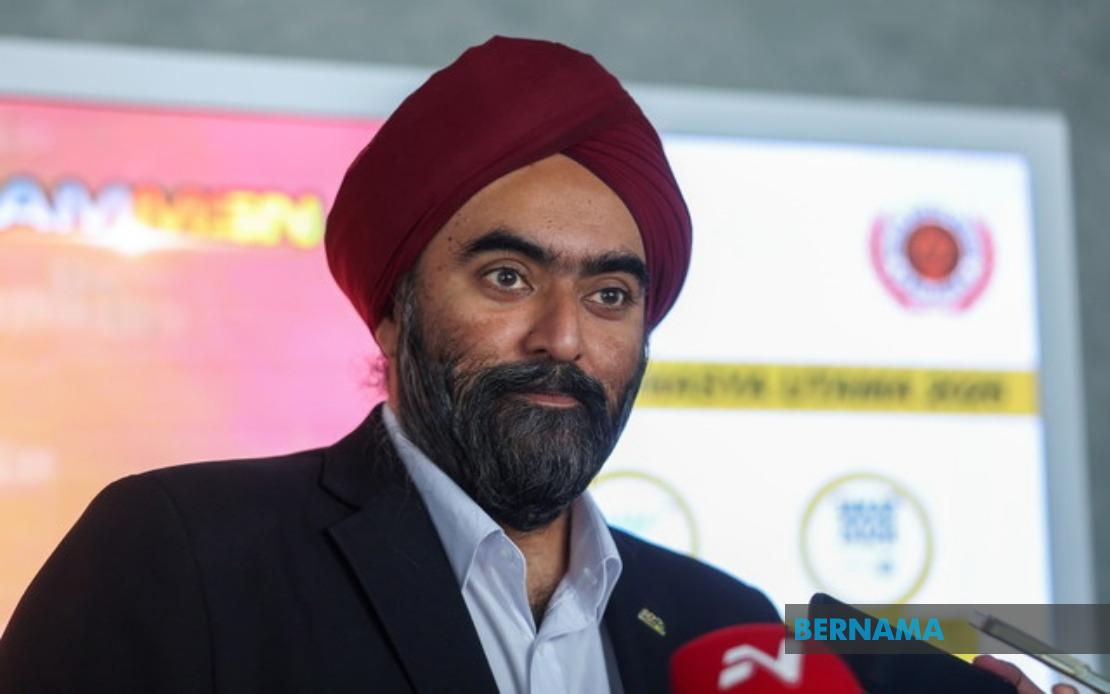
The Malaysian National Cycling Federation (MNCF) has expressed urgency in convening high-level discussions with Yayasan Sime Darby (YSD) to break the impasse surrounding the postponement of the YSD Track Cycling and BMX Series 2026. Speaking at the launch and route announcement of the Le Tour de Langkawi (LTdL) 2026 in Putrajaya on June 25, MNCF president Datuk Amarjit Singh Gill characterised the situation as requiring immediate attention from both organisations' leadership structures, though he indicated that a resolution is within reach if approached constructively.
The postponement, announced by YSD citing unspecified technical issues involving MNCF, has created a significant disruption to talent development pathways for Malaysian cyclists. Amarjit's insistence on face-to-face dialogue suggests that the parties have not yet engaged in substantive negotiations since the announcement, indicating a communication breakdown that threatens the calendar for competitive cycling in 2026. For Malaysia's cycling community, the postponement raises questions about programme continuity and the stability of domestic racing infrastructure, particularly at a time when the sport is gaining visibility through international events like the LTdL.
Amarjit's characterisation of the dispute as fundamentally uncomplicated carries implicit weight, suggesting that the underlying technical issues, while cited by YSD, are not intractable obstacles. His diplomatic language—acknowledging YSD's concerns while maintaining that resolution is feasible—reflects an attempt to defuse tensions without appearing to dismiss YSD's stated concerns. This approach recognises that Yayasan Sime Darby, as a major institutional sponsor, holds significant leverage in Malaysian cycling and cannot be sidelined without serious consequences for the sport's funding ecosystem.
The MNCF president's emphasis on mutual respect and equality between strategic partners addresses what appears to be a fundamental friction point in the collaboration. His repeated invocation of this principle suggests that the federation perceives an imbalance in how the partnership is being managed or, conversely, that YSD may be exercising unilateral decision-making authority that the MNCF finds incompatible with a genuine partnership model. In the Malaysian sports context, where sponsorship relationships are often hierarchical, MNCF's assertion of parity indicates a desire to recalibrate the power dynamics.
YSD's role as a development catalyst for Malaysian cycling cannot be minimised. The foundation's investment in the Track Cycling and BMX Series represents one of the country's most substantial commitments to grassroots and intermediate-level competitive cycling. The postponement thus carries consequences far beyond administrative inconvenience—it potentially disrupts the career trajectories of young cyclists who depend on consistent competitive opportunities to progress through the talent pipeline. For Southeast Asia's cycling aspirations, such disruptions have ripple effects on regional competitiveness and the development of future continental champions.
Amarjit's openness to meeting at any time conveys a conciliatory posture, but it also reflects the MNCF's weaker negotiating position relative to a major sponsor. The federation's willingness to accommodate YSD's schedule and conditions, while framed as flexibility, underscores the reality that sports bodies in Malaysia are heavily dependent on corporate patronage and cannot afford prolonged standoffs with significant funders. This dynamic raises broader questions about the sustainability of talent development when it is contingent on corporate goodwill rather than institutionalised, predictable public funding.
The reference to technical issues remains deliberately vague on both sides. Without clarity on what these issues actually entail—whether they involve operational governance, financial accountability, athlete eligibility, event organisation, or safety standards—it is difficult to assess the legitimacy of YSD's concerns or the feasibility of MNCF's proposed resolution. The opacity surrounding the actual dispute suggests that both parties may be protecting sensitive information or that the issues involve personalities and institutional pride rather than purely technical matters.
The timing of this conflict, occurring at a major cycling event announcement, underscores the visibility of the crisis within Malaysian sporting circles. Amarjit's public call for dialogue is both a display of good faith and a subtle form of pressure, enlisting public and media attention to encourage YSD to return to negotiations. In Malaysia's sports ecosystem, where reputation and face matter considerably in institutional relationships, such public positioning can be a more effective negotiating tool than formal correspondence.
For Malaysian cyclists and the broader development agenda, the postponement represents a lost year of competitive opportunities and disrupted planning. Track cycling and BMX racing require specialised facilities and training regimens; extended gaps in competition can cause participants to lose momentum or redirect their efforts elsewhere. The psychological impact of cancellations, particularly on younger athletes whose careers depend on consistent development frameworks, should not be underestimated.
Amarjit's appeal to mutual recognition of roles and responsibilities reflects a mature understanding that sustainable partnerships require reciprocal acknowledgment rather than dominance by one party. His respect for YSD's contribution, stated explicitly, serves both as acknowledgment of reality and as a foundation upon which to rebuild trust. However, whether YSD interprets these overtures as genuine recalibration or merely tactical positioning will determine whether the postponement becomes temporary disruption or permanent fracture in Malaysian cycling development.
The resolution of this dispute will likely hinge on whether both parties can move beyond the technical language of their disagreement to address underlying concerns about governance, roles, and accountability. The MNCF's emphasis on dialogue and mutual respect suggests a federation that understands it cannot dictate terms to a major sponsor but equally cannot allow a crucial development series to be held hostage indefinitely. The weeks following this public statement will reveal whether YSD views MNCF's overtures as genuine and sufficient to warrant resuming the series for 2026.

