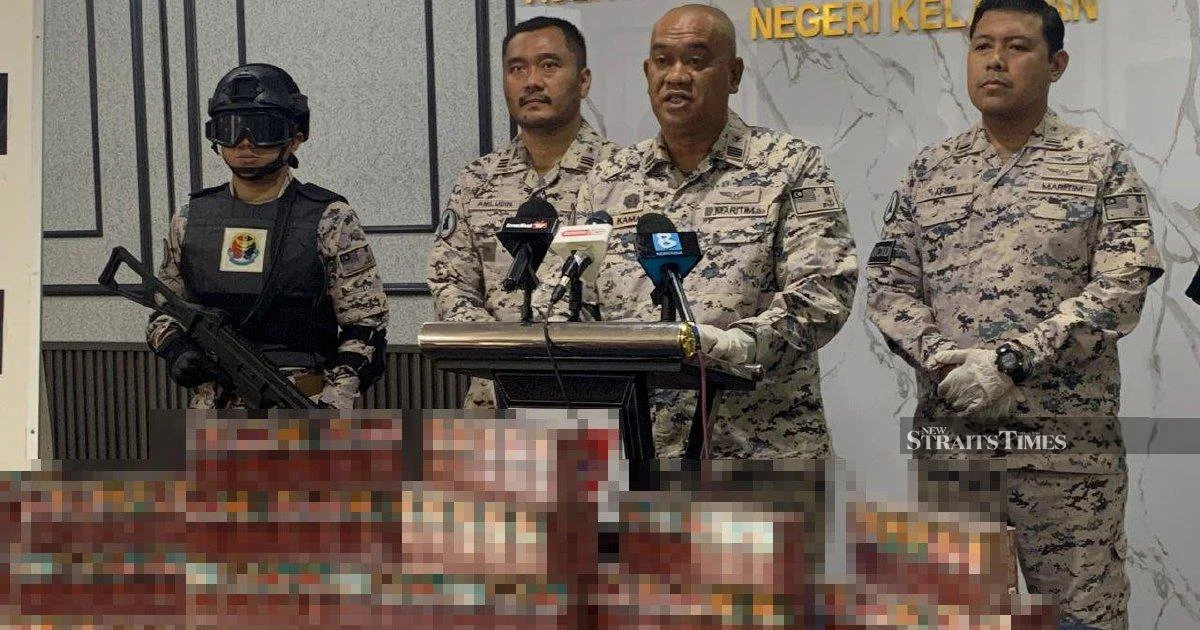
The Malaysian Maritime Enforcement Agency (MMEA) has successfully intercepted a substantial consignment of smuggled cigarettes in a waterborne enforcement operation conducted off the coast of Pasir Puteh in Kelantan. The raid, executed in the waters near Kampung Penambang, netted 24 boxes of contraband cigarettes with an estimated street value of approximately RM212,000. The seizure underscores ongoing efforts by maritime authorities to combat illicit tobacco trafficking through Malaysia's vulnerable coastal corridors.
This latest interception forms part of a broader crackdown on contraband movement through northern Malaysian waterways, particularly along Kelantan's river systems which have historically served as transit points for smugglers moving goods to and from Thailand. The proximity of Kampung Penambang to major shipping lanes and the relative difficulty in monitoring inland waterway traffic have made the region a recurring focal point for enforcement agencies. The MMEA's successful operation demonstrates improved coordination and intelligence-gathering capabilities in detecting suspicious maritime activity.
Cigarette smuggling represents a persistent challenge across Southeast Asia, with Malaysia occupying a strategic position on trafficking routes linking production centres in Thailand and Vietnam with lucrative markets in Singapore and across the peninsula. The illicit trade undermines government tax revenue while providing substantial profit margins for criminal networks operating at both supply and retail levels. A single carton of smuggled cigarettes can yield margins exceeding 40 percent compared to legitimately taxed products, creating powerful incentives for organised smuggling operations.
The financial scale of this particular seizure reflects the substantial economic stakes involved in contraband tobacco movement. With retail cigarette prices in Malaysia subject to excise taxation that has climbed steadily in recent years, price differentials between legitimate and smuggled products have widened considerably. This pricing gap fuels demand among price-sensitive consumers while attracting criminal entrepreneurs willing to assume the risks associated with maritime smuggling operations. Kampung Penambang's location provides convenient access to both river and coastal routes that traditionally receive less intensive monitoring than major ports.
Maritine enforcement agencies across the region face considerable operational constraints when attempting to interdict smuggling along porous waterways. Unlike containerised cargo at major ports that can be systematically scanned and inspected, small-volume shipments moving via river transport or through remote coastal landing points require intelligence-driven interdiction strategies. The MMEA's success in this operation suggests effective information networks, possibly including community tipoffs or intercepted communications regarding planned smuggling movements.
The confiscation carries implications beyond simple criminal enforcement, touching broader questions of public health policy and revenue protection. Unrestricted circulation of cheap cigarettes undermines smoking cessation campaigns and increases consumption rates, particularly among younger demographics and lower-income populations. Simultaneously, lost excise tax revenue—estimated at several billion ringgit annually across the region due to smuggling—represents significant foregone government resources that might otherwise fund healthcare and social programmes.
Thailand's more permissive tobacco pricing compared to Malaysia creates structural incentives for cross-border smuggling along shared maritime boundaries. While both nations maintain cooperative maritime patrols, geographical factors and resource limitations restrict enforcement capacity. The involvement of organised criminal syndicates with substantial capital resources, logistical expertise, and political connections elevates smuggling from opportunistic petty crime to sophisticated enterprise-scale operations capable of circumventing border controls.
The MMEA's operational tempo has accelerated in recent years following organisational restructuring and enhanced interagency coordination with the Royal Malaysian Police's maritime units and customs authorities. Enhanced vessel tracking systems, improved intelligence fusion capabilities, and increased patrols during high-risk periods have contributed to rising seizure numbers. Nevertheless, enforcement agencies acknowledge that detected smuggling represents merely a fraction of overall contraband movement, with successful interceptions ranging from 10 to 30 percent of estimated total flows depending on commodity type and operational focus.
This seizure near Pasir Puteh reflects widening enforcement focus beyond traditional urban smuggling corridors toward remote coastal and riverine areas where criminal operators believe detection risks remain manageable. Kelantan's geography—encompassing extensive coastline, river systems, and isolated landing zones—presents particular operational challenges. Comparable seizures along Terengganu and Pahang coastlines suggest organised smuggling networks maintain distributed operations across multiple entry points, reducing vulnerabilities from single-location enforcement concentrations.
Looking forward, effective smuggling interdiction requires sustained investment in maritime infrastructure, personnel capabilities, and intelligence systems. Regional coordination remains critical given the transnational nature of tobacco trafficking networks. Malaysia's strategic position as both transshipment hub and significant consumer market necessitates comprehensive border security approaches encompassing both maritime and terrestrial routes. The RM212,000 seizure, while significant in isolation, illustrates the ongoing cat-and-mouse dynamics characterising organised smuggling suppression efforts across Southeast Asia.