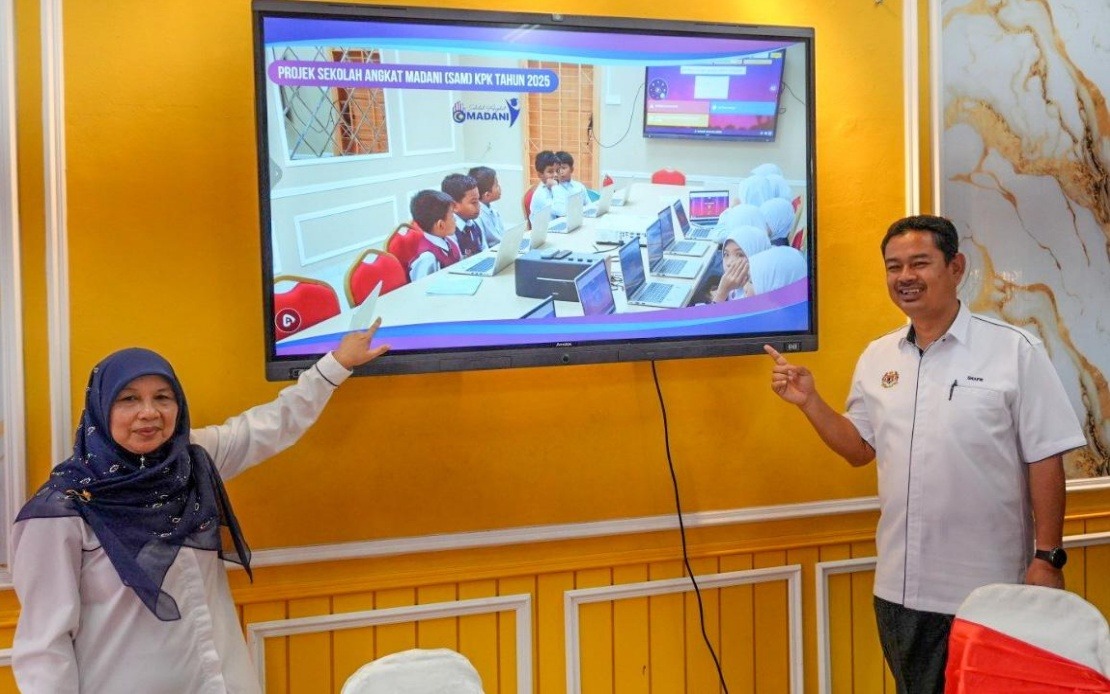
The Ministry of Plantation and Commodities (KPK) has committed RM100,000 towards comprehensive improvements at Sekolah Kebangsaan Bendang Kering in Kuala Kangsar, marking another step in the government's push to enhance educational infrastructure in rural Malaysian communities. The allocation was formally handed over during a ceremony held at the school in Ipoh on June 19, with KPK deputy secretary-general (Strategic Planning and Management) Shafie Taib presiding over the transfer. This initiative reflects a broader policy framework designed to ensure that students in remote and underserved areas have access to facilities comparable to their urban counterparts.
The Malaysian Rubber Board (LGM) has assumed responsibility as the implementing agency for this adoption programme, underscoring how sectoral agencies can leverage their resources and expertise to support national educational objectives. This collaborative approach demonstrates an attempt to distribute responsibility for educational development across government bodies beyond the traditional education ministry, potentially creating a more diverse funding ecosystem. The arrangement signals recognition that improving rural education requires engagement from multiple stakeholders with varying areas of influence and financial capacity.
The RM100,000 has been deployed strategically across multiple campus locations and functional areas. Significant portions have funded physical infrastructure overhauls, including refurbishment of the assembly area and main hall where students gather for collective activities and ceremonies. The ministry also prioritised creating dedicated reading corners designed to cultivate a culture of literacy and independent learning, alongside improvements to preschool classrooms where foundational educational experiences begin. These infrastructure enhancements address a critical gap in rural schooling, where physical deterioration and outdated facilities often compound existing disadvantages related to teacher shortages and limited extracurricular opportunities.
Technology integration features prominently in the upgrade plan. Interactive smartboards have been installed across classrooms, enabling educators to employ digital teaching methodologies that align with contemporary pedagogical approaches. By introducing technology-enhanced learning tools, the school gains capacity to deliver content in more engaging and varied formats, potentially improving comprehension and student retention rates. However, such investments typically require ongoing technical support and teacher training to realise their full potential—considerations that extend beyond the initial capital allocation.
Comfort and learning environment quality have received deliberate attention through the installation of air conditioning units throughout the facility. In Malaysia's tropical climate, functional cooling systems directly impact student concentration, comfort during extended study periods, and general school attendance. Educational signage and new classroom furniture round out the physical improvements, creating spaces that feel contemporary and well-maintained rather than neglected or makeshift. These elements collectively communicate to students that their educational experiences are valued, which carries psychological and motivational dimensions beyond their utilitarian functions.
Beyond infrastructure, the programme encompasses structured academic support mechanisms targeting core subjects. A dedicated academic performance scheme has been introduced with specific focus on Malay, English, Science, and Mathematics—the traditional pillars of Malaysian primary education. Students demonstrating outstanding achievement in these subjects receive recognition and incentives, establishing systems that reward academic excellence and potentially motivate peers to pursue higher standards. This incentivisation approach acknowledges that rural students often face economic pressures that might otherwise discourage educational focus, and that explicit recognition of achievement can meaningfully influence motivation and persistence.
Character and leadership development initiatives complement the academic programming. The Student Leadership Motivation Camp and Student Talent Development Camp represent structured efforts to cultivate soft skills, confidence, and civic awareness alongside formal curriculum content. These programmes address growing recognition that contemporary workforce demands extend far beyond subject mastery to encompass communication, problem-solving, teamwork, and adaptability. For rural students who may have limited exposure to leadership frameworks or mentorship relationships, such structured interventions can prove particularly transformative in expanding their conception of possible futures and personal capabilities.
The selection of SK Bendang Kering specifically reflects deliberate targeting of schools in underserved areas rather than broad or indiscriminate distribution of adoption programme resources. This focus responds to documented disparities in educational quality and facility standards between urban and rural Malaysia, where geographic isolation has historically translated into infrastructure and resource disadvantages. By concentrating adoption scheme efforts on rural institutions, the government acknowledges that achieving educational equity requires unequal distribution of support proportionate to existing disadvantages—a principle central to meaningful inclusion policy.
The adoption programme initiative represents part of a wider government commitment to educational development and human capital enhancement, themes that resonate across Malaysia's policy landscape amid competition for regional economic competitiveness. Upgrading rural school facilities and academic support systems directly contributes to developing skilled workforces from all geographic regions, reducing the human capital wastage that occurs when capable students in underprivileged areas cannot access quality education. The initiative thus bridges educational access and broader economic development objectives, framing school improvement not merely as welfare provision but as essential infrastructure investment.
The ministry has expressed confidence that sustained implementation of such adoption programmes will measurably reduce disparities in educational access and facility quality across Malaysia's diverse geography. By establishing rural schools as platforms for empowerment rather than sites of deficit, these interventions aim to produce graduates equipped with knowledge, practical skills, and competitive capacities regardless of their initial socioeconomic circumstances. However, sustainability and ongoing resource allocation remain critical considerations, as infrastructure improvements without corresponding operational funding for maintenance, staff development, and programme continuity risk becoming symbolic rather than transformative interventions.

