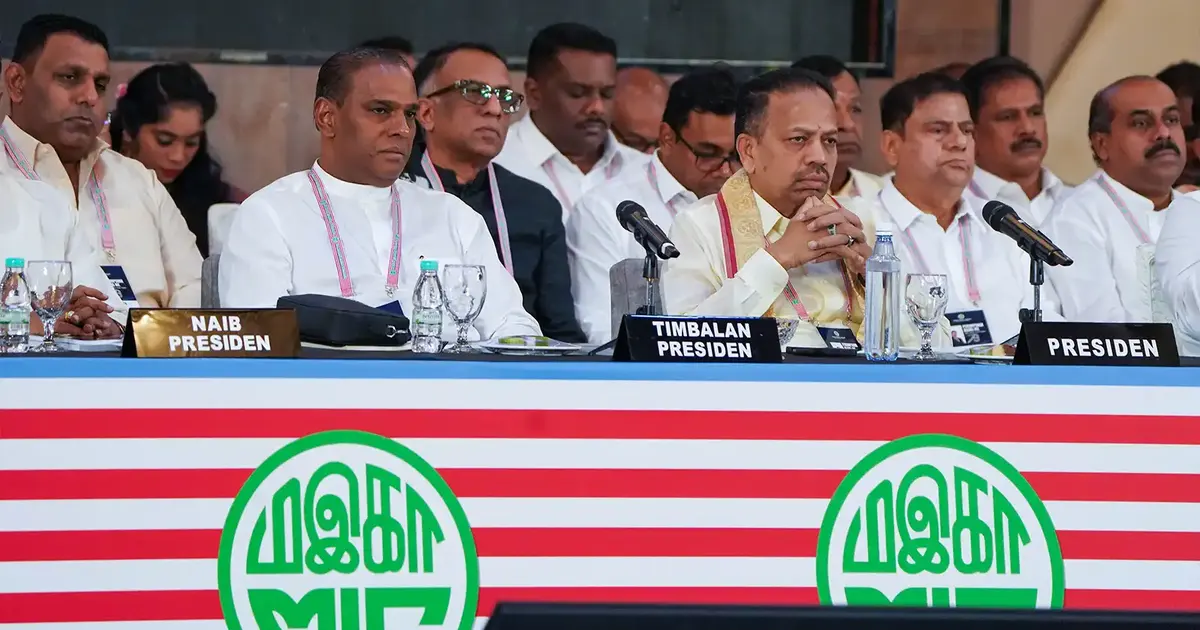
The Malaysian Indian Congress (MIC) has outlined its electoral strategy for the forthcoming Johor state assembly polls, signalling a calculated approach to maximising Barisan Nasional's representation in the southern state. Rather than fielding candidates across multiple constituencies, the party is focusing its resources on defending two seats directly whilst engaging in seat-sharing negotiations with coalition partner Umno that will see one additional seat ceded to the Malay-Muslim political heavyweight.
This targeted approach reflects the evolving dynamics within Barisan Nasional, where seat allocation has become increasingly sophisticated as the coalition seeks to prevent vote-splitting and maximise its overall performance in state-level contests. The Indian-based component party, which has faced demographic and electoral pressures in recent years as the Indian Malaysian voter base has diversified politically, is concentrating on constituencies where it maintains established grassroots presence and community networks. The decision to swap one seat with Umno underscores how coalition arithmetic now operates at granular levels, with larger partners effectively redistributing contests to optimise outcomes.
Among the seats MIC is preparing to contest is Bukit Batu, a constituency that carries historical significance for the party and where it maintains organisational infrastructure. The exact composition of the full four-seat allocation that MIC is expected to pursue overall—comprising the two seats it will directly defend, the one it is swapping away to Umno, and an additional seat—remains subject to final negotiations within the coalition structure. These arrangements typically conclude only weeks before nomination day, as different BN components horse-trade over winnable constituencies and strategic positioning.
For Malaysian readers, particularly in Johor and the broader Indian Malaysian community, this development carries implications for minority representation within state governance. MIC's focus on defending established strongholds rather than expanding into new territory suggests a defensive crouch by the party, which faces competition not only from other BN members but also from opposition coalitions that have made inroads into previously reliable voting blocs. The party's willingness to cede seats to Umno, whilst standard practice in coalition politics, reflects underlying questions about MIC's independent electoral capacity and its ability to mobilise Indian Malaysian voters who have become increasingly willing to split their votes.
The seat-sharing arrangement also illuminates the internal hierarchy within Barisan Nasional, where Umno retains disproportionate negotiating power as the coalition's dominant member. When a larger coalition partner requires a particular seat for strategic or representational reasons, smaller components like MIC typically accommodate such requests rather than risk broader coalition tensions. This has become standard practice across Malaysian elections, though it raises questions about how effectively minority communities like Indian Malaysians are represented when their political vehicles are relegated to negotiating for defensive positions rather than expanding electoral influence.
Johor remains strategically critical for all Malaysian political formations. As the nation's second-largest state by population and a traditional Barisan Nasional stronghold, Johor's electoral outcomes reverberate across peninsular politics. The state election will serve as a significant test of whether the ruling coalition can stabilise its position after recent electoral setbacks in other states, and whether it can maintain the delicate balance between its component parties that successive governments have struggled to preserve. MIC's constrained role in this contest mirrors broader challenges facing ethnic-based parties within multi-ethnic Malaysia's electoral architecture.
The party's focus on two directly-contested seats allows MIC to concentrate campaign resources and messaging on communities where it retains organisational depth. This pragmatic approach, whilst potentially limiting the party's overall state representation, reflects lessons learned from recent elections where overextension into unfavourable territory has resulted in humiliating defeats for component parties. By retreating to defensible ground, MIC calculates that it can secure at least two seats and thereby maintain its parliamentary relevance and claim to ministerial positions should Barisan Nasional prevail in the state.
From a Southeast Asian perspective, Malaysia's coalition politics demonstrate how power-sharing arrangements operate in plural societies attempting to balance ethnic and religious representation through institutionalised party structures. The negotiations now underway within Barisan Nasional reflect classic consociational democracy mechanics, where minority representation is negotiated rather than competed for openly. This system has produced decades of relative stability but faces growing strain as voter demographics shift and new political movements challenge traditional alignments.
The upcoming Johor election will reveal whether MIC's defensive strategy yields sufficient results to justify continued confidence in the party's relevance. If the Indian-based component fails to secure even its limited two seats, or faces embarrassingly narrow victory margins, pressure will intensify for further reforms within coalition architecture. Alternatively, success might validate the more modest approach and encourage other struggling BN components to similarly focus resources rather than attempting broad-based campaigns.