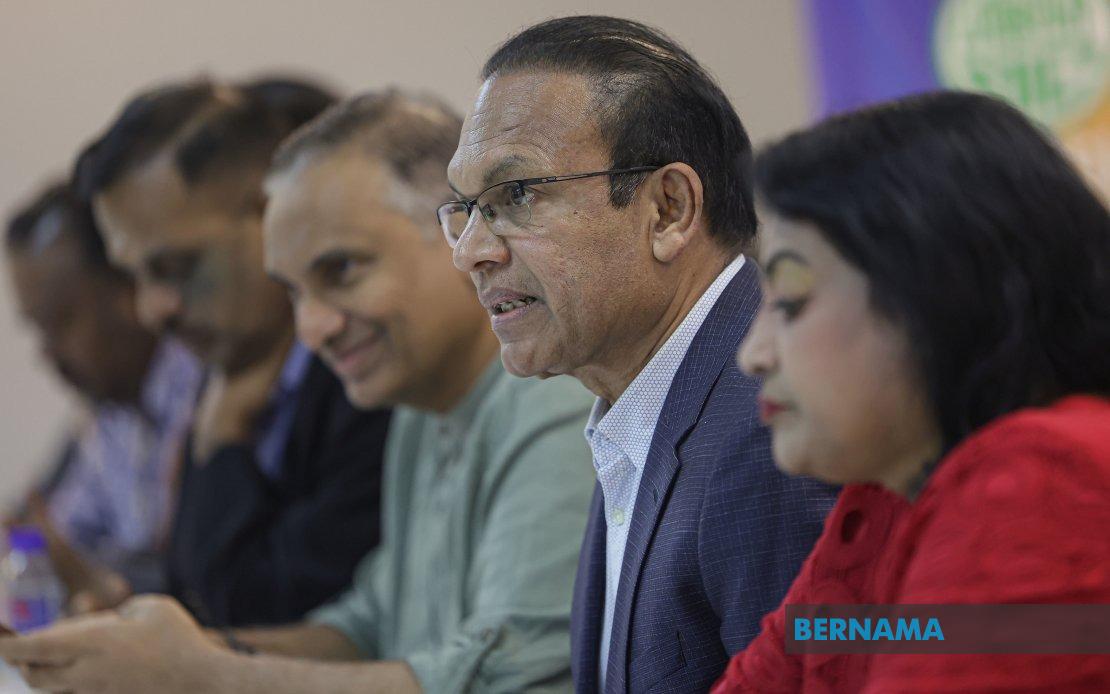
The Malaysian Indian Congress (MIC) will field candidates in four constituencies during the upcoming Johor state election, Datuk T. Murugiah announced at party headquarters in Kuala Lumpur on June 16. The allocation was confirmed by MIC president Tan Sri SA. Vigneswaran following recent consultations with Barisan Nasional component parties regarding electoral arrangements for both Johor and Negeri Sembilan. This represents a significant commitment from the long-established Indian-interest party as it prepares for what is expected to be a competitive campaign across the peninsular state.
While MIC's seat allocation in Johor has been settled, discussions concerning its participation in the Negeri Sembilan contest remain ongoing, with party leadership yet to finalise the specific number of constituencies it will contest in that state. Murugiah indicated that organisational preparations are proceeding at pace, reflecting the party's determination to mount an effective campaign ahead of the July 11 polling date. The compressed timeline between the announcement and nomination day, set for June 27, underscores the urgency with which BN's component parties are mobilising their resources across the peninsula.
To ensure campaign messaging reaches the Indian community effectively across all 56 state seats that BN is contesting in Johor, MIC is investing substantially in cadre development. The party has organised a intensive two-day training programme for approximately 150 speakers, to be held in Johor Bahru over the coming weekend. These trained campaigners will be equipped with public speaking skills and party-approved messaging, enabling them to engage voters across the entire spectrum of state constituencies and consolidate support within Johor's Indian demographic.
MIC's prospective candidate slate reflects a strategic balance between experience and renewal. According to party insiders, around half of the candidates fielded will be new entrants to electoral politics, suggesting the party is attempting to energise its grassroots appeal while retaining institutional knowledge. The party appears poised to contest Kemelah, Kahang, and Bukit Batu, three constituencies it previously held or narrowly lost. Notably, the party has negotiated a seat-swap arrangement with UMNO, relinquishing Tenggaroh to secure Perling, a manoeuvre that reflects the complex coalition dynamics within Barisan Nasional and the ongoing negotiations over constituency distribution.
MIC's performance in the 2022 Johor election provides relevant context for its current campaign. In that contest, the party successfully retained Kemelah, Kahang, and Tenggaroh, winning three of its four allocated seats, though it suffered defeat in Bukit Batu. The current allocation effectively restores MIC's presence to four seats, providing the party with a platform to rebuild its standing in constituencies where it has demonstrated electoral competitiveness. The Tenggaroh-Perling exchange reflects evolving BN coalition negotiations, as parties recalibrate their electoral strategies in response to shifting demographic and political conditions.
In Negeri Sembilan, MIC is positioned to potentially contest two seats, though formal confirmation remains pending. This would expand the party's overall footprint across the two-state electoral cycle. Given that nomination dates in Negeri Sembilan fall on July 18, substantially after the Johor nominations, MIC's leadership has additional time to finalise candidate selection and campaign positioning in that state. The staggered election schedule, with Johor voting on July 11 and Negeri Sembilan on August 1, may provide strategic advantages as the party tests campaign messages and evaluates voter responses in the earlier contest.
Beyond electoral politics, MIC is leveraging its 80th anniversary celebrations to strengthen community engagement and party visibility. The party has organised sports competitions across 152 locations nationwide, scheduled for this Saturday, encompassing football, badminton, bowling, carrom, and hiking. Murugiah's explicit invitation to Malaysians of all ethnic backgrounds to participate signals MIC's attempt to transcend its traditional role as a single-community representative and position itself as an inclusive organisation with broad appeal. Such grassroots initiatives, executed simultaneously across multiple constituencies, serve the dual function of celebrating institutional longevity whilst maintaining organisational momentum ahead of state elections.
The broader context of MIC's electoral participation reflects the party's positioning within Malaysia's dominant coalition politics. As a BN component with a traditionally defined constituency, MIC operates within constraints imposed by coalition mathematics and seat-sharing agreements negotiated with larger partners, principally UMNO. The four-seat allocation in Johor, whilst modest compared to UMNO's portfolio, represents MIC's negotiated floor within Barisan Nasional's power-sharing arrangement. The party's strategic imperative is to maximise its return within this constrained footprint, thereby justifying its continued place within the coalition whilst demonstrating electoral viability to its core Indian constituency.
MIC's emphasis on candidate training and messaging discipline suggests heightened awareness that electoral competition in these constituencies remains genuinely contested. The allocation of resources to speaker preparation, encompassing public speaking techniques and approved talking points, indicates party strategists recognise that effective ground-level engagement will determine electoral outcomes. As Malaysia's Indian-origin voters increasingly evaluate parties on grounds beyond traditional community-based appeals, MIC must demonstrate responsive governance, policy effectiveness, and inclusive representation to retain voter loyalty and attract new supporters.
The nomination process commencing June 27 for Johor will provide clarity regarding candidate quality and party unity. The selection of approximately 50 percent new candidates carries both opportunity and risk. New faces may energise campaigns and signal organisational renewal, yet their lack of electoral experience could prove disadvantageous against entrenched opposition competitors. MIC's leadership will need to ensure that candidate selection balances youth and vigour against the electoral knowledge and community networks that established figures provide. The calibre of candidates announced on or shortly after June 27 will substantially influence perceptions of MIC's electoral prospects and coalition credibility.