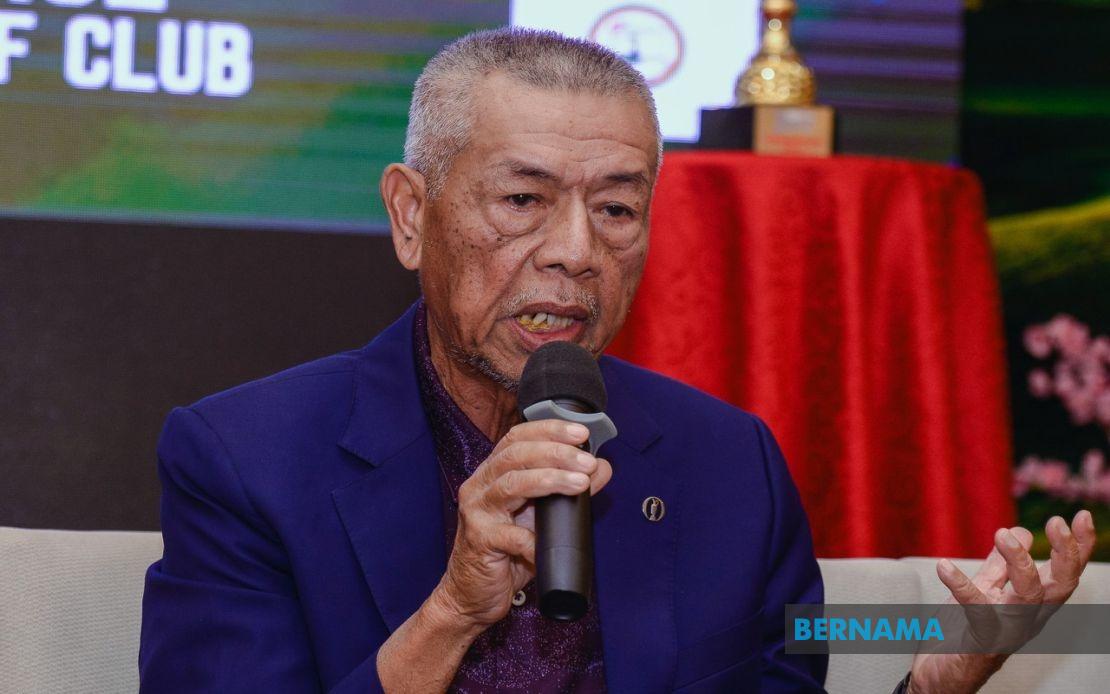
The Malaysian Golf Association has made a formal appeal to the Ministry of Youth and Sports to establish a dedicated full-time national coach position, underscoring the federation's commitment to bolstering its competitive standing ahead of hosting the 2027 SEA Games. During a high-level meeting with the ministry's leadership, MGA president Tan Sri Mohd Anwar Mohd Nor outlined this requirement as essential to implementing a more systematic and cohesive preparation strategy for the national golf contingent. The proposal reflects growing recognition within Malaysian sports circles that dedicated coaching infrastructure remains critical to competitive success at regional sporting events.
Tan Sri Mohd Anwar disclosed these developments while launching the 100PLUS MGA National Junior Development Programme Junior Series 2026 at The Mines Resort & Golf Club in Serdang. He emphasised that securing a high-calibre golf coach of international standing would enable MGA to design comprehensive long-term athlete development pathways rather than relying on ad-hoc coaching arrangements. The permanence of such a position, he argued, would provide continuity and institutional memory essential for nurturing emerging talents through their competitive progression. This approach aligns with contemporary best practices in sports development, where sustained coaching relationships prove instrumental in identifying and cultivating elite performers.
Coordination between MGA, the Ministry of Youth and Sports, and the National Sports Council emerges as pivotal to realising these aspirations. Tan Sri Mohd Anwar stressed that effective collaboration among these bodies remains crucial for translating various athlete development initiatives into tangible results. The ministry's involvement would streamline funding mechanisms and institutional support mechanisms that individual sporting associations often struggle to mobilise independently. Such partnerships also enable government resources to be deployed strategically across multiple sports programmes, ensuring that golf receives appropriate allocation within the broader national sports agenda.
Beyond coaching personnel, MGA has already begun architecting a multifaceted preparation schedule for the September 2027 competition. The federation is exploring possibilities to conduct specialised training programmes in Sarawak, leveraging the state's golfing facilities and resources. This geographic diversification of training venues reflects a deliberate strategy to expose national team members to different course conditions and playing environments, ultimately enhancing their tactical adaptability. Tan Sri Mohd Anwar recently engaged with Sarawak's Minister of Youth, Sports and Entrepreneur Development, Datuk Seri Abdul Karim Rahman Hamzah, to formalise these collaborative arrangements and secure state-level institutional support.
The timing of these initiatives carries particular significance given that Malaysia will serve as host nation. Historically, hosting nations experience subtle advantages—familiarity with venues, proximity to home support, reduced travel fatigue—though such benefits remain marginal against the mounting expectations placed upon domestic athletes. The onus on Malaysian golfers to perform creditably before home audiences intensifies the pressure to establish world-class preparation infrastructure now, rather than in the compressed final months before competition. The establishment of a permanent coaching position signals that MGA recognises this window for organisational development is rapidly closing.
The junior development programme launch simultaneously underscores MGA's conviction that sustainable competitive excellence emerges from systematic youth talent identification and cultivation. The 100PLUS backing of the National Junior Development Programme demonstrates commercial sector confidence in golf's growth trajectory within Malaysia's sports ecosystem. Youth development initiatives typically require five to ten years before generating elite performers capable of winning regional medals, meaning investments made today will directly influence the composition and capability of teams competing in 2027 and beyond. This forward-looking perspective reflects maturity in MGA's strategic thinking.
Malaysia's golf tradition, while respectable, has not consistently produced medal-winning performances at SEA Games comparable to nations such as Thailand or Indonesia. Structural deficiencies—inconsistent coaching quality, fragmented talent pathways, insufficient funding—have historically constrained the development of Malaysian golfers capable of competing at Southeast Asia's highest levels. The push for a permanent national coach position directly targets these systemic weaknesses, representing a philosophical shift toward viewing elite golf development as requiring state-equivalent professional infrastructure rather than relying on volunteer enthusiasm and part-time expertise.
Regionally, the competitive landscape for golf remains dynamic. Thailand maintains established golfing institutions and has produced consistent medal contenders, while Vietnam has invested heavily in golf development infrastructure. Indonesia's golfing prowess derives partly from its abundance of championship-standard courses and growing commercial investment in the sport. Malaysia's initiative to establish permanent coaching positions signals a determination to remain competitive within this intensifying regional environment. The 2027 Games will serve as a crucial test of whether such structural investments translate into improved performance metrics.
From a broader sports policy perspective, MGA's approach reflects evolving thinking about how federations should interface with government agencies. Rather than operating in isolation, modern sporting organisations increasingly recognise that achieving competitive excellence demands synergistic relationships with multiple government and commercial stakeholders. The ministry's role extends beyond funding provision to encompassing strategic guidance, resource coordination, and institutional legitimacy that elevates particular sporting activities within the national consciousness. Such partnerships, when functioning effectively, generate multiplicative benefits for athlete development.
The financial implications of establishing a permanent national coach position warrant consideration. Recruiting an internationally credentialled coach typically requires competitive remuneration packages, ongoing professional development opportunities, and administrative support structures. Whether the Ministry of Youth and Sports will allocate dedicated budget lines specifically for golf coaching, or whether such costs will be absorbed through existing sporting budgets, remains unresolved. These budgetary questions will ultimately determine the implementation timeline and the calibre of coaching talent that MGA can attract.
Looking ahead, the success of MGA's initiatives will be measured not merely by the establishment of institutional structures but by tangible improvements in national team performance. The 2027 SEA Games will provide an objective assessment of whether permanent coaching arrangements, junior development programmes, and multi-venue training strategies collectively translate into enhanced competitive outcomes. For Malaysian golf and for the broader sporting community, these preparations represent a critical investment in demonstrating that systematic institutional development yields measurable sporting results.

