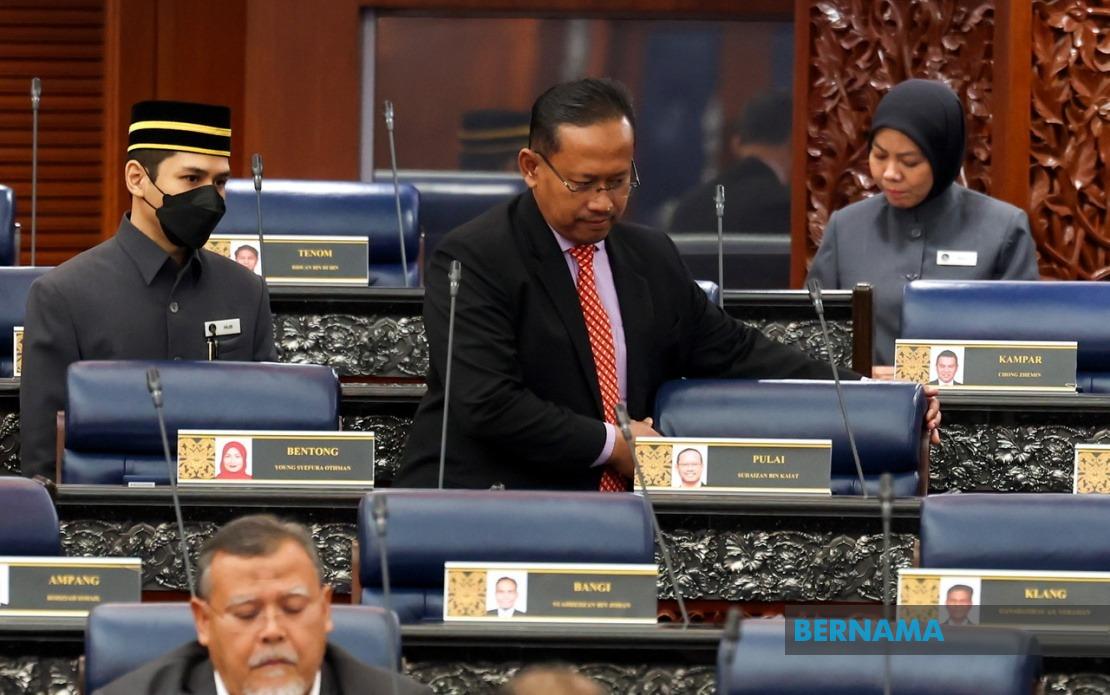
The mounting toll of mental health problems threatens to become a significant drag on Malaysia's economy, with parliamentary officials warning that the financial fallout could reach RM25.3 billion by the end of the decade unless policymakers move decisively to address the underlying causes. Speaking in the Dewan Rakyat, Special Select Committee on Health chairman Suhaizan Kaiat framed the issue not merely as a clinical challenge for the healthcare system but as a critical factor that will shape the nation's economic trajectory and capacity for sustained growth. The projected financial burden reflects a troubling acceleration in mental health conditions across Malaysian demographics, signalling a public health emergency with profound implications for workforce productivity, healthcare expenditure, and social cohesion.
The scale of the problem becomes apparent when examining the epidemiological trends documented by health authorities over recent years. Depression diagnoses among Malaysian adults aged 16 and above have roughly doubled in just four years, climbing from 2.3 per cent in 2019 to 4.6 per cent in 2023—a shift that translates to approximately one million individuals now grappling with the condition. This rising prevalence reflects not simply improved diagnostic practices or heightened awareness, but rather a genuine expansion in the proportion of the population experiencing clinically significant depressive symptoms. The trajectory suggests an accelerating problem rather than a stabilising one, indicating that without intervention, the figures are likely to continue deteriorating as the decade progresses.
The mental health crisis extends well beyond the adult population, encompassing alarming trends among younger Malaysians who will form the backbone of the future workforce. Children's mental health problems have more than doubled within the same timeframe, surging from 7.9 per cent to 16.5 per cent. Among adolescents aged 13 to 17, the situation is particularly stark: one in four young people is experiencing depression. These statistics carry profound implications for educational attainment, social development, and long-term psychological wellbeing, suggesting that a cohort of young Malaysians is entering their formative years burdened by mental health challenges that risk becoming entrenched without adequate support and treatment.
Suhaizan emphasised that these are not merely abstract statistics but indicators of genuine suffering within Malaysian society and stress points within families and communities struggling to cope with mental health conditions. The concentration of mental health problems among young people points to multiple contributing factors—examination pressure, social media-driven anxiety, economic uncertainty, and the persistent social stigma surrounding mental illness—all of which create barriers to help-seeking behaviour. By the time individuals reach adulthood, untreated childhood and adolescent depression often evolves into chronic conditions that compromise employment prospects, relationship quality, and overall life satisfaction, thereby perpetuating cycles of disadvantage.
In response to these escalating challenges, the parliamentary health committee has developed a comprehensive reform agenda centred on 12 strategic recommendations spanning three primary intervention areas. Immediate measures under consideration include substantially expanding the reach of crisis helplines—essential infrastructure that provides entry points for individuals in acute distress—alongside nationwide anti-stigma campaigns designed to shift public attitudes toward mental health treatment. The committee also proposes implementing stricter ethical protocols governing how media outlets report on mental health issues and suicide, recognising that irresponsible coverage can inadvertently increase harm through contagion effects.
Parliamentary discussion revealed significant support for holistic system redesign rather than incremental tinkering with existing structures. Datuk Dr Radzi Jidin advocated for establishing an integrated one-stop centre model that would consolidate mental health support services and streamline referral pathways, eliminating the fragmentation that currently forces individuals and families to navigate multiple agencies and bureaucratic procedures. Dr Radzi also highlighted an important equity concern: assistance programmes disproportionately target the B40 income group, yet the M40 category—caught between ineligibility for targeted support and insufficient income to afford private care—faces mounting financial pressures that frequently precipitate mental health crises.
Lim Lip Eng proposed that implementation of mental health reforms must be underpinned by concrete timelines and measurable key performance indicators, transforming aspirational policy statements into accountable delivery mechanisms. His recommendations included urgently filling critical vacancies in the mental health workforce, recruiting clinicians and support staff according to district-level demand patterns rather than centralised allocations that may misalign resources with actual need. Early intervention in schools and communities emerged as a recurring priority, with emphasis on expanding Community Mental Health Centres (Mentari) and outreach teams serving homeless populations and other marginalised groups vulnerable to mental health crises.
There was particular recognition among participating members that emergency crisis response systems must function without bureaucratic impediments that delay access to care during acute episodes. Teresa Kok proposed shifting away from the institutional model of psychiatric hospitalisation toward a diversified spectrum of community-based alternatives, including intermediate care facilities, psychiatric rehabilitation centres, and dedicated community care homes. This approach reflects international evidence suggesting that recovery outcomes improve when individuals receive treatment within their home communities rather than in large institutional settings that may intensify social isolation and reduce prospects for maintaining employment and community connections.
The legislative discussion underscored a cross-party acknowledgement that mental health reform represents an urgent national priority with economic, social, and humanitarian dimensions. Beyond the immediate human suffering evident in rising depression and suicide rates, untreated mental illness exerts substantial indirect costs through lost productivity, increased healthcare utilisation, and reduced social participation. The RM25.3 billion projection by 2030 likely understates the true economic burden when accounting for reduced workplace performance, increased absenteeism, and the long-term educational underachievement stemming from unaddressed mental health problems in childhood and adolescence.
For Malaysia's business and policy communities, the mental health crisis presents both a challenge and an opportunity. Organisations that proactively support employee mental wellbeing through workplace initiatives, destigmatisation efforts, and accessible counselling services position themselves as attractive employers while reducing healthcare costs and boosting productivity. Government implementation of the parliamentary committee's recommendations will require sustained funding, workforce development, and genuine integration across health, education, and social services—a level of coordination that historically has proven difficult to achieve but remains essential for converting policy intentions into measurable improvements in population mental health.
The window for preventive action remains open, but the narrowing trend in mental health indicators suggests that delay carries significant costs. Early intervention in schools, accessible community mental health services, and workplace-based support programmes could substantially reduce the projected economic burden while alleviating the immense suffering currently endured by millions of Malaysians. Success will depend on whether government and non-government stakeholders can mobilise the political will, financial resources, and human capacity to implement comprehensive reforms outlined by parliament, transforming what remains a fragmented, under-resourced system into an integrated network capable of meeting the scale of current and projected mental health needs.

