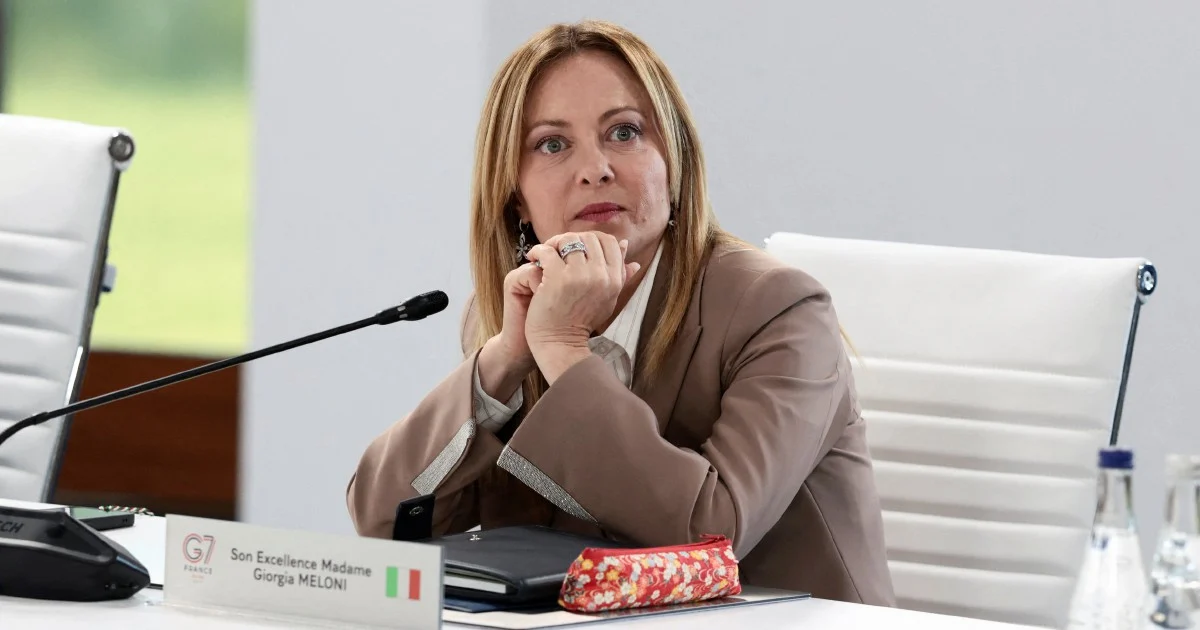
Italian Prime Minister Giorgia Meloni's relationship with United States President Donald Trump has undergone a significant reversal, moving from early enthusiasm to growing friction. Her trajectory from confidant to critic illuminates the volatile nature of personal diplomacy between leaders and suggests that initial optimism about a strengthened transatlantic partnership may have been premature. When Trump assumed office for his second term in 2025, Meloni was distinguished as the sole European head of government extending an invitation to the inauguration, a decision that symbolised Rome's distinctive positioning within European politics and hinted at a forthcoming period of enhanced bilateral cooperation.
The Italian premier's prominent attendance at Trump's inaugural celebration represented a clear diplomatic statement. By being the only continental European leader to grace the ceremony, Meloni signalled her government's comfort with a closer alignment with Washington at a moment when many fellow EU counterparts maintained distance. This gesture suggested Rome was charting an independent course within European corridors, prioritising direct ties with the incoming American administration over potential coordinated continental responses. Her willingness to embrace the political outsider and controversial figure stood out amid broader European scepticism of Trump's second coming, positioning Italy as a bridge between Washington and the continent.
Yet this honeymoon period appears to have fractured more rapidly than anticipated. The shift from supporter to opponent reflects the practical challenges that emerge when personal political affinity encounters the grinding realities of competing national interests, trade negotiations, and divergent strategic priorities. Meloni's initial enthusiasm for the Trump administration has given way to public criticism, a change that deserves careful examination for what it reveals about both bilateral relations and Italy's broader European position. The transformation suggests that ideological alignment at the elite level does not necessarily translate into harmonious relations once governance begins in earnest.
The deterioration holds significance beyond Rome and Washington. Italy occupies a strategically important position within the European Union and NATO, serving as a major economy and a nation with substantial influence over Mediterranean affairs. Should Rome drift from its early pro-Trump positioning, it complicates any strategy Washington might pursue to cultivate individual European capitals rather than dealing with unified EU institutions. Conversely, if Meloni faces domestic or European pressure to distance herself from Trump, her shifting rhetoric may reflect not a genuine change of conviction but rather the constraints of operating simultaneously within multiple political contexts—satisfying Brussels bureaucrats, fellow EU governments, and her own electorate whilst maintaining some semblance of bilateral goodwill.
Meloni's initial embrace of Trump occurred against the backdrop of her right-wing political pedigree and ideological affinity with Trump's nationalist and populist messaging. Her Brothers of Italy party shares rhetorical and programmatic overlaps with Trumpist politics, including scepticism toward multilateral institutions, prioritisation of national sovereignty, and appeals to traditional values. These commonalities created a natural political gravitational pull, suggesting that the relationship could withstand ordinary diplomatic friction. Yet the journey from the inauguration podium to public criticism indicates that shared ideology matters less than immediate policy conflicts when tensions arise.
Trade and economic considerations likely feature prominently in the deterioration. Trump's administration has demonstrated willingness to pursue protectionist policies and to threaten tariffs against long-standing allies, and Italy's export-dependent economy faces vulnerability to American trade restrictions. The European Union as a bloc, and Italy as a member state, might find themselves targeted by tariff actions or other punitive measures. Additionally, Trump's foreign policy unpredictability—particularly regarding alliances, military commitments, and regional conflicts—may have prompted Meloni to recalibrate her public positioning to avoid appearing too closely aligned with potentially destabilising American decisions.
Domestic political factors in Italy may also explain Meloni's shift. Whilst her government enjoys a coalition, broader Italian public opinion and intellectual circles remain more aligned with European integration and institutional stability than with Trumpist politics. Excessive association with Trump could invite criticism from opposition parties and generate tension within her coalition partners. By publicly criticising the American president, Meloni may be attempting to inoculate her government against accusations of being overly beholden to Washington or of abandoning distinctly European interests for American preferences.
The episode illuminates a broader dynamic within contemporary European politics: the tension between individual leader affinity and structural European constraints. Meloni cannot unilaterally withdraw Italy from NATO or the European Union, nor can she ignore consensus positions adopted within EU institutions. When her personal inclination toward Trump collides with these structural realities, public criticism becomes a tool for managing multiple constituencies simultaneously. She affirms her European credentials and her government's commitment to continental institutions whilst maintaining the possibility of bilateral engagement with Washington should circumstances change.
Looking forward, the Meloni-Trump relationship will likely remain unstable and transactional. Neither leader has demonstrated strong capacity for sustained personal diplomacy or patience with contrary views, and both operate within domestic political systems that demand regular affirmation from core supporters. The golden age promised at the inauguration appears increasingly distant, replaced by the more typical pattern of frequent misalignments and rhetorical friction punctuated by moments of pragmatic accommodation. For Southeast Asian observers, the situation underscores how quickly personal political alignments can dissolve when tested by competing interests, a lesson potentially relevant as regional leaders navigate great power competition.

