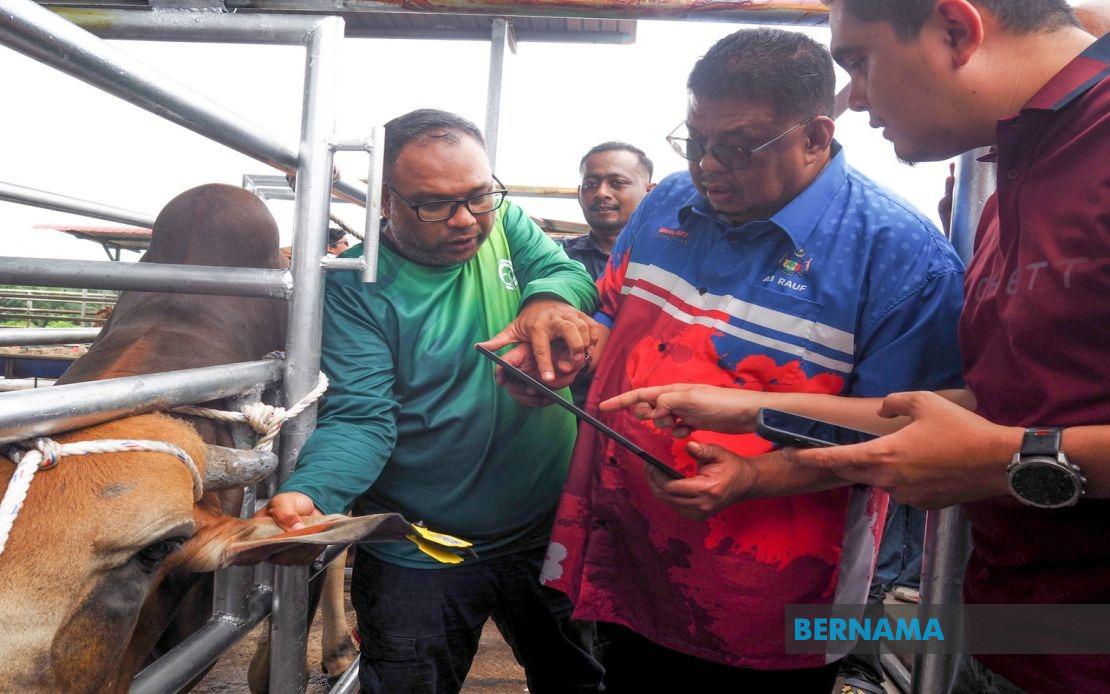
Melaka has rolled out an innovative livestock identification system using quick response codes, a digitalisation initiative designed to address mounting concerns over stray animals and improve accountability among farm operators across the state. The Livestock QR Tag system, developed through collaboration between the Melaka Chief Minister Department and the state's Veterinary Services Division, represents a technological shift in how authorities track and manage the state's substantial cattle and buffalo population.
The system emerged from Chief Minister Datuk Seri Ab Rauf Yusoh's vision to modernise livestock governance while pursuing Melaka's broader ambition to function as a digitally enabled and liveable state. According to Mahathir Mustafa, chief assistant secretary of the Local Government Unit within the Chief Minister Department, the project aligns with the state administration's commitment to deploying technology across economic sectors to enhance service delivery and regulatory effectiveness.
Each registered animal receives a unique physical tag embedded with a QR code and identification number, allowing immediate access to essential farm data through simple smartphone scanning. This design captures critical information including the breeder's name, registered premises identifier, and farm location. The tag serves as permanent livestock identification throughout the animal's lifetime, remaining unchanged even if ownership transfers. Ownership transitions require only a database update in the eVetPermit Malaysia system rather than physical tag replacement, maintaining accurate records while minimising operational costs.
The initiative addresses a demonstrable public safety challenge in Melaka. Since 2023, the state has recorded 835 traffic accidents involving livestock, alongside more than 50 formal complaints about stray animals roaming residential and commercial areas. These incidents expose residents and motorists to genuine danger while complicating law enforcement responses. By enabling rapid owner identification when incidents occur, authorities can pursue accountability and implement corrective measures faster, reducing response times and insurance complications.
Implementation commenced in early June, with 2,000 animals already tagged by that point. The state government aims to progressively extend coverage across Melaka's estimated 32,000 registered cattle and buffalo. This phased approach allows infrastructure adaptation and provides time for breeders to familiarise themselves with the system. The expansion programme reflects realistic ambitions about large-scale technological adoption in agricultural sectors where compliance cannot be mandated instantly.
Beyond immediate owner identification, the system strengthens disease surveillance and movement monitoring. Veterinary authorities gain enhanced capability to track animal movements between premises, identify potential disease clusters, and respond swiftly to outbreaks. This surveillance capacity carries significance throughout Southeast Asia, where livestock diseases can create substantial economic losses and occasionally pose zoonotic risks to human populations. Melaka's implementation may establish a model that neighbouring states or countries examine for adaptation.
The QR tagging initiative also addresses chronic enforcement challenges surrounding stray livestock. Farm operators previously faced minimal consequences for animals escaping onto public roads or entering residential zones. The rapid identification capability shifts accountability dynamics. Knowing that authorities can immediately contact them regarding wayward animals, farmers gain stronger incentives to maintain adequate containment infrastructure and oversight. This preventative dimension complements reactive enforcement.
Farm operators have responded positively to the programme, viewing it as protecting their commercial interests rather than representing bureaucratic burden. Many understand that stray animals damage the industry's public image and create negative sentiment toward livestock farming generally. The system's transparency potential appeals to conscientious operators seeking to distinguish themselves from negligent competitors. Such buy-in from stakeholders significantly improves adoption prospects compared to top-down regulatory mandates lacking sector support.
The state government subsidises tag installation costs at RM6.50 per unit through the end of 2024, fully absorbing expenses to encourage voluntary participation during the critical launch phase. This financial commitment demonstrates serious commitment to implementation. Beginning in 2027, replacement tags will cost RM5 per head, a modest fee unlikely to deter farmers but sufficient to maintain ongoing system engagement. The delayed cost-sharing transition provides breeders adjustment time while establishing long-term financial sustainability.
Successful execution depends on sustained coordination between the Local Government Unit, Veterinary Services Division, and municipal authorities. Each entity contributes essential functions: local government provides administrative infrastructure, veterinary services furnish technical expertise and animal welfare oversight, while municipalities enforce compliance and respond to public complaints. This tripartite structure, while potentially complex, distributes workload appropriately across specialised agencies.
Melaka's approach carries implications beyond the state's borders. Livestock identification systems increasingly interest agricultural authorities throughout Malaysia and the broader region as urbanisation intensifies human-animal proximity and trade integration increases disease transmission risks. A successful, documented implementation in Melaka provides demonstrable evidence for adoption elsewhere. The system also positions Melaka as a regional leader in agritech implementation, potentially attracting investment and expertise in precision agriculture and smart farm management.
The QR tagging initiative exemplifies how states can harness digital tools to solve practical governance challenges without imposing unreasonable burdens on commercial operators. It demonstrates that technological modernisation and stakeholder cooperation can advance simultaneously. As Melaka continues expanding implementation toward its 32,000-animal target, performance data will illuminate both the system's effectiveness and adaptation requirements for replication in different agricultural contexts.

