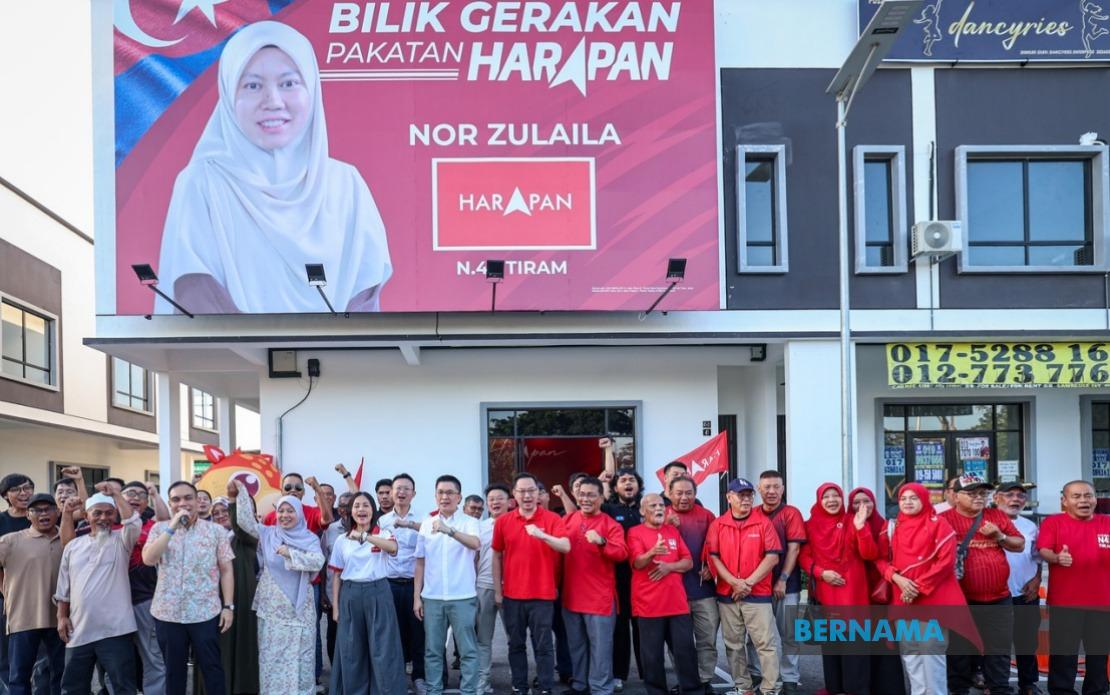
The Malaysian Communications and Multimedia Commission will prioritise maintaining reliable internet connectivity across Johor throughout the upcoming state election campaign, according to Deputy Communications Minister Teo Nie Ching. Speaking after launching the Pakatan Harapan operations room for the Tiram constituency in Pasir Gudang, Teo stressed that stable digital access has become indispensable for conducting modern political campaigns and reaching voters effectively during the contested election period.
Teo's directive to MCMC reflects evolving campaign realities in Malaysia, where internet-based communication now rivals traditional methods for disseminating political messaging and coordinating campaign activities. The emphasis on connectivity extends beyond convenience; digital infrastructure now underpins fundamental election operations, from streaming live rallies to coordinating volunteer networks and delivering real-time information to constituents seeking voting information or candidate details. Without reliable connectivity, parties face genuine operational constraints in reaching dispersed voter populations and organising ground-level activities.
The regulatory focus will concentrate on high-traffic areas anticipated to draw substantial crowds during campaign events. MCMC has been instructed to conduct continuous monitoring in these locations, ensuring that technical failures or capacity bottlenecks do not disrupt campaign activities or disadvantage particular political participants. This proactive approach acknowledges that internet disruptions during critical campaign moments—such as major rallies or candidate announcements—could have tangible impacts on political communication and voter engagement.
The timing of this infrastructure commitment arrives as Malaysia's political discourse increasingly depends on digital channels. Unlike previous election cycles, where traditional media, door-to-door canvassing, and public forums dominated campaign landscapes, contemporary elections see voters accessing candidate information, comparing political platforms, and participating in online discussions. Poor connectivity in specific areas creates unequal information access, potentially disadvantaging constituencies with weaker digital infrastructure and limiting the ability of voters to make fully informed electoral choices.
For Pakatan Harapan specifically, Teo reported encouraging grassroots feedback across Johor, with voters demonstrating strong readiness to participate in the electoral process. Ground campaigns have revealed substantial voter enthusiasm, including from those residing outside their home constituencies who plan to return specifically for polling day. This voter commitment underscores the importance of efficient campaign infrastructure; parties must capitalise on demonstrated civic engagement by ensuring their messaging reaches citizens reliably and their logistical operations function smoothly.
DAP's electoral strategy in Johor reflects broader lessons about contemporary Malaysian politics and constituency dynamics. Rather than designating any of its 17 contested seats as safely held positions, the party intends to dedicate equivalent resources and attention to each location. This approach acknowledges that Malaysia's political landscape has become increasingly volatile, with traditional voting patterns disrupted by evolving demographics, shifting class interests, and changing voter priorities. Complacency in any constituency risks allowing opposition parties to exploit organisational gaps or localised grievances.
Teo emphasised that each constituency presents distinct challenges requiring tailored strategic responses. This recognition moves beyond simplistic campaign templates, acknowledging that Johor's diverse geography encompasses urban centres like Johor Bahru with different voter concerns than rural or semi-urban areas, and that communities differ substantially in their priorities regarding economic opportunity, education provision, infrastructure development, and social services. Effective campaigning demands understanding these granular distinctions rather than imposing identical messaging across disparate communities.
The election schedule compresses campaigning into a concentrated period, with nominations opening immediately, early voting scheduled for July 7, and polling day set for July 11. This condensed timeline increases pressure on campaign infrastructure and organisation, making reliable internet connectivity even more critical. Candidates must maximise limited days to reach voters through multiple channels simultaneously, and coordinating these overlapping activities demands robust digital systems.
The MCMC initiative reflects broader recognition that election quality depends increasingly on technical infrastructure alongside traditional democratic elements. While political competition, candidate selection, and voter choice remain fundamental, the mechanisms enabling voters to access information and candidates to communicate their platforms now depend substantially on telecommunications infrastructure. This infrastructure dimension of electoral democracy receives comparatively little public attention but shapes campaign effectiveness in measurable ways.
For Malaysian voters in Johor, improved internet connectivity during the campaign period should theoretically enhance their ability to research candidates and political platforms through online sources. Whether urban residents accessing campaign websites or rural voters following live-streamed rallies, stronger connectivity expands information access. However, infrastructure improvements benefit all participants equally, and whether Pakatan Harapan translates technical advantages into electoral success ultimately depends on message resonance, candidate quality, and local political dynamics rather than bandwidth alone.
The regulatory commitment also acknowledges Malaysia's ongoing digital divide, where connectivity quality varies substantially across regions. While urban constituencies generally enjoy good coverage, more remote areas experience spotty service. Election periods should not exacerbate these existing inequalities; instead, authorities should use campaign intensity as an opportunity to ensure all Johor residents access equivalent information regardless of location. This regulatory fairness dimension protects electoral integrity by preventing technical factors from distorting political competition.
As Malaysia continues modernising its political processes, infrastructure reliability deserves comparable attention to electoral rules and campaign regulations. MCMC's role in ensuring network stability during Johor's election illustrates how technical agencies increasingly shape democratic participation in subtle but consequential ways. Future election management will likely increasingly depend on coordinating political rules with infrastructure planning, recognising that democratic competition occurs within technical systems that themselves require management and oversight.

