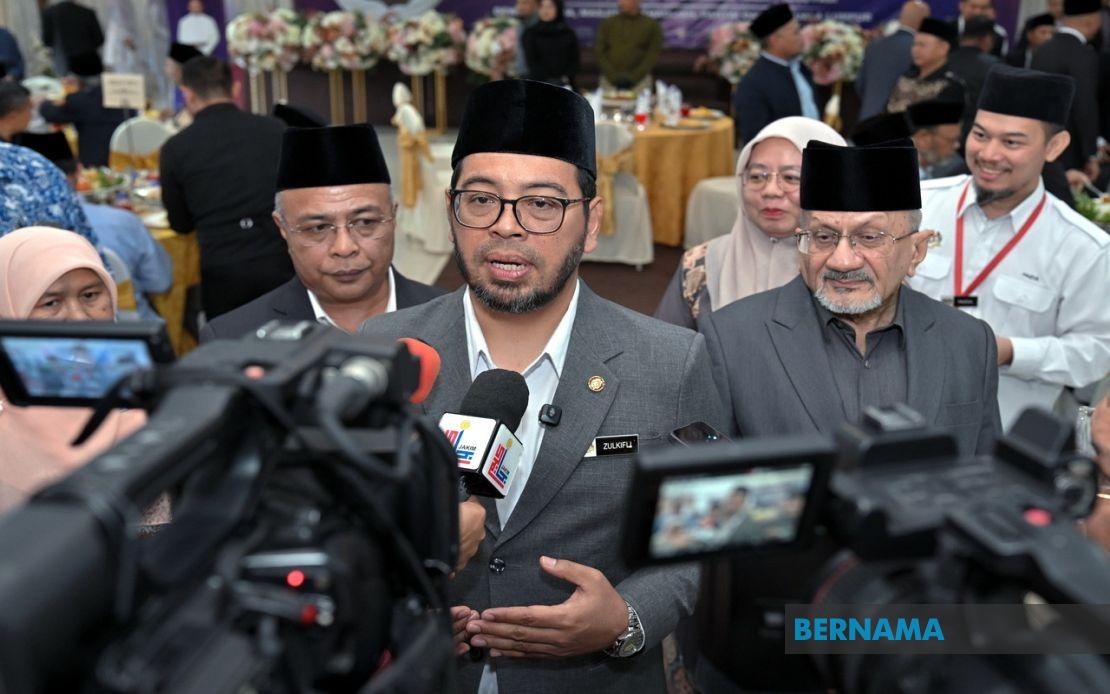
The construction of Masjid Warisan, positioned prominently in front of the Tun Razak Exchange (TRX) tower in Kuala Lumpur, will advance according to schedule, according to Dr Zulkifli Hasan, Minister in the Prime Minister's Department (Religious Affairs). The government has committed to implementing this long-established initiative, which forms part of a broader strategy to reinforce the role of mosques as vital institutions for fostering social cohesion within Malaysian communities. The minister's declaration comes after the project faced renewed scrutiny from opposition quarters, who had publicly questioned its viability and potential consequences.
The Masjid Warisan initiative has undergone extensive planning within government circles over an extended period. Rather than being a hastily conceived development, the project represents a carefully considered element of Malaysia's urban religious infrastructure strategy. Officials stress that moving forward reflects a commitment to long-term vision, with Zulkifli indicating confidence in the project's eventual completion. The minister framed the decision as part of normal governance processes, suggesting that such religious facilities are integral components of city development planning.
Detractors of the project have mounted campaigns claiming that Masjid Warisan could generate social discord and trigger public dissatisfaction. However, the religious affairs ministry appears unmoved by these concerns, maintaining that the construction addresses genuine community needs rather than provocative objectives. The controversy surrounding the project reveals underlying tensions within Malaysian society regarding religious infrastructure development in high-profile locations, particularly within the federal territories where multiple religious communities coexist. Such disputes are not uncommon in Southeast Asia, where decisions about religious buildings can become flashpoints for broader communal anxieties.
For those harbouring concerns about the mosque's construction, Zulkifli advised engagement with the Federal Territories Islamic Religious Council (MAIWP). This institutional pathway suggests that the government believes sufficient mechanisms exist for addressing public grievances and providing clarification to interested parties. The minister's suggestion reflects confidence that transparent dialogue can assuage worries, though critics may argue that such assurances lack concrete substance without detailed community consultation outcomes being publicly available.
The minister drew parallels with international precedents to contextualise the project. He observed that mosques are standard features in major cities worldwide, and that the Islamic call to prayer constitutes a source of spiritual peace and tranquillity rather than discord. This argument attempts to normalise the Masjid Warisan development by positioning it within global urban religious pluralism. However, the comparison may oversimplify Malaysia's particular demographic and religious landscape, where questions about the visibility and prominence of Islamic facilities carry distinct political and communal dimensions not necessarily present in other national contexts.
Beyond the Masjid Warisan announcement, Zulkifli also conducted a broader governance exercise within the Federal Territories' mosque administration. He distributed appointment letters to committee members representing the Federal Territories Mosque and Friday prayer surau sector for the 2026-2029 term, during a ceremony held at Masjid Al-Khadijah in Kampung Pantai Dalam. This routine administrative function represents the institutional machinery through which religious affairs in the federal territories are managed and overseen.
The appointment process involved substantial vetting procedures designed to ensure administrative integrity. Officials received 3,010 nominations across 91 mosques and 124 Friday prayer surau establishments, demonstrating significant interest in participating within mosque governance structures. From this candidate pool, 2,914 individuals were selected after undergoing rigorous integrity verification coordinated by the Royal Malaysia Police, the Malaysian Anti-Corruption Commission, and the Insolvency Department. This multi-agency screening reflects government concerns about maintaining ethical standards within religious institutional leadership.
The selective process indicates that approximately 96.8 per cent of nominees successfully cleared the integrity assessment, suggesting relatively high standards among the candidate cohort or alternatively, that the vetting process itself may not be particularly stringent. The involvement of anti-corruption and law enforcement bodies demonstrates that mosque committee appointments are treated as matters of public governance rather than purely religious concern, reflecting the intertwined nature of religious and administrative authority within Malaysian religious institutions. This approach ensures that religious bodies maintain compliance with broader national standards of conduct.
The Masjid Warisan project acquisition represents one element within Malaysia's continuing evolution of its urban religious landscape. Decisions about such high-profile mosque developments carry implications beyond immediate construction considerations, touching upon questions of religious identity, urban planning priorities, and intercommunal relations. The government's determination to proceed signals confidence that the initiative serves legitimate developmental objectives, though controversy surrounding the project suggests that significant portions of Malaysian society harbour unresolved questions about the project's true motivations and likely impacts.
For regional observers, Malaysia's handling of the Masjid Warisan controversy illuminates broader patterns within Southeast Asian governance surrounding religious infrastructure. The project demonstrates both the capacity of elected governments to advance religious initiatives aligned with demographic majority interests and the reality that such decisions generate ongoing contestation. As Malaysia continues developing its capital territory, similar situations will likely recur, necessitating clearer frameworks for balancing religious institutional expansion with broader social cohesion objectives.

