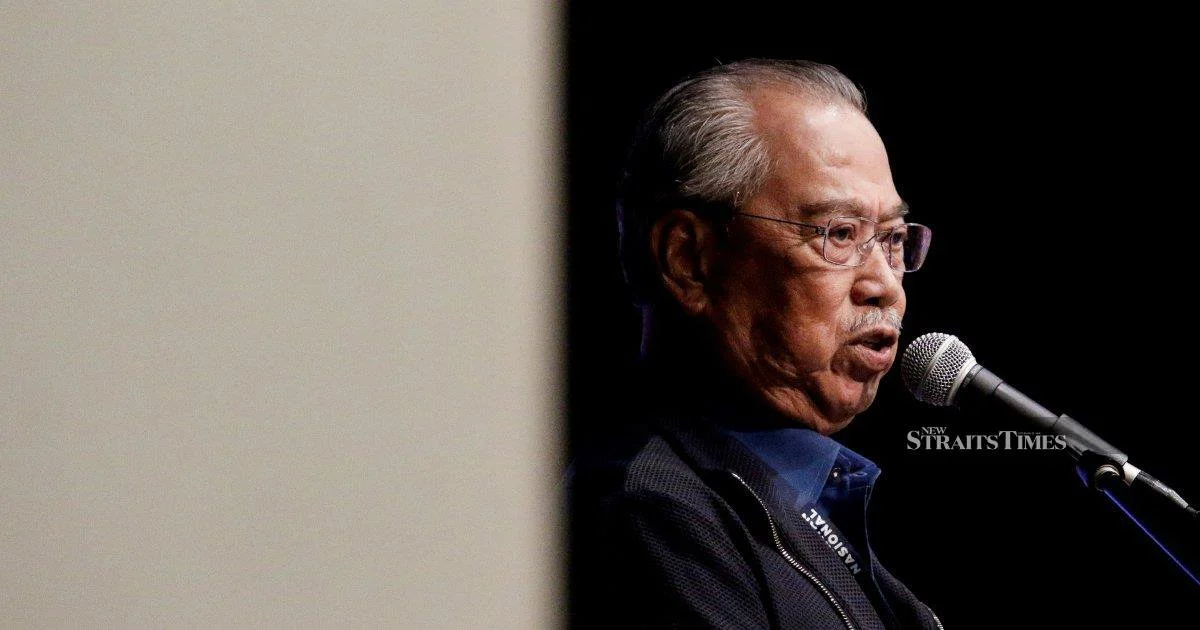
Datuk Dr Marzuki Mohamad has rejected suggestions that Perikatan Nasional failed to form the federal government after the 15th General Election because of personal rivalries or the unwillingness of a single individual to make way for another prime ministerial contender. The veteran politician's remarks push back against a narrative that has circulated within political circles, which attributes PN's inability to secure enough parliamentary support to establish an administration to interpersonal tensions and ego clashes rather than substantive political obstacles.
Instead, Marzuki has characterised the coalition's post-election difficulties as fundamentally a matter rooted in constitutional law and governance frameworks. His intervention into this debate reflects ongoing attempts within PN to reshape public perception of what transpired in the critical weeks following the November 2022 election, when the bloc initially appeared positioned to command a parliamentary majority. The framing matters significantly for PN's internal cohesion and its ability to present itself as a principled political force rather than one hobbled by personal ambitions.
The distinction Marzuki draws between constitutional constraints and ego-driven failure carries weight in Malaysian political discourse. Constitutional issues relating to government formation—such as questions about federal versus state positioning, matters of privilege, or questions about which coalition partner could legitimately claim the prime minister's office—operate according to legal precedent and institutional rules. These differ markedly from narratives centring on individual personalities refusing to compromise, which would suggest the crisis stemmed from preventable personal stubbornness rather than structural political realities.
PN's trajectory after GE15 remains one of the most consequential political turning points in recent Malaysian history. The coalition, which comprised the Malaysian Islamic Party (PAS), Bersatu, and the Pan-Malaysian Islamic Party components, faced the unexpected development that no single bloc had secured a clear majority in the Dewan Rakyat. This outcome disrupted pre-election calculations and forced rapid recalibration of political alliances. The subsequent formation of the unity government under Datuk Seri Anwar Ibrahim represented a fundamentally different political settlement than what many coalition leaders had anticipated.
Marzuki's emphasis on constitutional dimensions suggests PN leadership recognises that attributing failure to individual weakness undermines the coalition's credibility for future electoral contests. By framing the outcome as a constitutional or structural problem rather than a personnel issue, PN can argue that its leaders navigated a genuinely difficult situation according to proper principles. This approach also allows the coalition to preserve its internal relationships, avoiding the impression that any single figure bears responsibility for preventing the entire bloc from ascending to power.
The timing of such clarifications remains politically sensitive. Malaysian voters and observers continue to process what occurred during the post-GE15 negotiations, and competing narratives circulate regarding decision-making processes within coalition leadership. Claims about who should have stepped aside, what negotiations transpired, and whether opportunities were genuinely missed versus realistically unavailable remain contested within PN itself. By centralising constitutional arguments, Marzuki attempts to steer the conversation toward objective legal and structural constraints rather than subjective assessments of individual leaders' choices.
For Southeast Asian observers watching Malaysian politics, this debate illuminates how coalitional politics operate under conditions of electoral uncertainty. When no single bloc wins decisively, as happened in GE15, the manner in which power-sharing arrangements are negotiated becomes crucial. Malaysia's constitutional framework, which grants significant discretion to the Yang di-Pertuan Agong in selecting a prime minister, creates particular complexities. The Agong's constitutional role can intersect with coalition politics in ways that constrain which leaders can realistically claim the top office, potentially validating Marzuki's constitutional emphasis.
The broader implications for PN's political trajectory should not be overlooked. The coalition's ability to maintain unity, attract electoral support, and position itself as a credible alternative government depends partly on how it explains GE15 outcomes to its base and the broader electorate. If supporters believe their preferred leaders were thwarted by personal egoism and internal sabotage, resentment and fragmentation could follow. Conversely, if the narrative emphasises that constitutional and structural factors genuinely prevented government formation through no single actor's fault, the coalition can present itself as having conducted itself with integrity despite adverse circumstances.
Marzuki's intervention also reflects PN's continuing effort to distinguish itself in an increasingly complex political landscape. With the unity government now established and functioning, PN must position itself as a credible opposition or coalition partner for future contests. Disputes within PN about post-GE15 decisions risk undermining this positioning. By offering an institutional rather than personalistic explanation for what occurred, PN can move forward while minimising internal blame and recrimination that might otherwise corrode coalition cohesion.
The question of whether Malaysian voters ultimately accept this constitutional framing remains open. Public memory of political events is shaped by multiple narratives, media coverage, and grassroots discussion within communities and party structures. While Marzuki's constitutional argument carries intellectual weight, it competes with other explanations circulating in political discourse. How PN leaders continue to explain GE15 outcomes will influence both the coalition's internal stability and its electoral prospects in future contests.

