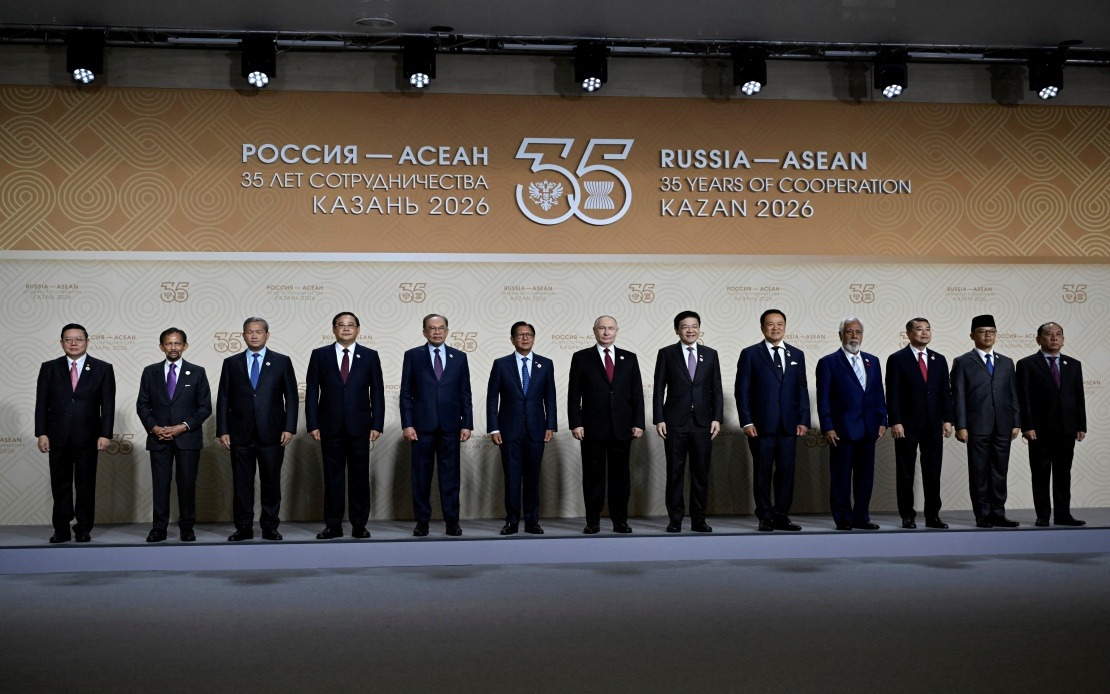
Philippine President Ferdinand Marcos Jr has identified significant room for expanding the relationship between ASEAN and Russia, arguing that decades of diplomatic engagement have yet to materialise into the partnership's full potential. Speaking after attending the ASEAN-Russia Commemorative Summit in Kazan, Marcos pointed to emerging technological domains as the frontier for advancing cooperation between the regional bloc and Moscow, marking a notable shift in how Southeast Asian nations are diversifying their external partnerships.
The summit, which commemorated over 35 years of dialogue relations, underscored a recognition within ASEAN that traditional economic cooperation frameworks may be insufficient for the contemporary geopolitical landscape. Marcos acknowledged that whilst relations have progressed steadily since their inception, the trajectory has remained modest, with disparities in engagement levels across individual ASEAN member states. This uneven development reflects broader patterns in Southeast Asia, where bilateral relationships with major powers often develop at different paces depending on national interests and historical context.
What distinguishes Marcos's remarks is his explicit naming of sectors previously absent from ASEAN-Russia economic discussions. Advanced technology, artificial intelligence, data centres, and power generation represent domains where neither ASEAN nor individual member states have historically concentrated collaborative efforts with Moscow. The Philippines president's emphasis on these areas suggests a deliberate recalibration of regional strategy, moving away from commodity-based or traditional manufacturing partnerships toward knowledge-intensive and infrastructure-dependent sectors that align with contemporary economic priorities.
The geopolitical context cannot be overlooked. Marcos framed ASEAN's evolving engagement patterns as a natural consequence of the region's maturation and growing autonomy in foreign policy decision-making. His reference to moving beyond "bipolar" frameworks and "growing up fast" reflects Southeast Asia's increasing confidence in managing relationships with multiple major powers simultaneously, whether the United States, China, Russia, or others. This posture is particularly significant for Malaysian policymakers, as it mirrors regional preferences for strategic hedging rather than exclusive alignment with any single power bloc.
Russia's expanding presence in advanced technology sectors has become increasingly visible across emerging markets globally. Data centre development, artificial intelligence infrastructure, and energy innovations represent areas where Russian expertise and investment could theoretically complement ASEAN's digital transformation ambitions. For Malaysia specifically, which has positioned itself as a regional technology and digital economy hub, such partnerships could offer alternative sources of technical knowledge and investment capital beyond traditional Western and Chinese channels.
The outcome documents from Kazan—particularly the Kazan Declaration 2026 and the ASEAN-Russia Comprehensive Plan of Action for 2026–2030—provide institutional scaffolding for this expanded cooperation. These frameworks go beyond symbolic gestures; they establish concrete pathways for collaboration across multiple sectors, including culture and energy, domains where tangible benefits for both sides could materialise relatively quickly. Energy cooperation is especially noteworthy given Southeast Asia's ongoing transitions toward cleaner power sources and the region's need for diversified supply chains.
Marcos's characterisation of the current moment as a "new day" in ASEAN-Russia relations warrants careful scrutiny from Southeast Asian observers. The comment suggests a deliberate repositioning of ASEAN's strategic posture, one that acknowledges past underutilisation of available partnerships and seeks to correct that trajectory. This sentiment likely resonates differently across ASEAN capitals, with some nations potentially viewing deeper Russia engagement through a regional security or economic diversification lens, whilst others may harbour reservations stemming from geopolitical concerns or existing alliance commitments.
The uneven development of ASEAN-Russia relations within the bloc—Marcos's acknowledgment that "some countries have gone further than other countries"—reflects reality. Vietnam, for instance, maintains deeper defence and energy relationships with Russia than many other Southeast Asian nations, whilst newer dynamics in other member states create opportunities for more selective engagement. This fragmentation presents both challenges and opportunities for regional initiatives, as no single ASEAN position on Russia necessarily exists.
For Malaysian readers and policymakers, the significance lies in how this conversation shapes regional options and narratives around economic diversification and strategic autonomy. As ASEAN collectively explores expanded cooperation with Russia in technology and energy, Malaysia's positioning within these initiatives will influence the broader trajectory of Southeast Asian engagement with Moscow. The identification of emerging sectors suggests that conversations previously confined to traditional geopolitical and defence discussions are now encompassing economic transformation and technological development.
The timing of this emphasis on new collaborative domains is noteworthy given global supply chain reassessments and regional discussions about technological sovereignty. Marcos's vision of ASEAN-Russia cooperation in data centres and artificial intelligence infrastructure touches on critical infrastructure questions that touch Malaysian interests directly. As the region seeks alternatives to overly concentrated dependencies in technology provision, exploring multiple partnerships—including with Russia—reflects pragmatic hedging strategies that Southeast Asian governments increasingly adopt.
The Kazan summit outcomes signal that both ASEAN and Russia view their relationship as underperforming relative to potential. Whether these frameworks translate into substantive cooperation will depend on member states' willingness to allocate resources, navigate divergent national interests within ASEAN, and address international pressures regarding certain collaborative domains. For Malaysia and other regional observers, monitoring how these commitments translate into actual technology transfer, investment flows, and operational partnerships will reveal the sincerity of post-Kazan intentions.
Ultimately, Marcos's message reflects a broader Southeast Asian orientation toward maximising strategic flexibility and economic options. By identifying untapped cooperation areas with Russia, the Philippine president has articulated what appears to be an emerging ASEAN consensus: that traditional relationship boundaries deserve reconsideration, and that emerging sectors present opportunities for partnerships that transcend conventional Cold War-era alignments, allowing the region to pursue interests defined by contemporary economic and technological realities rather than historical patterns.

