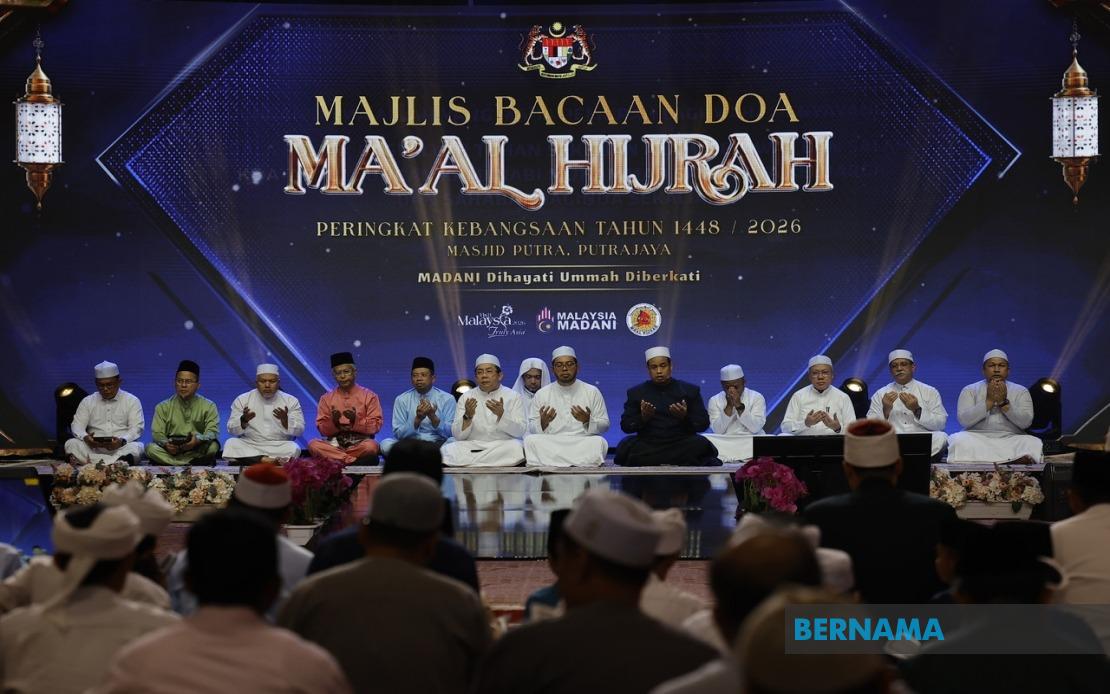
Religious and civic leaders in Malaysia are calling on young Malaysians to find contemporary relevance in the historical Hijrah—Prophet Muhammad's migration from Makkah to Madinah—positioning it as a framework for personal and national progress. Datuk Dr Zulkifli Hasan, the Minister in the Prime Minister's Department (Religious Affairs), made this appeal during discussions surrounding the forthcoming Maal Hijrah 1448H/2026M national celebration, emphasising that the youth possess considerable potential to drive meaningful change within Malaysian society.
The Hijrah narrative, which marks a pivotal moment in Islamic history, extends beyond its religious significance to offer broader lessons about resilience, community building, and purposeful migration toward improvement. By contextualising these ancient principles within Malaysia's modern development trajectory, officials hope to inspire younger generations to apply similar values of deliberate transformation to their personal aspirations and contributions to national progress.
This year's observance takes on particular symbolic weight through its venue selection and programmatic approach. The main national-level celebration will commence at Putra Mosque, a choice deliberately designed to evoke the historical establishment of Masjid Quba as the first institution Prophet Muhammad founded upon arrival in Madinah. Officials view the mosque not merely as a religious structure but as the foundational institution from which civilisation and organised community development emanate. By beginning proceedings at Putra Mosque, organisers hope to reinforce the connection between spiritual centres and broader social construction.
Zulkifli underscored that Malaysia's youth should internalise the Hijrah spirit by reflecting on its deeper implications for contemporary nation-building. The spiritual discipline and intentional community-focus that characterised the Hijrah period represent qualities that could address modern challenges of social cohesion, purposeful economic participation, and meaningful contribution to the Malaysian project. Rather than treating the commemoration as purely historical reflection, officials are framing it as an opportunity for young Malaysians to examine their own agency in driving positive transformation.
The national celebration scheduled for June 17 at Putra Mosque, coinciding with 1 Muharam 1448H, will feature the formal presentation of national and international Maal Hijrah Figure awards. The ceremony, to commence at 7 am, will be officiated by Sultan Nazrin Shah, the Sultan of Perak, lending governmental and royal legitimacy to the occasion and underscoring its significance within Malaysia's official calendar.
Complementing the main ceremony, a keynote lecture series featuring prominent national and international scholars will be held at the JAKIM Auditorium on June 18. The event anticipates approximately 1,000 participants and will provide a platform for established figures to articulate their understanding of the Hijrah spirit and how contemporary believers might authentically embrace its transformative principles. These sessions promise to deliver diverse perspectives from speakers with substantial standing in both Malaysian and global Islamic contexts.
Organisers have deliberately scaled the celebration to reflect broader national concerns, particularly the imperative for energy conservation amid ongoing global supply chain disruptions. Rather than viewing this constraint as a limitation, the modest approach is being presented as philosophically consistent with the values of simplicity and resource consciousness that characterised the Hijrah period itself. This alignment between practical necessity and spiritual principle demonstrates how modern observances can authentically connect with historical narratives.
The Hijrah's relevance for Malaysian youth extends to understanding migration not merely as physical relocation but as purposeful movement toward improvement. In a nation where many young people navigate transitions—educational migrations, economic repositioning, and social role evolution—the Hijrah framework offers historical precedent for treating such movements as opportunities for purposeful reflection and community contribution rather than mere personal advancement.
For Malaysia's multicultural and multi-religious society, the emphasis on Hijrah as a model for institutional development and community building carries particular resonance. The establishment of Masjid Quba as a shared community space that welcomed diverse participants mirrors contemporary aspirations for inclusive Malaysian institutions that serve broader social functions beyond narrow sectarian boundaries. Young Malaysians across different communities might draw inspiration from this inclusive institutional approach.
The timing of this celebration also reflects Malaysia's ongoing engagement with Islamic heritage as a source of contemporary guidance. Rather than positioning religious observance as disconnected from modern governance and development, officials are actively weaving Hijrah's lessons into discourse surrounding youth empowerment, institutional excellence, and social transformation. This integration suggests confidence that Islamic historical narratives possess substantive relevance for addressing contemporary Malaysian challenges.
The appeal to Malaysian youth also implicitly addresses concerns about youth engagement and purposeful participation in national development. By presenting the Hijrah as a model of intentional, community-focused transformation, officials are offering young Malaysians a framework for understanding their own potential contributions to the nation's trajectory. The emphasis on spiritual reflection combined with practical action mirrors contemporary expectations for engaged citizenship that transcends passive observance.