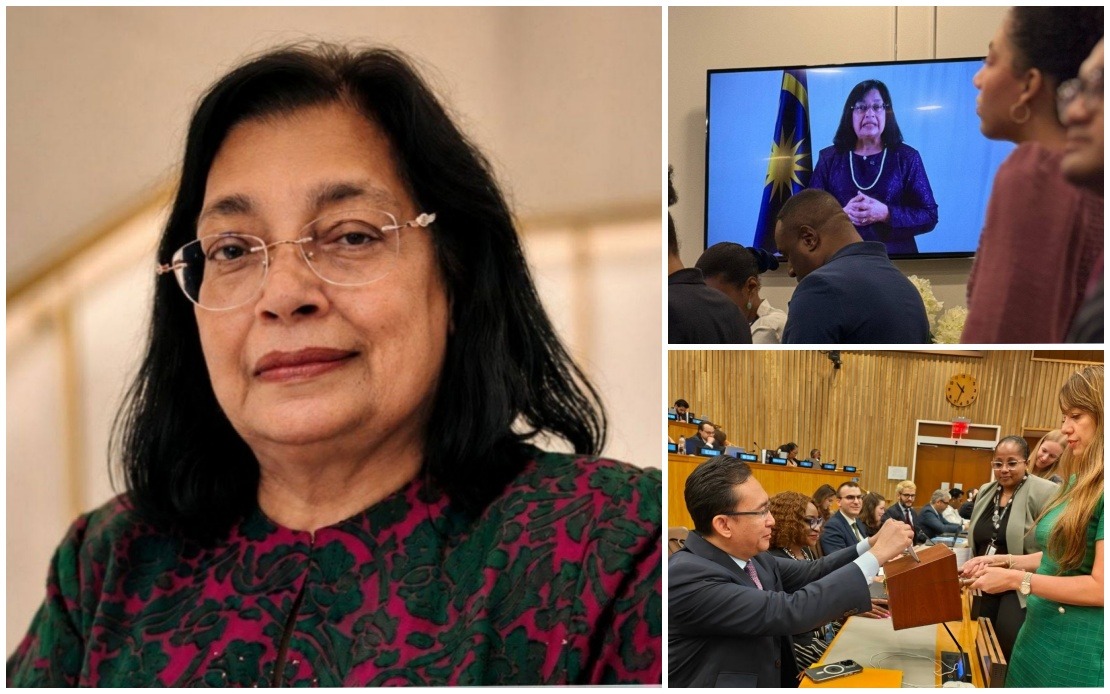
Malaysia has secured a significant position in international child protection oversight, with Datuk Yasmeen Muhamad Shariff's re-election to the United Nations Committee on the Rights of the Child for the 2027-2031 term. The election, held at the UN Headquarters in New York on Tuesday, saw Yasmeen commanding 136 votes from 189 States Parties present and voting during the 21st Meeting of States Parties to the Convention on the Rights of the Child. Her decisive victory, receiving the highest number of votes among all candidates, underscores the international community's confidence in her qualifications and commitment to advancing children's welfare globally.
Yasmeen's appointment represents a remarkable achievement in her professional trajectory. This marks her second term on the prestigious committee, having previously served from 2013 to 2017. Her return to the body after a decade demonstrates not only her sustained credibility within the international child rights arena but also the continued relevance of her expertise as global challenges affecting children have evolved significantly. The interval between her two terms positions her to bring valuable perspective informed by a decade of developments in child protection policy and practice across diverse regions.
The role carries substantial responsibility and influence. As a committee member, Yasmeen will serve in her personal capacity as an independent expert, a designation that emphasizes her individual professional standing rather than any governmental mandate. Her responsibilities will encompass monitoring how signatory nations implement the Convention on the Rights of the Child, engaging in constructive dialogue with States Parties to encourage compliance, and advocating for a rights-based approach to addressing challenges confronting children worldwide. This framework ensures that committee members maintain intellectual independence while contributing to the collective mandate of advancing child protection standards.
Malaysia's successful nomination reflects broader diplomatic recognition and positioning within the international child rights community. The Foreign Ministry, through its statement following the election, framed Yasmeen's selection as validation of Malaysia's own commitment to children's welfare through domestic policy initiatives. The ministry emphasized that the appointment acknowledges Malaysia's inclusive policies, legal reforms, and targeted programmes designed to support child development and protection. This framing connects the individual expert's achievement to national-level efforts, demonstrating how Malaysia leverages international appointments to reinforce its child-focused agenda.
The international dimensions of child protection have grown increasingly complex in recent years. Contemporary challenges include addressing child labour exploitation across supply chains, protecting children displaced by conflicts and climate change, combating online exploitation and trafficking, and ensuring equitable access to education and healthcare. The committee's role has expanded to encompass these multifaceted issues, making the appointment of experienced experts like Yasmeen crucial for informed, nuanced guidance to member states navigating these interconnected challenges.
Southeast Asian representation in UN technical committees carries particular significance for the region. Malaysia's successful placement of Yasmeen provides the Southeast Asian perspective in deliberations affecting child protection globally, ensuring that regional contexts and priorities receive consideration in international policy discussions. Given the region's experiences with transnational child exploitation, forced displacement, and development pressures affecting vulnerable populations, having experienced regional voices within these committees strengthens advocacy for policies addressing Southeast Asian realities.
The involvement of Malaysia's Ministry of Women, Family and Community Development proved instrumental in facilitating Yasmeen's candidacy. The Foreign Ministry's public acknowledgment of this inter-ministerial collaboration highlights how coordinated governmental effort enhances Malaysia's international positioning. Domestic agencies focused on child welfare, family policy, and community development bring institutional knowledge and policy perspective that strengthens candidature packages submitted to international bodies. This coordination model may serve as a framework for other Malaysian expertise areas seeking international recognition.
Yasmeen's independent expert status carries important implications for her effectiveness. Unlike representatives bound by governmental instructions, committee members serving in personal capacity can engage with evidence-based analysis and collegial deliberation without political constraints. This independence proves particularly valuable when committee work requires critiquing state practices or recommending substantive changes to national policies. However, this independence also means individual experts bear heightened professional responsibility for rigor and impartiality in their assessments.
The 2027-2031 term timing positions the committee to address emerging challenges in child protection. Artificial intelligence's impact on children, including algorithmic bias, data privacy, and exposure to harmful content, remains an evolving policy frontier. Climate change's disproportionate impact on child welfare, including health crises, educational disruption, and forced migration, will likely demand committee attention. Mental health challenges affecting youth populations, exacerbated by pandemic-related disruptions, will continue requiring international coordination and best-practice sharing.
Malaysia's commitment to child protection conventions extends beyond symbolic participation. The government has implemented legislative frameworks including the Child Act, which underwent significant amendment to strengthen protections. National action plans address child labour, human trafficking, and online safety. By placing recognized expertise within international monitoring bodies, Malaysia positions itself as both accountable to external scrutiny and capable of contributing constructively to global child protection evolution. Yasmeen's appointment reinforces this dual positioning.
The regional context cannot be overlooked. Southeast Asia continues facing challenges including child labour in agriculture and manufacturing, trafficking across porous borders, educational inequities affecting indigenous and migrant children, and healthcare access disparities. The committee's oversight function, combined with dialogue mechanisms with states parties, creates opportunities for international support and peer learning that can strengthen regional progress on these issues. Yasmeen's familiarity with Southeast Asian contexts enhances the committee's capacity to engage meaningfully with regional dynamics.
Moving forward, Malaysia's continued advocacy for children's rights will likely be evaluated partly through Yasmeen's work on the committee. Her contributions to monitoring reports, her participation in country reviews, and her stance on emerging child protection issues will reflect Malaysia's positioning within this critical international framework. The re-election itself validates years of domestic effort; her performance over the next five years will shape whether this appointment translates into substantive advancement of child protection standards regionally and globally.

