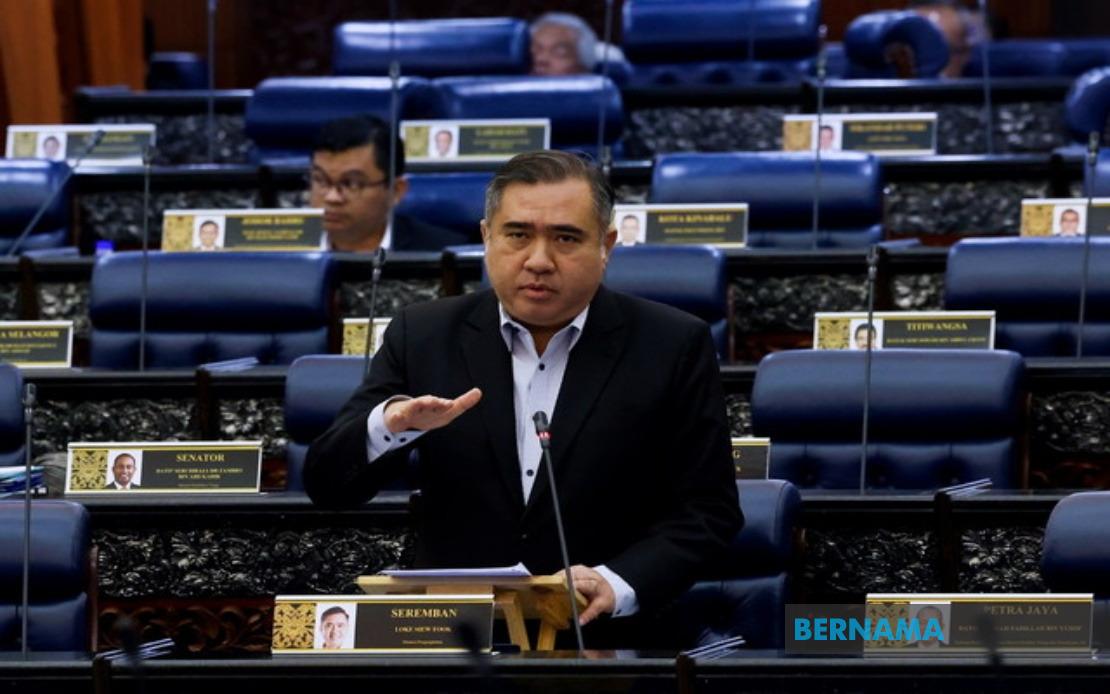
The Transport Ministry has initiated a significant shift in how Malaysia handles the aftermath of serious road accidents, proposing sweeping amendments to the Road Transport Act 1987 that would establish a formal compensation mechanism for victims and their families. Transport Minister Anthony Loke announced the proposal to the Dewan Rakyat on July 14, signalling the government's intention to move beyond traditional traffic enforcement and create a framework where courts can mandate restitution from convicted offenders based on the severity and circumstances of individual cases.
Under the proposed amendments, judicial authorities would gain explicit powers to impose compensation orders on drivers convicted of serious offences under the act. The determination of compensation amounts would hinge on several interconnected factors, including the extent of injuries sustained or fatalities incurred, the quantifiable losses experienced by victims and their dependents, and the financial capacity of the convicted offender to satisfy such orders. This multifaceted approach reflects an acknowledgement that one-size-fits-all penalties fail to address the real human and economic costs inflicted by reckless driving behaviour.
The compensation proposal sits within a broader legislative package designed to treat dangerous driving and illegal street racing as serious criminal matters rather than ordinary traffic infractions. Minister Loke's statement underscores a philosophical reorientation whereby drivers who kill or catastrophically injure others through negligent or deliberately dangerous conduct will face judicial consequences proportionate to their actions and culpability. This represents a departure from traditional approaches where traffic violations were often treated as administrative matters with fixed penalties.
The government has already tabled the Road Transport (Amendment) Bill 2026, which the Dewan Rakyat has passed, introducing a new Section 42A that specifically criminalises illegal racing as a distinct offence. First-time offenders face fines ranging from RM2,000 to RM10,000 coupled with potential imprisonment up to two years, while repeat offenders face substantially stiffer penalties including fines between RM5,000 and RM20,000 and imprisonment extending to five years. These escalated penalties reflect the ministry's recognition that illegal racing culture has become endemic in certain communities and requires forceful legal intervention.
A particularly significant innovation in the amendment framework is its proactive dimension. Previously, law enforcement could only pursue charges after an accident had occurred, leaving illegal racing activities technically unpunished in the absence of a collision or injury. The amended legislation now permits authorities to prosecute individuals engaged in illegal racing regardless of whether their actions have yet resulted in harm. This preventative approach shifts the legal burden upstream, allowing intervention before potential tragedies materialise rather than only after victims have already suffered irreversible damage.
Enforcement intensity has visibly increased nationwide, with recent operations yielding substantial results. A recent operation in Johor alone resulted in 16 arrests and the seizure of 260 motorcycles implicated in illegal racing activities. These operational figures suggest that illegal racing involves organised networks and represents a systemic rather than isolated problem requiring sustained attention. The ministry's intensified enforcement posture indicates a determination to implement the legislative framework with corresponding police and regulatory action.
The urgency of these measures gained additional weight following a fatal incident on June 1 at Kilometre 27 of Jalan Renggam-Simpang Renggam in Johor that claimed five lives. The Attorney-General's Chambers directed that investigations proceed under Section 302 of the Penal Code, which addresses culpable homicide, signalling that the most serious criminal provisions will apply to fatal road accidents involving reckless driving. Such cases demonstrate the devastating human toll that drives the legislative agenda.
Beyond legislative and enforcement mechanisms, Minister Loke emphasised that sustainable reductions in road fatalities demand broader societal engagement. Malaysia's annual road death toll exceeding 6,000 lives reflects systemic failures that legal measures alone cannot remedy. The minister stressed that behavioural transformation and elevated public consciousness regarding road safety are equally critical components of any comprehensive strategy. Without shifts in how drivers and road users conduct themselves, even rigorous enforcement and substantial penalties may produce only marginal improvements.
The proposal for a cross-ministerial national strategy addressing illegal racing signals recognition that road safety transcends the Transport Ministry's purview and requires coordinated action across government agencies. Community leaders, civil society organisations, and the general public must all become active participants in cultural reform around road safety. This whole-of-society approach contrasts with earlier eras when road safety was treated primarily as a technical or enforcement matter rather than a comprehensive national priority.
Minister Loke's statement notably included an appeal for depoliticisation of road safety issues, suggesting that these proposals have emerged within contested political terrain. By framing road safety as a unifying national agenda transcending partisan divisions, the minister attempted to establish common ground where political opponents might otherwise disagree. The appeal reflects awareness that effective road safety initiatives require sustained commitment across electoral cycles and government transitions, necessitating bipartisan consensus.
For Malaysian motorists and road users, these proposals signal a genuine tightening of legal consequences for dangerous driving behaviour. The combination of enhanced criminal penalties, court-ordered compensation mechanisms, and expanded enforcement authority creates a substantially more punitive environment for those engaging in illegal racing or driving that causes serious harm. Families of accident victims gain a clearer pathway to obtaining financial compensation from offenders through court processes.
The legislative framework also carries implications for vehicle owners and insurance markets. Drivers and owners must recognise that involvement in illegal racing now exposes them to criminal prosecution even absent any accident, fundamentally altering the risk calculus. Insurance companies may respond by adjusting premiums or coverage terms for high-risk drivers and vehicles. The compensation mechanisms could also influence how courts determine damages in civil negligence claims, as statutory compensation frameworks often inform judicial reasoning in parallel proceedings.
As these amendments progress through implementation, their actual impact on behaviour and road fatalities will depend heavily on consistent enforcement, public awareness campaigns, and whether courts consistently apply compensation provisions in sentencing decisions. The legislative innovation is substantial, but transforming it into measurable reductions in illegal racing and preventable deaths requires complementary investments in enforcement capacity, public education, and sustained political commitment across multiple government administrations.

