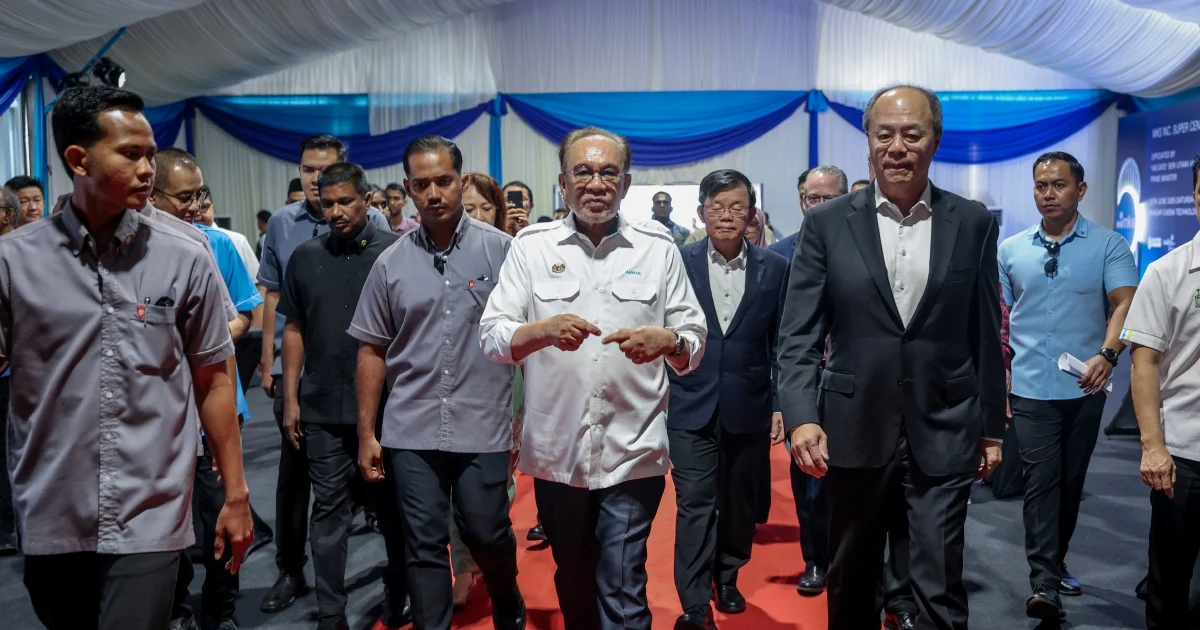
Prime Minister Datuk Seri Anwar Ibrahim has attributed Malaysia's rising attractiveness to international investors to the country's commitment to remaining diplomatically independent while cultivating relationships across the geopolitical spectrum. Speaking in Batu Kawan, Anwar emphasised that the nation's refusal to align exclusively with any major power bloc has become a competitive advantage in an increasingly fractured global economy.
Malaysia's positioning as a neutral intermediary between competing international interests reflects a deliberate strategic choice rooted in the country's post-independence philosophy. The government maintains that this approach—sometimes termed "hedging" in academic circles—allows Malaysian policymakers to extract maximum benefit from relationships with the United States, China, India, Japan, and other economic powers without incurring the political or economic liabilities that exclusive partnerships might entail. For investors evaluating regional hubs, this flexibility signals stability and reduced geopolitical risk.
The Prime Minister's statement carries particular weight amid deteriorating great-power relations that have destabilised many neighbouring economies. While other Southeast Asian nations grapple with pressure to choose sides in disputes ranging from trade conflicts to territorial tensions, Malaysia's demonstrated ability to maintain multiple partnerships simultaneously offers reassurance. International investors increasingly view political stability as inseparable from economic opportunity, making Malaysia's diplomatic posture a tangible asset on balance sheets.
Anwar's framing also addresses anxieties within Malaysia's business community about potential fallout from regional tensions. Large multinational corporations operating across Asia must navigate complex supply chains and regulatory environments; a host country perceived as caught between hostile powers becomes riskier. Conversely, a nation that can facilitate commerce and dialogue among competing interests becomes more valuable as a production, logistics, or regional headquarters location. This explains why technology firms, financial services providers, and manufacturers have consistently expanded operations in Malaysia despite competition from other Southeast Asian economies.
The economic implications extend beyond attracting foreign direct investment. Malaysia's independent foreign policy stance enhances the country's bargaining position when negotiating trade agreements, investment frameworks, or technology partnerships. When nations perceive Malaysia as genuinely non-aligned rather than subtly aligned, they are more inclined to offer competitive terms. This dynamic has been evident in Malaysia's negotiations with both Western and Asian-Pacific partners over the past two decades.
However, maintaining genuine neutrality amid rising geopolitical tensions requires constant diplomatic calibration. Malaysia must walk a narrowing tightrope as the United States and China intensify competition in areas ranging from semiconductors to military presence in the South China Sea. Every policy decision—from 5G infrastructure choices to defence procurement—carries implications for which major power perceives Malaysia as trustworthy. The government's commitment to remaining independent becomes more challenging when allies elsewhere in Southeast Asia make explicit choices.
The Prime Minister's emphasis on investor confidence reflects awareness that Malaysia's economic growth hinges substantially on capital inflows and technology transfers that major economies control. Foreign direct investment from multinational corporations has historically accounted for significant portions of Malaysia's GDP growth and employment creation. Any perception that Malaysia is tilting toward a particular bloc could trigger capital flight or cause potential investors to redirect projects toward perceived safer jurisdictions.
Malaysia's historical experience reinforces Anwar's position. The country emerged from colonialism and navigated the Cold War by cultivating non-aligned credentials, which enabled it to extract benefits from both superpowers' competition for regional influence. Contemporary policymakers appear to believe this playbook remains valid, even as the nature of great-power competition has shifted from ideological confrontation to economic and technological rivalry.
The stated policy also resonates with Malaysia's position within ASEAN, the regional bloc that has similarly struggled to maintain collective neutrality as geopolitical pressures mount. ASEAN's founding principle of non-interference and inclusive dialogue—though increasingly strained—reflects many Southeast Asian nations' preference for engagement over confrontation. Malaysia's emphasis on this approach strengthens the broader regional consensus and positions the country as a champion of ASEAN values, which itself attracts investors seeking stability through multilateral frameworks.
Yet challenges persist. China's growing economic integration with Malaysia, particularly through infrastructure investments, raises questions about whether neutrality is genuinely maintained or merely performative. Similarly, Malaysia's intelligence and defence relationships with Western powers create implicit alignments that may not be fully visible to markets but inform investor assessments of long-term political stability.
Anwar's articulation of Malaysia's non-aligned stance serves multiple audiences simultaneously. Domestically, it appeals to those concerned about Malaysian sovereignty and independence. Regionally, it reinforces ASEAN solidarity. Internationally, it signals to investors and partners that Malaysia remains open to engagement without ideological preconditions. This multipurpose messaging reflects the practical demands of managing Malaysia's economic interests amid geopolitical fragmentation.
As global supply chains reorganise and companies seek alternatives to over-concentration in any single region, Malaysia's emphasis on independence becomes increasingly valuable. Investors increasingly view geopolitical risk as integral to location decisions, and a nation credibly committed to balanced engagement offers competitive advantages that market fundamentals alone cannot provide.

