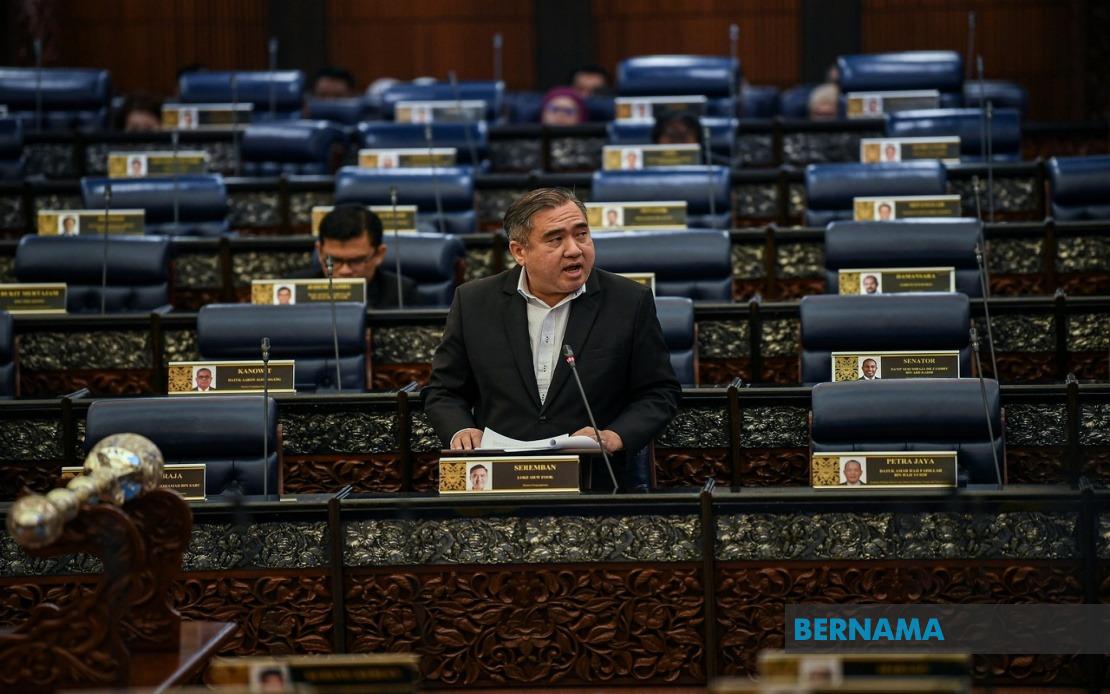
Transport Minister Anthony Loke has tabled the Road Transport (Amendment) Bill 2025 in Parliament, introducing a landmark legal provision that directly targets illegal racing and unauthorised speed testing on Malaysian public roads. The proposed Section 42A creates the first standalone offence specifically criminalising these activities under the Road Transport Act 1987, marking a significant shift in how enforcement agencies approach dangerous street racing that has plagued urban areas across the country.
Under the proposed legislation, first-time offenders caught engaged in racing or speed trials on public roads face financial penalties ranging from RM2,000 to RM10,000, imprisonment up to two years, or a combination of both. However, the penalties escalate substantially for those who reoffend, with second and subsequent convictions attracting fines between RM5,000 and RM20,000 alongside potential imprisonment reaching five years. These graduated penalties reflect the government's recognition that repeat offenders represent a more serious threat to public safety and warrant heightened deterrence measures.
The introduction of this dedicated offence addresses a critical enforcement gap that has long hampered authorities' ability to combat illegal racing effectively. Currently, racing incidents are prosecuted under general dangerous driving provisions, a framework that requires evidence of actual harm—accidents, injuries, or fatalities—to justify legal action. This reactive approach means authorities must wait for dangerous behaviour to result in tragedy before intervening, a philosophy that Loke explicitly rejected in his statement to Parliament. The new provision fundamentally reverses this logic, enabling proactive law enforcement that can apprehend and prosecute racers at the moment they begin their illegal activity, regardless of whether an accident subsequently occurs.
Loke illustrated this distinction through practical examples relevant to Malaysian road conditions. A scenario involving multiple motorcyclists engaging in speed competitions on a public road would now constitute an arrestable offence even if the riders complete their activities without incident or collision. Similarly, motorists utilising highways or urban streets to illegally test vehicle performance would face immediate prosecution rather than escaping legal consequences because no accident materialised. This preventive enforcement approach mirrors international best practices and acknowledges the inherent danger posed by organised racing, which endangers not only the participants but also innocent road users in the vicinity.
Beyond the racing offence, the Bill introduces Section 110B, a complementary provision designed to protect enforcement officers and strengthen their operational capacity. This section targets interference with enforcement operations, criminalising conduct including obstructing enforcement personnel, assaulting officers, threatening enforcement operations, pursuing enforcement vehicles, or—critically—sharing operational intelligence with suspected offenders to facilitate their evasion. Individuals convicted under this provision face fines spanning RM10,000 to RM50,000 and imprisonment terms between one and five years. Designating this offence as arrestable grants police expanded powers to detain suspects without warrant, recognising the coordinated nature of modern street racing networks that often employ lookouts and communication systems.
The information-sharing component represents a particularly insightful legislative recognition of how contemporary illegal racing operates in Malaysia. Street racing communities frequently utilise social media, messaging applications, and organised networks to alert members about police checkpoints, road conditions, and enforcement activities. By explicitly criminalising the provision of such intelligence to offenders, the Bill acknowledges this networked dimension and seeks to dismantle the ecosystem supporting organised racing rather than merely punishing individual participants. This holistic approach addresses the entire chain of activity rather than treating illegal racing as isolated incidents.
The amendment also includes provisions modernising compound and fine structures across road transport legislation. The Bill proposes increasing base minimum fines from RM300 to RM500 for selected road offences, although the government clarified that this does not mandate automatic issuance of RM500 compounds to all violators. Instead, enforcement officers retain discretion to adjust penalty amounts based on offence severity, circumstances, duration of violation, and established procedures. This graduated approach prevents indiscriminate application while establishing higher baseline consequences for traffic violations. The new maximum compound rates will take effect on January 1, 2029, providing stakeholders—including commercial operators and the insurance industry—adequate transition time to adjust business practices and pricing models.
For Malaysian road safety advocates and transport industry observers, the Bill represents a legislative response to mounting public concern about illegal street racing, particularly in urban centres like Kuala Lumpur, Johor Bahru, and Penang. Organised racing events occurring on highways and city streets have generated numerous viral social media videos, public complaints, and documented traffic incidents. The dedicated legal framework provides authorities with clearer mandates and enhanced penalties, potentially shifting enforcement priorities and resource allocation toward this specific menace. The timing suggests alignment with broader road safety campaigns and reflects evolving public expectations regarding government intervention in dangerous driving behaviours.
The Bill's treatment of enforcement protection deserves particular attention within Southeast Asia's broader law enforcement context. As Malaysian police and traffic authorities increasingly employ technology-enabled enforcement—dash cameras, automated speed detection, licensing plate recognition—protecting officers from coordinated evasion and intimidation becomes operationally critical. Section 110B essentially criminalises the organised resistance infrastructure that has sometimes surrounded enforcement operations, particularly in areas where illegal racing maintains social currency among certain demographics. By treating interference as a serious offence commanding substantial penalties, the legislation signals that organised evasion of traffic enforcement carries consequences equivalent to the underlying violations themselves.
The Bill's passage through Parliament would establish Malaysia among countries implementing specific anti-racing legislation, aligning domestic law with transportation safety standards observed in developed nations. Implementation will likely require coordination between the Road Transport Department, police, local authorities, and transport enforcement agencies to ensure consistent application across federal territories and states. Training materials and operational guidelines will need development to ensure officers understand the new offence elements and evidentiary requirements, particularly given the distinction between racing activities and legitimate vehicle testing conducted within legal frameworks such as closed-circuit racing facilities and manufacturer test tracks.
Stakeholders including commercial vehicle operators, ride-hailing companies, and logistics providers may also experience broader impacts as the fine regime modernisation affects enforcement across the transport sector. While the Bill specifically targets illegal racing and enforcement interference, the compound adjustment provisions affect multiple road transport violations. Insurance premiums may shift if enforcement becomes demonstrably stricter, and compliance monitoring requirements could intensify for operators managing fleets vulnerable to driver misconduct. These broader industry implications suggest the Bill extends beyond addressing street racing toward comprehensive modernisation of Malaysia's road transport penalty framework.

