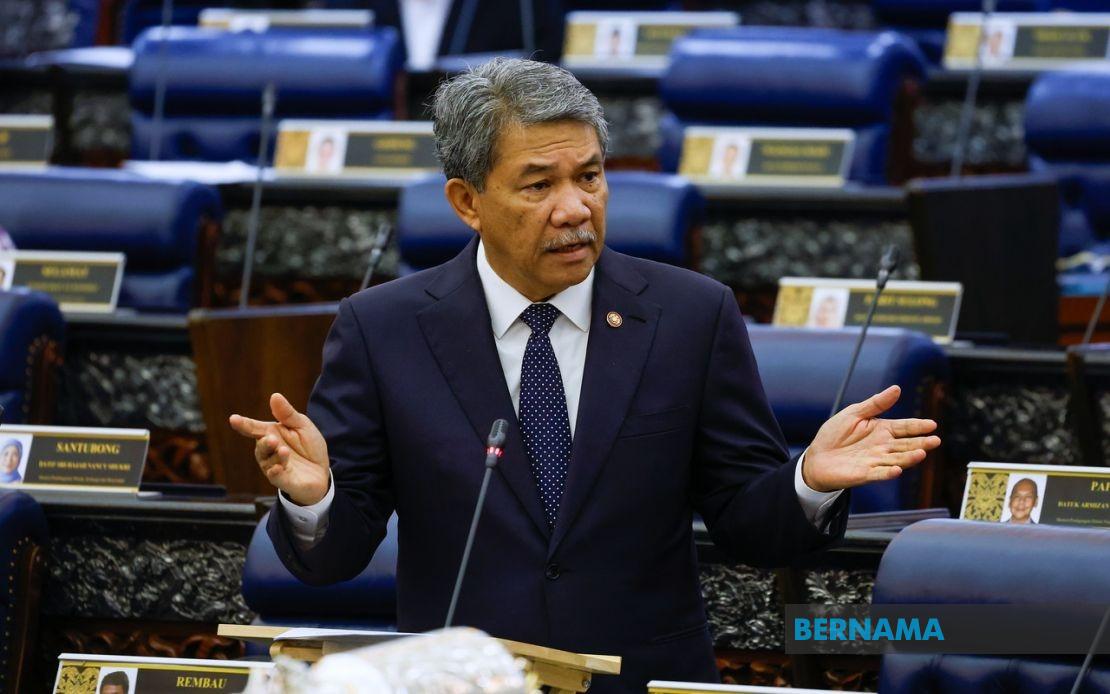
Foreign Minister Datuk Seri Mohamad Hasan has sought to dispel concerns about Malaysia's diplomatic engagement with Myanmar, insisting that a high-level Malaysian delegation visit to the country last May should not be interpreted as tacit recognition of the military administration that has ruled since the 2021 coup. Speaking in Parliament on June 25, the FM emphasised that Malaysia remains aligned with ASEAN's collective position of refusing to legitimise the junta, whilst simultaneously pursuing constructive dialogue to address the deepening humanitarian and political crisis.
The clarification comes against a backdrop of regional tension over how best to manage Myanmar's isolation following years of military rule and escalating violence. Mohamad explained that the visit was authorised under a decision reached at the 48th ASEAN Summit, which mandated the regional bloc's foreign ministers to maintain informal channels with Myanmar despite the junta's grip on power. By framing the engagement as part of a coordinated ASEAN strategy rather than unilateral Malaysian recognition, the FM sought to distinguish between diplomatic communication and political acceptance.
During his meeting with Myanmar Foreign Minister Tin Maung Swe, Mohamad deliberately avoided protocol venues typically associated with formal state-to-state recognition. The encounter took place at a hotel rather than the Foreign Ministry, a symbolic choice designed to underscore the unofficial nature of the engagement. Within this carefully calibrated setting, the Malaysian delegation conveyed ASEAN's collective expectations for how Myanmar should address its internal conflicts and governance crisis, signalling that dialogue does not equate to abandoning the region's principles.
At the heart of Malaysia's approach lies the Five-Point Consensus, an ASEAN framework established to guide the Myanmar crisis response. This agreement calls for cessation of violence, establishment of inclusive political dialogue, humanitarian assistance delivery, and constructive engagement with ASEAN. Mohamad reiterated that Malaysia's bilateral talks with Myanmar stakeholders remain fully consistent with these objectives, and that the recent visit in no way softened Malaysia's or ASEAN's commitment to seeing these principles implemented.
A central theme of Mohamad's parliamentary remarks was Malaysia's argument that isolation of Myanmar could backfire strategically. He warned that if ASEAN distances itself entirely from Myanmar, the resulting political vacuum might be exploited by external powers with interests misaligned with the region's stability and autonomy. This reasoning reflects longstanding concerns in Southeast Asian capitals that Myanmar's abandonment could create openings for influence by larger powers, fragmenting ASEAN unity at a time when the bloc faces mounting geopolitical pressures.
Crucially, Mohamad conveyed to the Myanmar Foreign Minister that membership in ASEAN carries reciprocal obligations. While Myanmar retains certain rights as a member state, it cannot selectively disregard the responsibilities that accompany regional participation. This dual messaging—maintaining communication while setting firm expectations—represents Malaysia's attempt to keep diplomatic pressure on the junta without severing all engagement, a delicate balancing act that reflects broader ASEAN divisions over how assertively to confront Myanmar.
The Malaysian position sits within a complex regional dynamic where ASEAN members hold divergent views on Myanmar's isolation. Some nations favour strict condemnation and disengagement, while others, including Malaysia, argue that dialogue creates better prospects for change than estrangement. Mohamad's parliamentary defence of the visit suggests growing domestic political scrutiny of Malaysia's Myanmar policy, with opposition lawmakers questioning whether engagement risks legitimising authoritarian rule.
Looking ahead, Malaysia has scheduled additional stakeholder consultations in Myanmar for early or mid-July, signalling that engagement will deepen rather than diminish in coming months. These planned meetings suggest a sustained Malaysian commitment to testing whether dialogue can facilitate progress on violence cessation, ceasefire agreements, and inclusive political negotiation. For Malaysian policymakers, the hope is that continuous communication can nudge the junta toward compliance with the Five-Point Consensus without requiring a formal shift in Malaysia's non-recognition stance.
The FM's parliamentary statement also reflects Malaysia's broader regional leadership aspirations, as it chairs ASEAN-related mechanisms and seeks to position itself as a bridge-builder on intractable crises. By maintaining channels with Myanmar whilst firmly defending ASEAN principles, Malaysia attempts to demonstrate that principled pragmatism—rather than rigid ideology or capitulation—can serve the region's long-term interests. This framing is intended to reassure domestic critics that Malaysia is neither endorsing the junta nor abandoning Myanmar to external influence, but rather executing a sophisticated diplomatic strategy calibrated to regional circumstances.
For Malaysia and its Southeast Asian peers, the Myanmar conundrum exemplifies the tension between upholding regional norms and maintaining practical engagement with problematic actors. Mohamad's insistence that the May visit represented no shift in official positions underscores ASEAN's struggle to present a unified response to a crisis that challenges the bloc's principle of non-interference whilst demanding collective action. As the crisis extends into its fourth year with no resolution in sight, Malaysia's approach of sustained dialogue coupled with unwavering adherence to the Five-Point Consensus framework represents a middle path between isolation and acquiescence, though one that will likely face continued scrutiny from both regional partners and domestic constituencies.
The unresolved Myanmar crisis will continue testing ASEAN solidarity and Malaysia's diplomatic dexterity in the months ahead. With violence persisting and political stalemate deepening, the success of Malaysia's engagement strategy will ultimately be measured not by the dialogue itself, but by tangible progress toward the ceasefire, inclusive talks, and humanitarian access that the Five-Point Consensus demands. Until such breakthroughs materialise, Malaysian-led initiatives will remain vulnerable to accusations of either naïveté or implicit complicity, requiring Kuala Lumpur to navigate these perceptions with precision.

