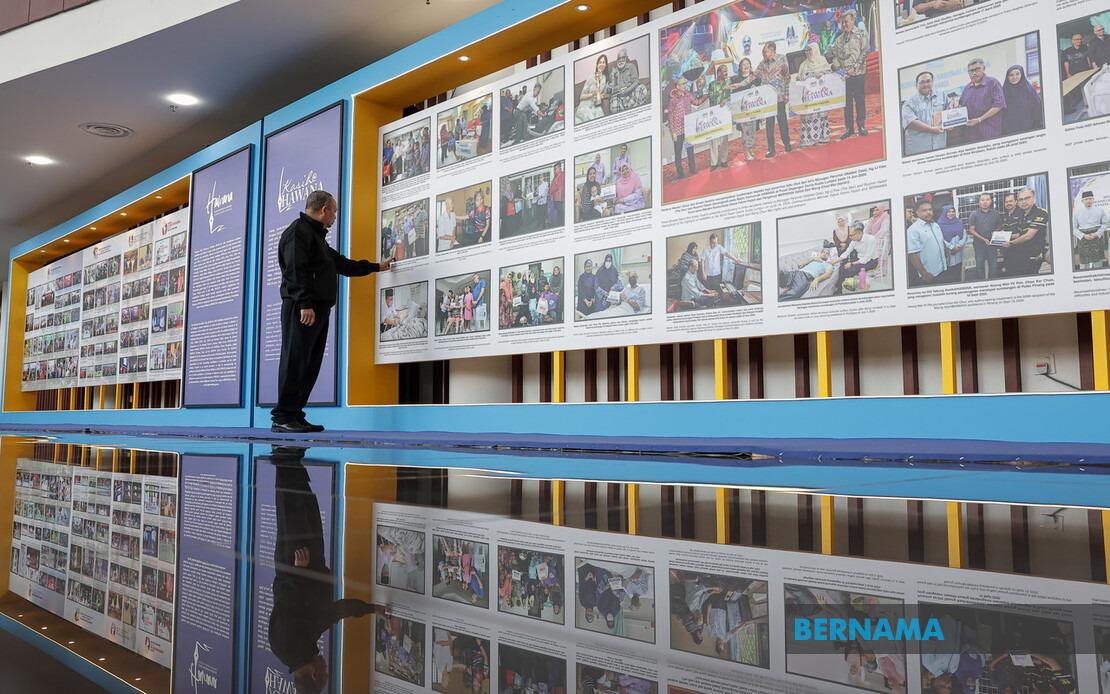
The countdown to Malaysia's National Journalists' Day celebration has begun in earnest in Penang, with the media industry seizing the opportunity to tackle pressing challenges facing modern journalism. HAWANA 2026, scheduled to culminate tomorrow in Butterworth, represents more than a ceremonial recognition of media professionals—it signals a collective commitment to reassessing the industry's direction as it navigates unprecedented technological and social disruption. The theme of 'Media Integrity, Foundation of Credibility' underscores mounting concerns about trust, misinformation, and the profession's survival in an era of rapid transformation.
Organised by the Communications Ministry with Bernama as the implementing body, HAWANA 2026 is expected to draw approximately 1,000 journalists and media practitioners from across Malaysia and internationally. The convergence on Penang reflects the federal government's acknowledgement that meaningful dialogue about the industry's future requires gathering voices from diverse newsrooms and perspectives. Prime Minister Datuk Seri Anwar Ibrahim will officiate the main ceremony at PICCA @ Butterworth Arena, signalling the highest political recognition of journalism's institutional importance.
Leading up to the main event, several substantive programmes have already reshaped the conversation around media professionalism. The Malaysia Media Retreat 2.0, organised by the Malaysian Federation of Media Clubs (GKMM), brought together practitioners from 15 media clubs nationwide. This gathering served a dual purpose: strengthening professional networks while allowing the GKMM to assess its development trajectory since its official establishment on October 24, 2022. The retreat, officiated by Communications Minister Datuk Fahmi Fadzil, demonstrated how industry bodies are moving beyond passive compliance to active institution-building.
Mohamad Fauzi Ishak, GKMM president, framed the retreat not merely as networking but as a moment for self-evaluation. The federation is preparing for its third annual general meeting, notably without an election process, suggesting operational stability. This approach reflects a broader maturation within Malaysian media structures, where the emphasis has shifted from procedural formalities to substantive capacity-building and collaborative problem-solving among clubs representing different regions and newsroom types.
The most intellectually ambitious programme preceding the main celebration was the Malaysian Press Institute's town hall session at Han Chiang University College of Communication, titled 'Will Journalists Still Exist?' by 2035. This provocative framing acknowledged an existential question haunting journalism globally: whether the profession as traditionally understood can survive artificial intelligence integration, accelerating digitalisation, and fundamental shifts in how audiences consume news. The session featured influential editorial figures including MPI president Datuk Yong Soo Heong, Farrah Naz Abd Karim from New Straits Times Press, and Azhari Muhidin from Media Prima's news division.
These names represent the institutional gatekeepers making real-time decisions about journalism's future. Their participation signalled that Malaysian media leadership recognises the conversation cannot be deferred or delegated to academics and technologists alone. Journalists themselves must actively shape how their profession adapts to algorithmic curation, automated reporting, and audience measurement driven by engagement metrics rather than editorial judgment. The urgency of this discussion reflects regional and global trends where traditional newsrooms have contracted dramatically while digital platforms have concentrated audience attention.
For Malaysia and Southeast Asia specifically, the timing of these conversations carries particular weight. The region confronts simultaneous challenges: the regulatory pressures of increasingly authoritarian-leaning governments, the commercial collapse of traditional business models, the proliferation of misinformation across WhatsApp and Telegram, and competition from global platforms that extract advertising revenue while bearing no editorial responsibility. Malaysian journalists cannot simply adopt solutions developed in Western contexts where institutional press freedom, though under strain, remains constitutionally entrenched. The HAWANA 2026 discussions therefore acquire a distinctly regional character as practitioners grapple with technology, politics, and economics simultaneously.
The Malaysian Media Council's scheduled engagement session tomorrow will introduce institutional structures for ongoing dialogue between newsrooms and regulatory bodies. This represents an attempt to prevent the adversarial positioning that often emerges when media and government communicate only through conflict. By establishing formal platforms for discussion before crises emerge, Malaysia's media institutions may avoid the destructive cycles that have characterised press-government relations elsewhere in the region, where mutual distrust has poisoned collaboration even on matters of shared interest.
The three-day RIUH @ HAWANA Carnival at PICCA Convention Centre underscores that HAWANA 2026 extends beyond professional seminars into public engagement. By bringing the media industry's conversations into a carnival format accessible to general audiences, organisers signal that journalism's future is not merely a trade matter but a public concern. Audiences increasingly understand that the news ecosystem's health directly affects their capacity to make informed decisions as citizens and consumers. This democratisation of the conversation—moving beyond journalists talking to journalists—represents a subtle but significant shift toward transparency about industry challenges.
The HAWANA celebration arrives at a moment when Malaysian journalism faces genuine uncertainty about its economic model and social relevance. Print circulation has declined steadily, digital advertising revenue fragments across platforms, and younger audiences increasingly obtain news incidentally through social media rather than deliberately seeking journalism. Against this backdrop, the emphasis on professionalism and integrity—rather than business model innovation or technological disruption—appears almost nostalgic. Yet this focus contains a deeper logic: if journalism's distinguishing characteristic in an age of infinite information is credibility, then strengthening professional standards becomes not a sentimental gesture but a competitive necessity.
The convergence of media clubs, research institutes, editorial leaders, and government officials in Penang suggests recognition that journalism's survival requires collective action across institutional boundaries. Individual newsrooms acting in isolation cannot solve problems rooted in market dynamics, technological disruption, and information ecosystem transformation. The HAWANA 2026 programme architecture reflects this understanding, creating spaces where practitioners confront difficult futures collectively rather than retreating into newsroom silos.
Looking forward, the challenge lies in converting HAWANA 2026's momentum into sustained institutional change. Conferences and carnival celebrations generate temporary solidarity but leave permanent impact only if they catalyse concrete policy shifts, professional standards adoption, or collaborative initiatives that persist after the amplification fades. Malaysian journalism stands at a crossroads where nostalgic appeals to traditional professionalism feel increasingly fragile. The real measure of HAWANA 2026's success will emerge not tomorrow with the Prime Minister's remarks but in subsequent months as practising journalists translate this gathering's themes into daily editorial decisions, newsroom policies, and strategic investments.

