The Ministry of Human Resources is responding to workforce displacement triggered by persistent global supply chain disruptions by establishing a comprehensive support framework combining vocational retraining and job placement services. The initiative targets employees across the services, manufacturing and construction sectors who face redundancy or reduced opportunities due to ongoing international logistics challenges. Rather than treating job losses as isolated incidents, KESUMA is positioning reskilling as a systematic intervention designed to reconnect displaced workers with employment opportunities aligned to their capabilities and market demand.
Minister Datuk Seri R. Ramanan outlined the dual-track approach during an event in Johor Bahru, emphasizing that Technical and Vocational Education and Training programmes will form the foundation of the response. The strategy recognises that conventional unemployment assistance alone cannot address the scale or structural nature of supply chain-induced job losses affecting Malaysia's economy. By channelling workers through TVET pathways, the ministry aims to equip them with skills matching emerging sectors and evolving employer requirements, rather than simply waiting for displaced workers to find work independently.
The placement mechanism operates through PERKESO's MYFutureJobs platform, which functions as a labour market intermediary connecting retrained workers with hiring employers. According to Ramanan, the process incorporates deliberate job matching procedures intended to ensure that placements reflect individual capability rather than resulting in mismatched assignments. This methodical approach suggests recognition that rapid or inappropriate job placement can lead to early worker attrition, underutilised skills, and ultimately inadequate economic outcomes for both individuals and businesses.
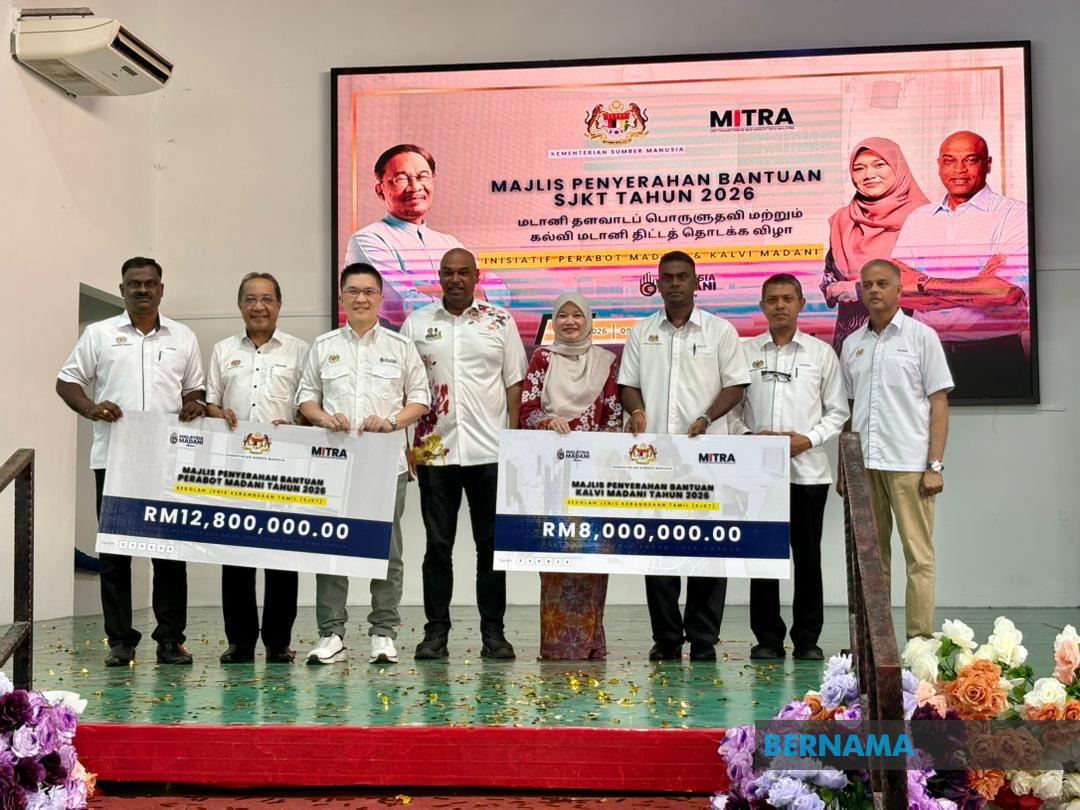
Simultaneously, the ministry unveiled the MADANI Furniture Initiative targeting 361 government-aided Tamil vernacular schools across Malaysia. The RM12.8 million allocation will supply fourteen categories of educational furniture and equipment, from classroom tables and chairs to storage cabinets and ventilation fans. The phased delivery timeline extending from June through August reflects logistical planning rather than immediate full deployment, suggesting careful sequencing across school locations and careful inventory management to prevent waste or theft.
The furniture initiative directly addresses infrastructure deficiencies in Tamil vernacular schools, which have historically operated with constrained budgets and minimal capital investment. Educational furniture constitutes foundational infrastructure; inadequate or deteriorating desks and seating creates physical discomfort impeding student concentration, while poor ventilation and absent storage systematically undermines pedagogical effectiveness. By systematizing furniture provision, the initiative removes barriers to learning that stem not from student or teacher capability but from basic environmental conditions.
Complementing the infrastructure improvements, the RM8 million KALVI MADANI Programme extends support across multiple dimensions affecting student achievement and family welfare. The free tuition component targets students from economically disadvantaged households where private tuition fees represent a substantial financial burden. Many Indian-Malaysian families view vernacular education as culturally and linguistically important but face acute financial constraints limiting access to supplementary academic support that increasingly determines educational outcomes in competitive systems.
Nutritional support embedded within the KALVI MADANI Programme addresses malnutrition's documented negative effects on cognitive development, school attendance and academic achievement. Students attending school without adequate nutrition experience reduced concentration, fatigue and illness-related absences—outcomes particularly acute among low-income populations. Providing systematic nutritional support removes this educational barrier while promoting health outcomes during critical developmental periods.
The learning kits and device components recognise the digital divide that disadvantages students lacking home access to educational technology. Even as Malaysian schools increasingly integrate technology into curriculum delivery, students from low-income households face restricted engagement with digital learning resources. The provision of devices and learning materials democratizes access to educational content otherwise available only to affluent students, narrowing achievement gaps rooted in economic inequality rather than aptitude.
Teacher welfare initiatives embedded within KALVI MADANI represent substantive recognition that educator wellbeing directly influences instructional quality. Teachers experiencing financial stress, inadequate resources or poor working conditions demonstrate reduced job satisfaction and commitment, which translates into diminished pedagogical engagement and student outcomes. By improving teacher conditions in vernacular schools, the programme addresses educational quality at its source—the motivation and capacity of educators themselves.
The dual initiatives reflect a coherent policy philosophy treating human capital development as central to economic and social stability. Supply chain disruptions, whether temporary shocks or structural transformations, necessitate workforce adaptability supported by accessible reskilling. Simultaneously, educational equity during formative years determines long-term workforce capability, earnings potential and social mobility. Investing simultaneously in displaced worker retraining and in strengthened vernacular school infrastructure acknowledges that economic resilience requires both immediate workforce responses and foundational human capital development.
For Malaysia's Indian-Malaysian community specifically, these initiatives address longstanding inequities in educational resource distribution. Tamil vernacular schools have traditionally received minimal capital investment despite enrolling students from predominantly low-income households. The targeted allocations signal sustained government commitment to educational inclusion across linguistic and ethnic communities, with concrete financial backing translated into tangible improvements in educational infrastructure and student support services.
The scale of beneficiary populations underscores the programmes' significance: nearly 40,000 pupils and over 5,000 teachers directly benefit from the furniture initiative, while over 10,000 Indian pupils access KALVI MADANI services. These numbers suggest systemic interventions extending beyond symbolic gestures toward meaningful resource reallocation addressing documented inequities in educational access and quality.

