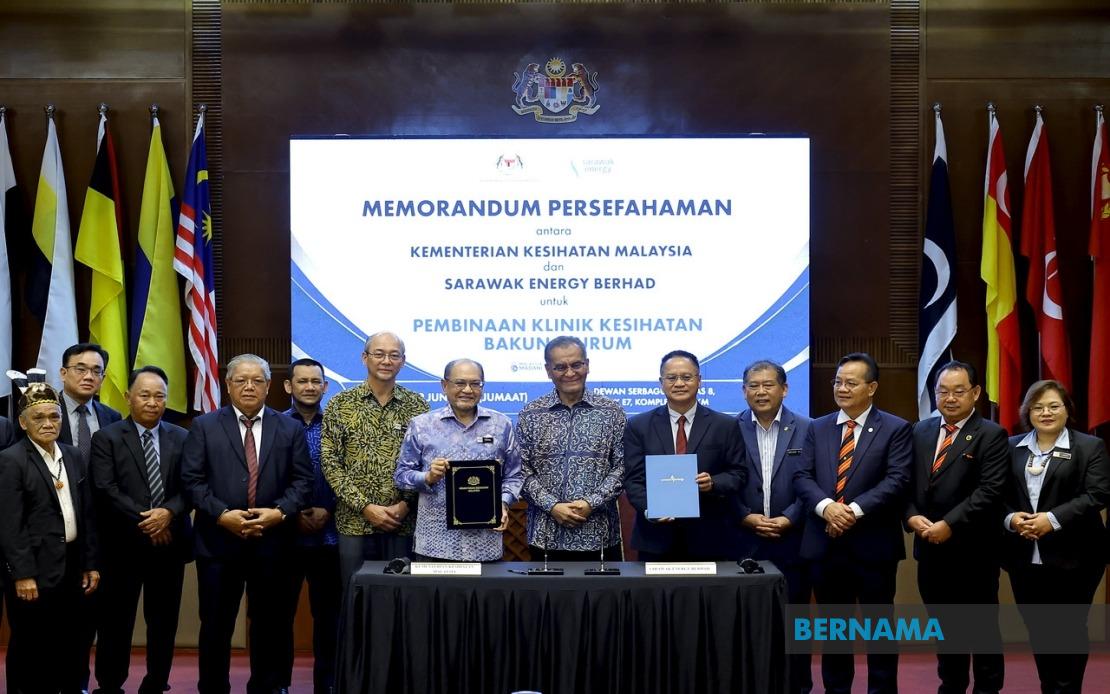
Malaysia's health system faces mounting pressure to expand its specialist workforce, with the Ministry of Health acknowledging a critical shortage of roughly 11,000 medical specialists that spans both public and private healthcare providers. Health Minister Datuk Seri Dr Dzulkefly Ahmad disclosed that the ministry has identified specific bottlenecks obstructing the pathway for training and development of specialists and is now in the final stages of resolving these constraints. The announcement came as the Health Ministry signed a memorandum of understanding with Sarawak Energy for the construction of the Bakun-Murum Health Clinic, underscoring the broader infrastructure expansion accompanying efforts to bolster medical capacity.
The shortage of specialists represents one of the most pressing challenges confronting Malaysia's public healthcare system. With populations aging and disease burdens shifting toward chronic conditions that require specialist intervention, the current deficit threatens to overwhelm existing resources and delay patient care. The problem compounds existing pressures on frontline healthcare workers already stretched thin across the country's hospital network. For Malaysian patients, particularly those in rural and semi-urban areas with limited specialist services, this shortfall translates into longer waiting times and reduced access to advanced medical care.
Dr Dzulkefly emphasised that bureaucratic hurdles, while acknowledged as real obstacles, will not impede the ministry's roadmap for expanding specialist numbers. The commitment to overcome these administrative constraints reflects recognition that systemic blockages—whether in training accreditation, placement pathways, or resource allocation—have contributed significantly to Malaysia's inability to produce specialists at the pace demanded by healthcare demand. The minister's willingness to publicly address these challenges signals an institutional acknowledgment that the current system requires substantial recalibration.
The ministry's approach to expanding the specialist workforce does not adopt a simplistic model of rapid recruitment. Instead, the Health Ministry is implementing a phased expansion strategy deliberately synchronised with infrastructure development. This measured approach reflects the reality that deploying additional specialists without commensurate investments in hospital facilities, diagnostic equipment, and support staff would merely redistribute scarcity rather than alleviate it. By aligning specialist workforce growth with facility expansion, the ministry aims to ensure that newly trained specialists can be productively deployed rather than underutilised due to infrastructure constraints.
Current priorities and pressing healthcare needs form the basis for determining the pace and distribution of specialist expansion. The ministry recognises that specialist requirements vary significantly across disciplines and geographic regions. Some specialties face more acute shortages than others, and deploying resources toward high-need areas and disciplines represents a rational allocation strategy. This granular approach to workforce planning, while administratively complex, theoretically produces better outcomes than blanket expansion that ignores regional disparities and specialty-specific demand.
The health ministry is presently relying on what it describes as a cluster crisis management system to address immediate service gaps while longer-term solutions progress through approval processes. This interim framework establishes mechanisms for hospitals within geographic clusters to collaborate intensively, sharing specialist expertise and coordinating patient referrals. Health clinics integrated into cluster networks can channel complex cases toward appropriate hospitals, and personnel can be temporarily redeployed according to emerging operational demands. This flexibility aims to optimise the utilisation of existing specialist capacity without waiting for new training pipelines to produce additional practitioners.
The cluster approach acknowledges harsh realities facing Malaysia's healthcare workforce. Medical professionals already report experiencing substantial occupational stress, burnout, and inadequate remuneration relative to private-sector alternatives. Asking overtaxed specialists to absorb additional caseload density risks accelerating career departures and degrading service quality. The interim cluster strategy attempts to manage current pressures through organisational innovation rather than simply demanding greater individual productivity from specialists already operating near capacity limits.
For Southeast Asian observers and policymakers, Malaysia's specialist shortage carries instructive lessons. As regional economies develop and populations age, demand for specialist medical services rises inexorably, yet training pipelines require years to produce qualified practitioners. Countries across Southeast Asia confront similar constraints on specialist availability, suggesting that resolving Malaysia's shortage will require not merely bureaucratic reform but potentially restructured medical education systems, revised training timelines, and possibly greater integration of regional specialist expertise through cross-border referral mechanisms.
The implications for Malaysian patients extend beyond waiting times. Specialist shortages constrain capacity for clinical innovation, research, and development of tertiary care services. Teaching hospitals struggle to maintain robust training environments when existing specialists are overwhelmed by clinical demands. This creates a vicious cycle where overworked specialists cannot adequately mentor trainees, potentially compromising the quality of the next generation of practitioners. Breaking this cycle requires sustained investment in both specialist positions and supporting infrastructure.
The Health Ministry's articulation of phased expansion and bureaucratic reform suggests internal planning has progressed substantially, though specific implementation timelines remain unpublished. The ministry's emphasis on synchronisation between workforce expansion and infrastructure development implies that major capital projects remain in planning or early construction stages. Malaysian healthcare stakeholders and patients awaiting specialist services will be monitoring closely whether the ministry's promised resolution of bureaucratic constraints translates into measurable acceleration of specialist production within reasonable timeframes.
The integration of the Bakun-Murum clinic project with broader specialist expansion strategy illustrates the ministry's comprehensive approach to healthcare system development. However, the substantial gap between current specialist capacity and assessed demand suggests that incremental clinic additions and phased workforce expansion, while necessary, may prove insufficient to eliminate waiting times and improve access in the near term. The ministry's challenge lies in maintaining momentum across multiple concurrent initiatives while managing workforce pressures and maintaining service quality throughout the transition period.

