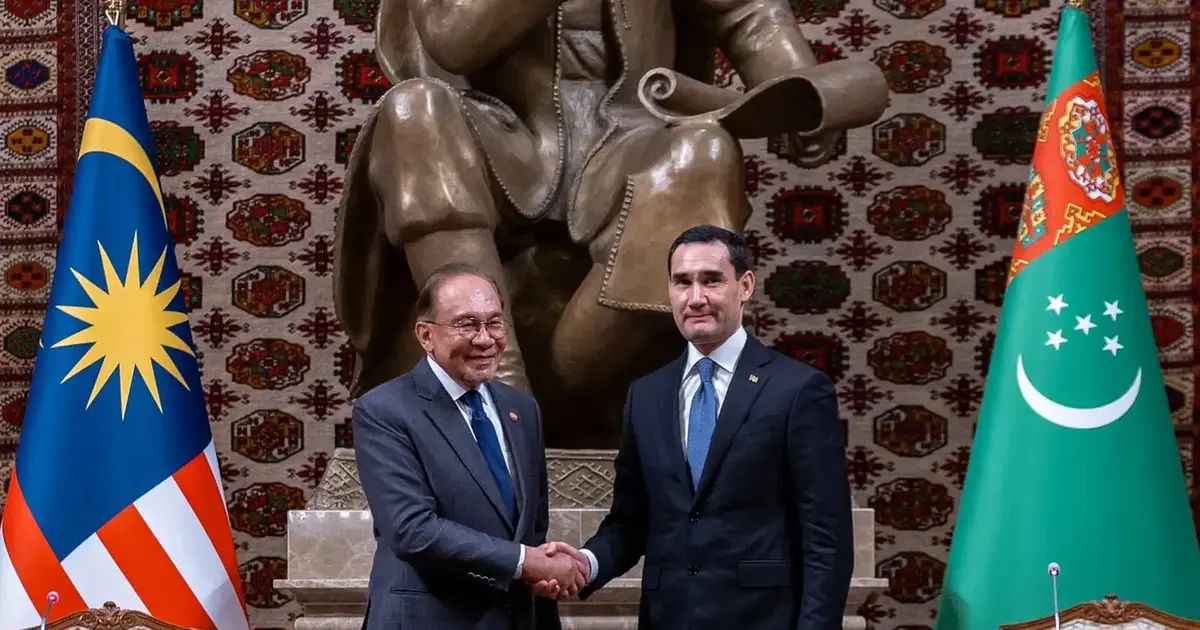
Prime Minister Anwar Ibrahim's administration has been quietly assembling a geographically dispersed network of energy partnerships that experts believe will fundamentally reshape Malaysia's approach to fuel security and export competitiveness. Recent agreements with Russia, Turkmenistan, and Japan represent the culmination of calculated diplomatic outreach designed to insulate the nation from supply vulnerabilities and volatile global energy markets that have buffeted Southeast Asia in recent years.
The agreements strike at a critical juncture when energy security has become inseparable from broader geopolitical strategy. Malaysia, as a major liquefied natural gas exporter and a growing consumer of fossil fuels, faces competing pressures: maintaining its position as a reliable LNG supplier to global markets whilst simultaneously ensuring domestic energy availability at affordable prices. The diplomatic overtures signal a recognition that bilateral relationships—rather than reliance on spot markets or multilateral frameworks—offer the stability required for long-term energy planning.
Engagements with Russia reflect Malaysia's willingness to diversify partnerships beyond traditional Western suppliers and markets, acknowledging that energy cooperation transcends current geopolitical divisions. For a nation that has historically maintained strategic ambiguity in major power competitions, such deals underscore pragmatism: Malaysia seeks energy security regardless of international tensions elsewhere. This approach resonates throughout the region, where other nations similarly navigate complex relationships to secure essential resources.
Turkmenistan's role in the arrangement is particularly significant for Malaysia's supply-side strategy. The Central Asian nation possesses vast reserves of natural gas and has actively pursued partnerships across Asia. A structured relationship with Turkmen suppliers could provide Malaysia with additional hydrocarbon reserves to feed both domestic consumption and liquefaction facilities that service the global LNG market. Such arrangements typically include long-term purchase agreements that lock in pricing mechanisms and guarantee minimum volumes, reducing exposure to market fluctuations that have historically squeezed margins for energy-dependent economies.
The Japanese dimension adds a crucial demand-side stability mechanism. Japan remains the world's largest LNG importer, and relationships with Tokyo provide Malaysian exporters with access to one of the most reliable and substantial markets available. Japanese energy companies and government entities prioritise long-term contracts with trusted suppliers, and Malaysia's cultivation of these relationships ensures that production capacity expansion can be matched with committed buyer commitments. This reduces the risk of infrastructure underutilisation that has plagued some regional producers.
Analysts emphasise that these agreements collectively address three distinct vulnerabilities in Malaysia's energy architecture. Supply security improves through access to additional reserves and diverse sources, reducing dependence on any single producer region. Demand stability strengthens via secured export channels that guarantee revenue streams and justify continued investment in production and export infrastructure. Reserve access—the capacity to draw upon accumulated resources during supply disruptions—provides the flexibility necessary for both domestic priorities and international obligations.
The timing of these diplomatic initiatives reflects broader regional trends. Supply chain disruptions following global pandemic effects, coupled with Russia's actions in Europe and resulting energy market reshaping, have prompted many Asian nations to reassess energy strategies. Malaysia's overtures align with wider Southeast Asian recognition that traditional assumptions about energy abundance and smooth market functioning can no longer be taken for granted. Countries throughout the region are simultaneously negotiating with multiple suppliers and buyers, effectively creating redundancy in their energy relationships.
For Malaysia specifically, these partnerships carry implications extending beyond energy economics into geopolitical positioning. By maintaining balanced relationships across multiple major powers and regions, the nation reinforces its identity as a non-aligned actor whose primary interest lies in national development rather than bloc membership. This positioning has traditionally served Malaysian foreign policy well, and energy cooperation becomes one instrument among several for maintaining this equilibrium.
The practical implications for Malaysian households and businesses depend substantially on implementation details not yet fully disclosed. Long-term procurement agreements typically result in more stable domestic energy prices compared to markets dependent on spot transactions, though initially negotiated rates reflect prevailing international conditions. Enhanced energy security provides a foundation for industrial expansion and manufacturing competitiveness, as energy costs and reliability significantly influence investment decisions by multinational corporations evaluating regional locations.
Regional observers note that Malaysia's energy diplomacy may establish precedents for other ASEAN members facing similar security concerns. Should these arrangements prove effective in stabilising supply and demand, neighbouring nations might pursue comparable strategies, potentially leading to a more coordinated Southeast Asian approach to energy partnership agreements. This evolution could gradually shift regional energy dynamics, creating a more resilient network less vulnerable to individual supplier disruptions or market shocks.
Looking forward, the durability of these partnerships depends on several factors beyond diplomatic statements. Geopolitical relationships remain fluid, particularly given evolving great power competition in Asia. Maintenance of these energy relationships will require sustained political commitment and the ability to manage inevitable tensions between energy partnerships and other foreign policy objectives. Additionally, the longer-term sustainability of fossil fuel-based energy architecture faces pressure from global decarbonisation trends, suggesting that whilst these agreements may solve near-term challenges, Malaysia must simultaneously invest in energy transition pathways to remain competitive in a fundamentally changing global energy landscape.

