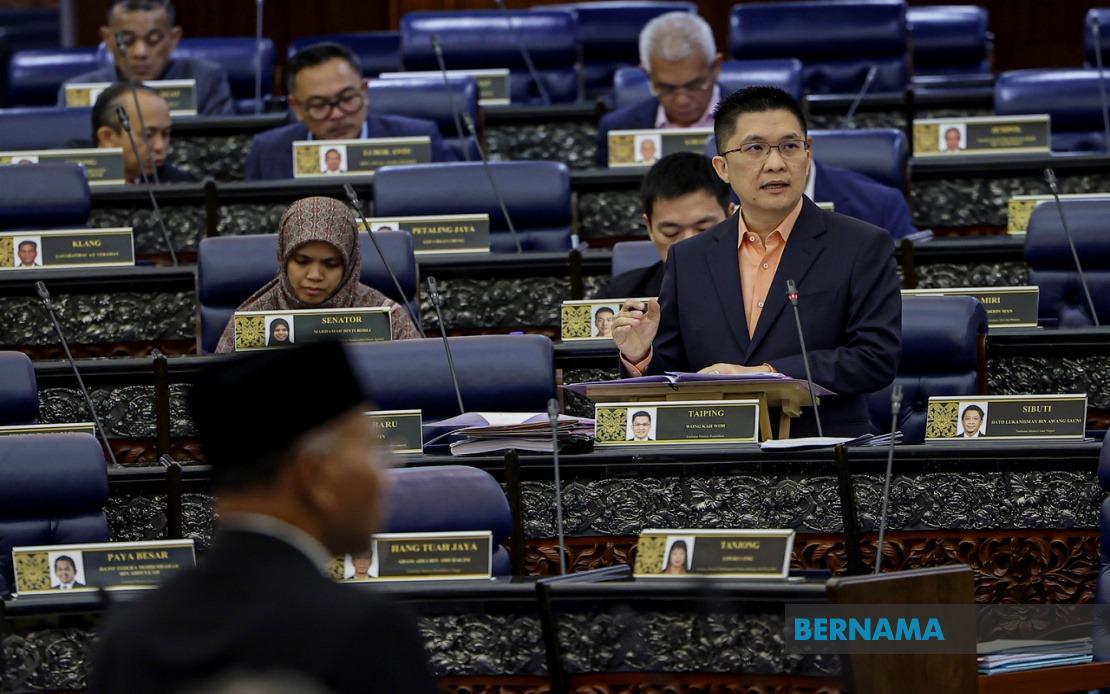
The Ministry of Education is racing to complete sweeping preparations for one of the most significant structural changes to Malaysia's primary education system, with the 2027 school year marking the first time two Year One cohorts will enter the education system simultaneously. Deputy Education Minister Wong Kah Woh outlined the scale of infrastructure and human resource requirements during parliamentary question time, revealing that the ministry has already received over 478,000 registration applications—a remarkable 12.07 per cent increase compared to 2026 enrolments. This expansion necessitates the construction of 2,596 new classrooms across 838 schools and the recruitment of 3,150 contract of service teachers, demonstrating the government's commitment to absorbing this demographic surge without compromising educational quality.
The two distinct cohorts signal a fundamental policy shift in Malaysia's education system. While 405,033 applications have been received for the traditional seven-year-old cohort, the introduction of a six-year-old intake has generated 73,386 applications, creating unprecedented demand for classroom space and teaching resources. This parallel intake system, first introduced in recent policy reforms, allows greater flexibility in child development assessment while attempting to align Malaysia with international early primary education practices. For parents and guardians, the policy grants discretion in determining whether their children are developmentally ready to commence formal schooling, a meaningful departure from the rigid age-based structure that previously governed enrolment.
The construction methodology chosen by the MOE reflects a pragmatic approach to addressing infrastructure bottlenecks. Rather than relying on traditional building methods that would delay classroom availability, the ministry is employing the Industrialised Building System—a modular construction approach that accelerates project completion while maintaining construction standards. Significantly, Wong indicated that classroom construction projects are targeted for completion within the current year, suggesting a compressed timeline that prioritizes readiness. The distribution of construction across 838 schools indicates geographically dispersed investment, though the announcement did not specify which states or regions face the most acute capacity constraints, raising questions about equity in resource allocation across Malaysia's diverse education landscape.
Teacher recruitment presents a parallel challenge to infrastructure expansion. The 3,150 contract of service appointments represent a substantial staffing injection, yet Wong's remarks suggest the ministry is preparing for potential shortages through multiple recruitment channels. Beyond COS teachers, the Education Service Commission will deploy reserve candidates to address staffing gaps, and the ministry has developed five-year teacher requirement projections at both national and state levels. This multi-tiered recruitment strategy acknowledges the complexity of teacher workforce planning in a federal education system where state-level variations in demographics and existing capacity create localized supply challenges. For Malaysian educators, the expansion signals significant hiring opportunities, though the reliance on contract positions rather than permanent appointments may raise concerns about employment security and career progression.
The simultaneous intake system carries profound implications for pre-school education access and private kindergarten viability. The ministry has substantially increased pre-school provision, adding 350 classes in the current year compared to approximately 150 annually previously—a more than twofold acceleration. This expansion targets disadvantaged B40 families who cannot afford private kindergarten fees, attempting to democratize early childhood education access. However, Wong acknowledged that the loss of one cohort to state pre-school systems poses sustainability questions for private kindergarten operators, many of whom depend on six-year-old cohorts for enrolment. The ministry is conducting stakeholder engagement sessions to address these concerns, recognizing that abrupt policy shifts can destabilize private education sectors if transition arrangements prove inadequate.
Curriculum and pedagogical adaptation represent crucial but less visible dimensions of the 2027 expansion. Wong indicated that the 2027 school curriculum will be tailored specifically to accommodate six-year-old developmental capacities and learning needs, signaling that the ministry is not simply admitting younger children into existing Year One frameworks. A dedicated Year One transition programme will facilitate adjustment for both age cohorts, recognizing that combining children with twelve months' developmental difference requires carefully calibrated teaching approaches. This pedagogical consideration demonstrates awareness that infrastructure and staffing alone cannot ensure successful integration; curriculum coherence and teacher preparation are equally essential to educational outcomes.
For Southeast Asia's broader education context, Malaysia's dual-cohort system carries regional significance. Several neighbouring countries have explored similar age-of-entry reforms, and Malaysia's implementation experience will provide valuable evidence about feasibility, cost-effectiveness, and educational outcomes. The 478,000-strong registration surge suggests considerable parental acceptance of the policy, though longitudinal data on the dual cohorts' academic performance will ultimately determine whether the structural change delivers intended developmental benefits. The significant public investment—evident in classroom construction and teacher recruitment scales—reflects governmental prioritization of primary education expansion amid competing fiscal demands.
The parliamentary exchange reveals ongoing dialogue between education policymakers and regional representatives about state-specific variations in teacher shortage projections and implementation timelines. Datuk Idris Ahmad's supplementary question about state-level teacher shortage forecasts highlights concerns that expansion pressures may not affect all states uniformly. Urban and developed states may possess existing capacity buffers, whilst rural or rapidly growing regions might face acute staffing deficits. The ministry's assertion that state-level five-year projections exist suggests this differentiation is acknowledged, though public disclosure of detailed state-by-state requirements would provide greater transparency about implementation equity.
Financial implications of the 2027 expansion remain partially obscured from public accounts. While Wong outlined construction scope and teacher recruitment figures, aggregate cost estimates were not disclosed during parliamentary question time. Understanding the budgetary envelope allocated to classroom construction, teacher salaries, curriculum development, and transition programme delivery would clarify whether the government views this expansion as fiscally manageable or whether education ministry budgets will experience meaningful pressure. Malaysian taxpayers and education sector observers would benefit from transparent accounting of expansion costs and funding mechanisms, particularly given concurrent infrastructure demands across Malaysia's public services.
The staged implementation timeline suggests a measured approach to systemic expansion. By concentrating classroom construction completion within the current year and initiating teacher recruitment before 2027, the ministry is attempting to avoid implementation chaos often accompanying large-scale education reforms. However, the adequacy of this timeline depends critically on execution capacity within school districts and construction sectors. Delays in classroom availability or teacher recruitment, common in large-scale infrastructure projects, could create overcrowding or teacher shortages that undermine educational quality precisely when the system absorbs additional students. Effective project management and contingency planning will therefore determine whether the 2027 dual-cohort intake proceeds smoothly or encounters operational disruptions.
Parental choice regarding child readiness introduces an important variable often overlooked in policy announcements. Rather than imposing age-based cohort assignment, the ministry permits guardians to determine whether their six-year-old children possess sufficient developmental maturity for Year One entry. This flexibility acknowledges genuine developmental variation within age cohorts while potentially creating self-selection bias—more advantaged families may be more confident in accelerating children, whilst disadvantaged families might defer entry, reproducing educational inequality within nominally open-access systems. The long-term equity implications of choice-based systems merit careful monitoring as the 2027 cohorts progress through primary education.
The infrastructure and staffing preparations announced by Wong Kah Woh represent substantial governmental commitment to accommodating Malaysia's continuing primary student population growth. The convergence of dual-cohort intake, classroom construction, teacher recruitment, curriculum adaptation, and pre-school expansion creates a complex implementation environment requiring coordination across multiple education ministry divisions and state education departments. Success hinges not merely on achieving the stated infrastructure targets—2,596 classrooms and 3,150 teachers—but on ensuring these resources are deployed thoughtfully to support equitable learning outcomes for nearly half a million pupils entering Year One simultaneously.

