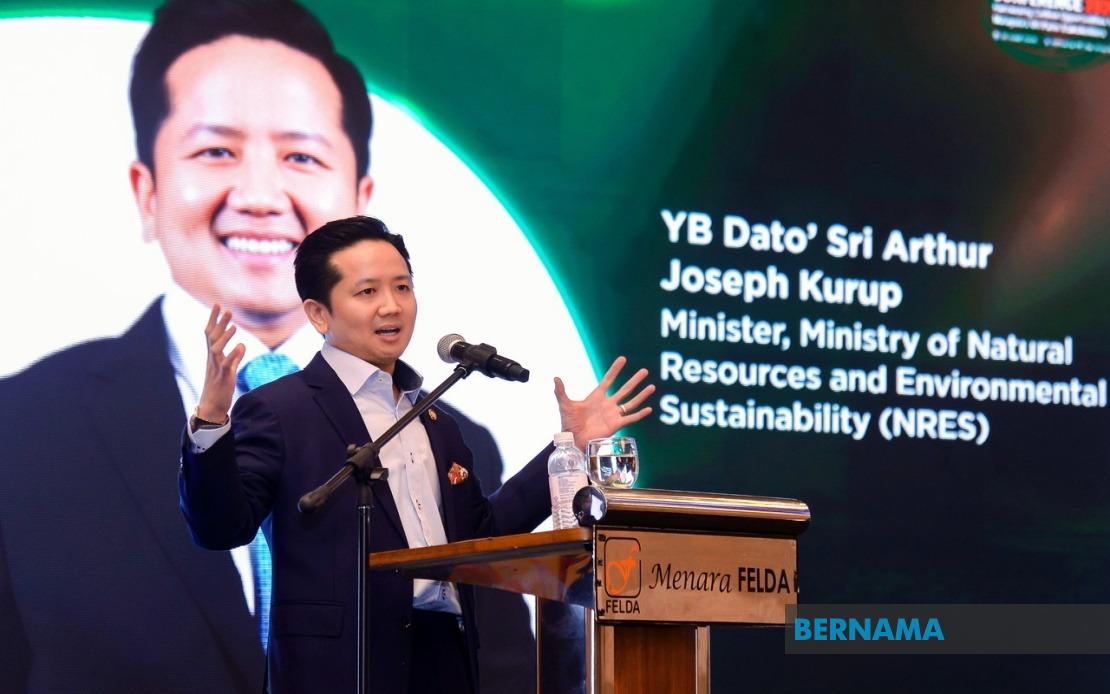
The Malaysian government continues to fine-tune its approach to implementing a carbon tax, according to Natural Resources and Environmental Sustainability Minister Datuk Seri Arthur Joseph Kurup, who addressed this matter while officiating the Malaysia Palm Carbon Conference (MPC) 2026 in Kuala Lumpur. While the government remains committed to eventually introducing the levy, officials are taking a measured approach that accounts for the readiness of local industries and the evolving policy landscape. The minister indicated that a formal decision on the timing of rollout would be made once further assessment is complete, though he affirmed the tax would eventually move forward.
Crucially, Arthur stressed that the carbon tax is not intended as a punitive mechanism designed to penalise economic sectors. Rather, the government views it as an incentive structure that would encourage businesses and consumers to adopt cleaner technologies and simultaneously reduce their carbon footprint. This framing is significant for Malaysia's economic stakeholders, as it signals the government's intent to balance environmental objectives with industrial competitiveness. The reframing of the tax as an incentive rather than a penalty reflects growing recognition that climate policy must work alongside, rather than against, economic development.
The government is simultaneously examining how revenue generated from the carbon tax should be allocated. Several proposals are under consideration, with options including channelling funds towards climate adaptation initiatives, forest conservation programmes, and sustainable land management projects. Arthur indicated that this revenue-use mechanism is essential for ensuring that money collected genuinely supports the country's broader sustainability agenda. By directly linking carbon tax revenue to climate-related expenditures, the government aims to demonstrate that the levy serves a constructive purpose beyond simple revenue collection, thereby building public and business support for the measure.
This deliberate approach to revenue allocation carries particular relevance for Malaysia, a major palm oil producer where land use and forestry practices face international scrutiny. By explicitly committing to use carbon tax proceeds for forest conservation and sustainable land management, the government can address both domestic environmental concerns and international criticism regarding deforestation. Such allocation would reinforce Malaysia's positioning as a nation taking climate commitments seriously, which could benefit trade relationships and investment flows from environmentally conscious markets.
The delay in implementation reflects earlier government statements from April, when Arthur indicated that the introduction timeline might be extended beyond the original 2024 target. At that time, the minister cited the global energy supply crisis and geopolitical tensions as reasons for reconsidering the implementation schedule. The government recognised that introducing additional financial obligations on industries such as steel, cement, and construction during a period of economic uncertainty could exacerbate pressures on already-strained sectors. This cautious approach demonstrates an awareness that poorly-timed climate policy can undermine competitiveness and business confidence.
Originally, the carbon tax was designed to target selected heavy-emission industries including the steel, cement, and construction sectors. These industries are crucial to Malaysia's development trajectory and regional competitiveness, making the timing and design of any carbon pricing mechanism particularly sensitive. The extended deliberation period has allowed stakeholders within these sectors to engage with policymakers, potentially shaping the final design of the levy in ways that minimise disruptive impacts while still achieving emissions-reduction objectives.
Parallel to carbon tax development, the government is progressing work on comprehensive climate legislation. Arthur announced that the National Climate Change Bill is expected to be tabled in the Dewan Rakyat during the current parliamentary year. This legislation represents a cornerstone of Malaysia's climate governance framework and would establish clearer legal and institutional mechanisms for addressing climate change. The bill's introduction reflects a broader shift towards embedding climate considerations into the country's legislative and regulatory architecture.
The simultaneous pursuit of the carbon tax and the National Climate Change Bill suggests a multi-pronged strategy to strengthen Malaysia's climate governance. Rather than relying on a single policy instrument, the government is developing complementary legislative and financial tools. This comprehensive approach acknowledges that addressing climate change requires both structural reforms—provided by the legislation—and economic incentives provided by the carbon tax.
For Malaysia and Southeast Asia more broadly, these developments have significant implications. As regional economies grapple with the transition to lower-carbon growth models, Malaysia's experience with carbon pricing could serve as a reference point for neighbouring nations. The government's emphasis on industry readiness and the need to balance environmental and economic objectives reflects challenges common across the region. Countries like Indonesia, Thailand, and Vietnam are similarly wrestling with how to implement climate policies without undermining development goals.
The decision to use carbon tax revenue for climate adaptation and forest conservation is particularly noteworthy given Southeast Asia's vulnerability to climate impacts such as flooding and sea-level rise. By committing revenue to adaptation projects, Malaysia acknowledges that reducing emissions alone is insufficient; the region must also build resilience to climate impacts already underway. This recognition aligns with growing international emphasis on loss-and-damage finance and adaptation funding in climate negotiations.
Business and investment communities will likely scrutinise the final design of both the carbon tax and the National Climate Change Bill closely. Foreign investors increasingly incorporate climate risk and governance quality into investment decisions, meaning that clear, predictable climate policy can enhance Malaysia's attractiveness. Conversely, poorly designed or unpredictably implemented climate measures could deter investment. The government's deliberate pace in refining the carbon tax suggests an awareness of these commercial sensitivities.
The presence of Federal Land Development Authority (Felda) chairman Datuk Seri Ahmad Shabery Cheek at the Malaysia Palm Carbon Conference underscores the intertwining of Malaysia's agricultural sector with climate policy. Felda manages extensive land holdings and smallholder farmers, making it a key player in how carbon pricing and forest conservation initiatives affect rural communities. The involvement of such stakeholders in policy discussions indicates that the government is attempting to ensure that climate measures account for the livelihoods and concerns of rural Malaysians.
Moving forward, the government's commitment to implementing the carbon tax while continuing to refine its design and timing suggests that Malaysia is attempting to chart a middle course between ambitious climate action and pragmatic economic management. Whether this approach ultimately succeeds will depend on how effectively the government communicates its climate objectives, engages stakeholders throughout the implementation process, and ensures that the revenue mechanisms deliver tangible benefits for climate adaptation and forest conservation.