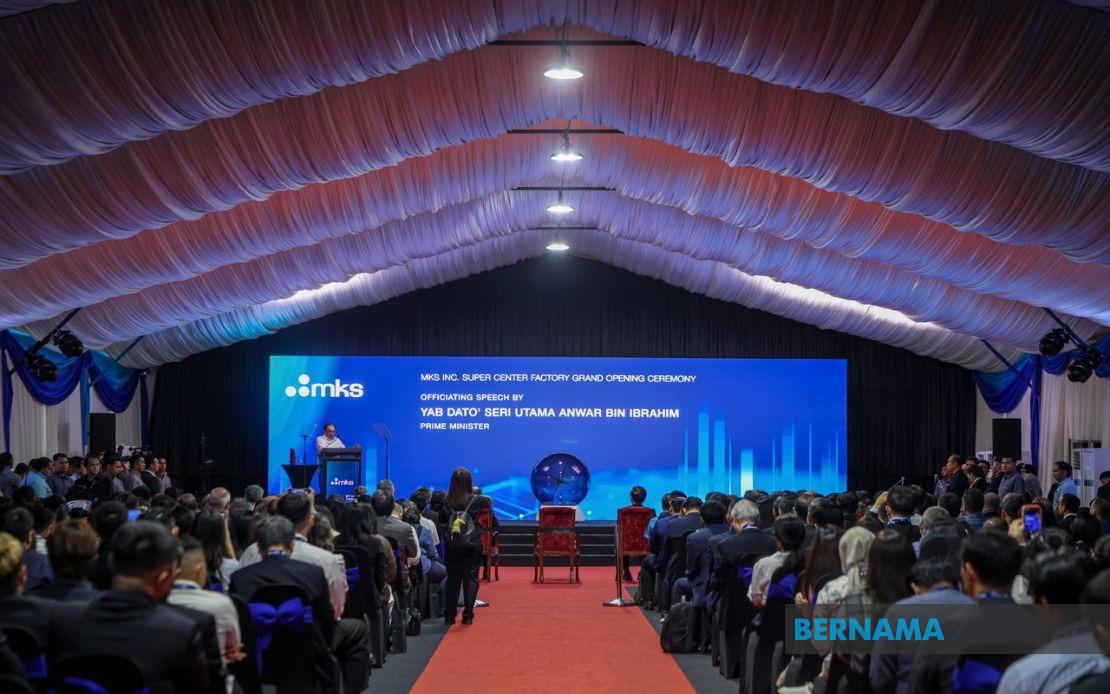
Prime Minister Datuk Seri Anwar Ibrahim has underscored the strategic advantages Malaysia derives from pursuing a carefully calibrated foreign policy that refuses alignment with any single geopolitical bloc. Speaking at an industrial facility opening in Batu Kawan on June 20, Anwar articulated how the nation's reputation for principled autonomy has become a catalyst for expanding economic ties across competing global powers. This positioning, he explained, has translated into measurable commercial gains and reinforced Malaysia's standing as a reliable partner in an increasingly fragmented world.
The Prime Minister's remarks reflect a deliberate diplomatic strategy that has gained prominence under his administration. Rather than choosing sides in tensions between major powers—whether centring on United States-China relations, India's regional ambitions, or Russia's international standing—Malaysia has consciously maintained engagement with all established and emerging powerhouses. This non-aligned approach, reminiscent of Malaysia's founding principles during the Cold War, has been dusted off and reapplied to contemporary great-power competition, yielding what Anwar characterises as tangible returns for the Malaysian economy.
Anwar pointed to several high-profile diplomatic visits and negotiations as evidence that Malaysia's balancing act commands respect internationally. He referenced a significant state visit by United States President Donald Trump the previous year, simultaneous relationship-building with China and India, and more recent engagements with Russia. Each interaction, in Anwar's framing, demonstrates that Malaysia occupies a position of genuine centrality in global affairs rather than peripheral dependence. This narrative of Malaysian importance contrasts sharply with smaller nations that feel compelled to choose between rival powers, thereby constraining their economic options.
Concrete economic dividends from this diplomatic stance have begun materialising. Anwar highlighted Petroliam Nasional Bhd (Petronas), Malaysia's state oil and gas champion, and its freshly negotiated agreement in Turkmenistan as a tangible outcome of the government's multi-aligned engagement strategy. Such deals in energy-rich Central Asian markets would have been considerably harder to secure had Malaysia been perceived as aligned exclusively with any single camp. The Turkmenistan agreement exemplifies how diplomatic neutrality translates into corporate opportunities, allowing Malaysian state enterprises to operate across diverse regulatory and geopolitical environments.
The Prime Minister's emphasis on expressing Malaysia's position on contentious global issues while simultaneously welcoming participation from all quarters reveals the sophistication underlying this approach. Malaysia refuses silence on matters it deems important—whether human rights, conflicts, or regional security—but refrains from weaponising its voice as a tool of any external power. This moral clarity coupled with pragmatic engagement permits Malaysia to maintain credibility across ideological boundaries. For Malaysian businesses seeking to operate internationally, this positioning provides diplomatic cover and reduces the risk of becoming ensnared in proxy disputes between competing empires.
For Southeast Asia more broadly, Malaysia's diplomatic model offers both inspiration and caution. The region comprises smaller economies that collectively possess strategic significance due to geography, resources, and trade routes, yet individually face pressure to align with major powers. If Malaysia can successfully demonstrate that principled non-alignment generates superior economic outcomes, other ASEAN members might gain confidence to resist coercive alignment pressures. Conversely, should Malaysia's balancing act prove unsustainable—with major powers eventually demanding explicit loyalty—the model's credibility would collapse throughout the region.
The broader context of Anwar's comments involves Malaysia's navigation of intensifying strategic competition between the United States and China, alongside India's growing regional assertiveness. Turkmenistan and Central Asia represent areas where these powers maintain competing interests but lack decisive dominance. Malaysia's willingness to engage this space reflects confidence that multiple patrons prefer a stable, neutral trading partner to a region destabilised by proxy conflict. This calculation has allowed Petronas to pursue commercial opportunities that might be foreclosed to firms from explicitly aligned nations.
Domestically, Anwar's framing of neutrality as an economic asset serves important political functions. Malaysia's business community, especially export-oriented manufacturers and service providers, benefits from access to diverse markets without stigma of being perceived as a proxy for any single power. Foreign investors considering Malaysia as an operational base find the nation's political steadiness and multi-aligned status attractive compared to neighbours facing alignment pressure. The implicit message is that voting for Anwar's government and supporting his foreign policy translates into prosperity and opportunity.
However, maintaining this balancing act demands considerable diplomatic skill and domestic consensus. Public opinion in Malaysia remains diverse on questions of China relations, United States partnership, and regional security arrangements. Anwar's emphasis on Malaysia's independence and unwillingness to subordinate national interests to external demands appeals to nationalist sentiment while reassuring business stakeholders that commercial opportunities remain abundant. Yet as global polarisation intensifies, maintaining this middle ground will grow increasingly difficult.
The factory opening where Anwar made these comments—the MKS Super Centre facility in Bandar Cassia Technology Park—itself symbolises the linkages between foreign policy and domestic economic development. Attended by Penang Chief Minister Chow Kon Yeow and senior investment officials, the event demonstrated how regional economic initiatives benefit from stable international relations and investor confidence. The presence of the Deputy Minister of Investment, Trade and Industry underscored the government's view that diplomatic neutrality directly enables domestic manufacturing competitiveness and foreign direct investment inflows.
Looking forward, Malaysia's economic future increasingly depends on sustaining this diplomatic equilibrium. The nation's position as a crucial energy player, manufacturing hub, and financial centre makes it too valuable for any power to alienate entirely, yet insufficiently aligned with any single bloc to warrant unconditional support. This precarious positioning demands sophisticated statecraft, clear communication of Malaysian interests, and willingness to benefit from opportunities presented by competing powers without becoming dependent on any single benefactor. Anwar's public articulation of this strategy suggests the government understands these dynamics and intends to pursue them actively.

