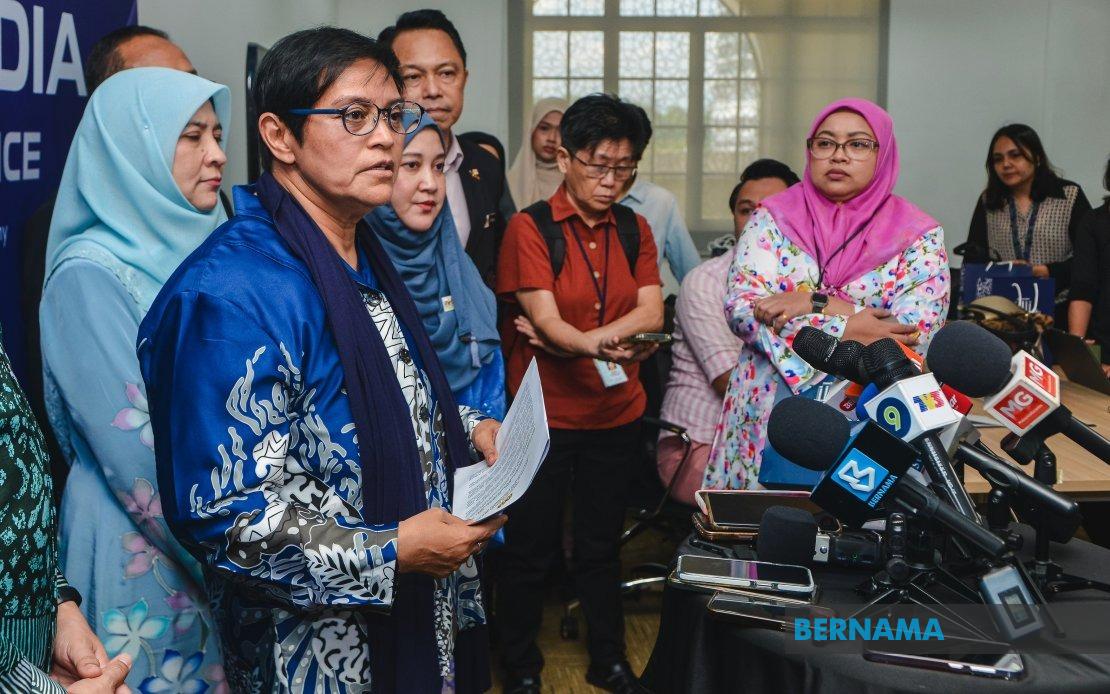
Malaysia is adopting a novel legislative approach to combat bullying by holding parents jointly accountable for misconduct perpetrated by their children under the Anti-Bullying Act 2026. Minister in the Prime Minister's Department (Law and Institutional Reform) Datuk Seri Azalina Othman Said unveiled the comprehensive anti-bullying framework at the launch of the Anti-Bullying Tribunal headquarters at the Asian International Arbitration Centre in Kuala Lumpur on June 16, signalling a significant shift in how the nation addresses youth violence and harassment.
The legislation departs substantially from conventional criminal law by extending legal responsibility beyond individual offenders to their families. Under traditional criminal statutes, accountability rests solely with the perpetrator; the Anti-Bullying Act 2026 fundamentally recalibrates this principle by introducing shared family responsibility. This means that financial sanctions, including fines and associated penalties imposed on juvenile bullies, become binding obligations for parents and other family members. The approach acknowledges the influential role families play in shaping children's behaviour and incentivises parental supervision and intervention.
Azalina emphasised that this joint liability mechanism represents a deliberate policy choice designed to amplify the consequences of bullying and deter potential offenders. By making financial consequences collective rather than individual, the legislation creates a powerful deterrent effect at the household level. Parents cannot ignore their children's conduct without risking personal financial exposure, thereby promoting active parental engagement in preventing bullying behaviour. The minister articulated a clear intent to transform societal attitudes toward bullying, moving it from the category of everyday schoolyard incidents to serious misconduct warranting formal legal intervention.
The establishment of the Anti-Bullying Tribunal responds to what authorities characterise as an alarming escalation in bullying incidents across Malaysia, including cases with fatal consequences. The tribunal commenced operations with 56 appointed members drawn from legal professionals and specialists in child welfare and psychology, providing expertise necessary to adjudicate sensitive cases involving minors. This expert composition ensures that decisions reflect understanding of developmental psychology and trauma-informed practices, rather than purely legal considerations.
To maximise accessibility for victims and complainants, the tribunal operates through a decentralised structure spanning six physical and virtual hearing zones nationwide. Rather than concentrating operations in a single location, the tribunal leverages existing facilities within the Legal Affairs Division, Insolvency Department, Legal Aid Bureau, and vacant courtrooms across the country. This geographically distributed model removes barriers to justice for bullying victims residing outside major urban centres and accommodates individuals unable to travel long distances. Virtual hearing capacity further expands access, particularly important for victims experiencing anxiety or trauma from bullying incidents.
A significant innovation embedded within the Act permits victims to lodge complaints directly with the tribunal regardless of whether the bullying occurred on school premises or beyond institutional boundaries. Previously, bullying incidents occurring outside schools would typically fall outside institutional complaint mechanisms, potentially leaving victims without formal redress channels. By removing this jurisdictional limitation, the legislation recognises that bullying increasingly occurs through digital platforms and social media, extending well beyond traditional school environments. This modernised approach reflects contemporary realities of youth interaction and harassment patterns.
The tribunal has implemented a digital portal enabling online case registration, removing procedural friction that often discourages victims from pursuing formal complaints. Simplifying the complaint mechanism acknowledges that victims and their families often lack resources or knowledge to navigate complex legal procedures. Online registration reduces costs, eliminates geographical constraints, and allows submissions outside business hours, making the system genuinely accessible to working families and those in rural areas. This technological integration positions Malaysia's anti-bullying framework as progressive relative to similar systems in comparable jurisdictions.
For Malaysian and Southeast Asian contexts, this legislation carries implications extending beyond bullying prevention. The joint parental liability principle potentially establishes precedent for other areas of youth misconduct, from vandalism to theft to substance abuse. If the Anti-Bullying Act 2026 demonstrably reduces bullying incidents, other jurisdictions within the region may adopt comparable family-centered accountability models. Conversely, if implementation encounters practical difficulties or unintended consequences emerge, the legislation provides valuable empirical evidence regarding the limits of collective liability approaches.
Azalina's emphasis on raising awareness among children about bullying's seriousness signals recognition that legal mechanisms alone cannot resolve behavioural issues rooted in social attitudes and peer cultures. The tribunal launch functions simultaneously as a public education campaign, communicating to young people that bullying attracts formal legal consequences rather than remaining a private interpersonal matter. This consciousness-raising objective may prove as significant as the tribunal's actual adjudicatory function in reshaping how Malaysian youth perceive bullying's social gravity.
The involvement of Majlis Amanah Rakyat (MARA) chairman Datuk Dr Asyraf Wajdi Dusuki at the tribunal launch reflects recognition that bullying disproportionately affects disadvantaged communities and bumiputera students. MARA's participation suggests coordination between legal reform initiatives and social welfare bodies to ensure comprehensive support for vulnerable victims. This institutional alignment indicates that Malaysia's anti-bullying response extends beyond punitive mechanisms to encompass victim support services and community engagement.
Implementation will prove critical for evaluating the Anti-Bullying Act 2026's effectiveness. The tribunal must navigate complex questions regarding parental liability standards—particularly when bullying involves multiple children or occurs despite reasonable parental oversight efforts. Legal precedent established through early tribunal decisions will substantially influence how families interpret their responsibilities and how consistently the joint liability principle is applied across diverse cases and socioeconomic circumstances throughout the nation.