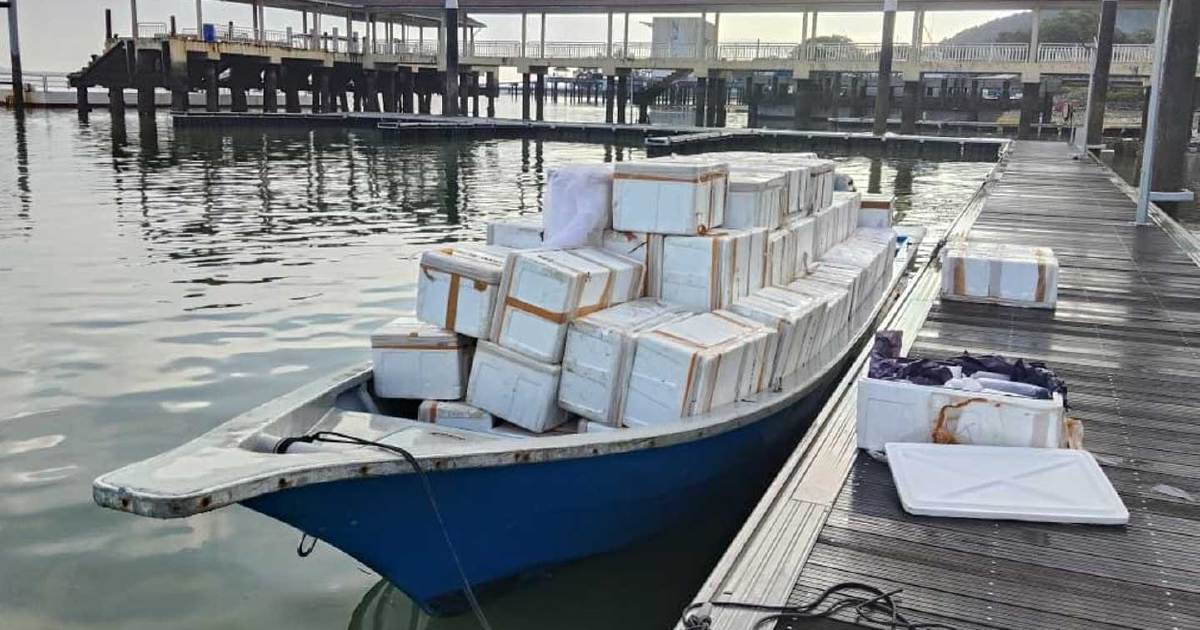
Maritime authorities in Malaysia have successfully disrupted a significant smuggling operation targeting baby lobsters, seizing a cargo valued at RM2.7 million that was being transported toward Singapore. The Malaysian Maritime Enforcement Agency detected the illegal consignment at Tanjung Belungkor jetty in Kota Tinggi during early morning operations, demonstrating the agency's continued vigilance against transboundary contraband trafficking along Malaysia's coastal waters.
The interception marks another chapter in the ongoing battle against organised marine smuggling networks that have increasingly targeted Malaysia's aquaculture resources. Baby lobsters, or juvenile crustaceans, represent a highly lucrative commodity in regional seafood markets, particularly in Singapore where demand for premium seafood remains robust. The sophisticated logistics required to move such perishable goods across international borders highlights the complexity of cross-border aquaculture trafficking, which has become a growing concern for authorities throughout Southeast Asia.
The Johor coastline, where Tanjung Belungkor jetty is situated, represents a critical juncture in maritime smuggling routes. Its proximity to Singapore makes it a natural chokepoint for illegal exports, as smugglers attempt to bypass customs enforcement and capitalise on price differentials between regional markets. The shallow waters and multiple entry points characterising this region have historically presented challenges for monitoring agencies, making successful interceptions particularly significant for demonstrating enforcement effectiveness.
Aquaculture theft and illegal export operations have emerged as a substantial threat to Malaysia's marine sector and agricultural sustainability. Lobster farming constitutes an increasingly important aquaculture activity in Malaysian waters, with significant investment in hatcheries and breeding facilities concentrated in coastal areas. When juvenile lobsters destined for local farming operations or domestic consumption are diverted into international smuggling networks, the domestic industry faces reduced supply and compromised economic viability.
The valuation of RM2.7 million reflects not merely the biological worth of the seized creatures, but also the premium commanded by Southeast Asian markets where live seafood trades at elevated prices. Singapore's position as a wealthy trading hub with substantial purchasing power for luxury foods creates powerful economic incentives for smugglers willing to risk regulatory penalties. The price differential between Malaysian and Singaporean markets often exceeds 50 percent, rendering smuggling economically rational for organised criminal syndicates despite enforcement risks.
The Malaysian Maritime Enforcement Agency's intervention demonstrates evolving enforcement strategies adapted to tackle maritime crime in congested coastal zones. Modern detection capabilities, including surveillance technology and intelligence gathering from community sources, have improved officials' ability to anticipate and intercept contraband before it crosses international boundaries. The timing of this operation in early morning hours reflects tactical planning designed to catch smugglers during less visible operational windows when enforcement presence might be less apparent.
Regional cooperation frameworks addressing aquaculture smuggling remain underdeveloped compared to enforcement mechanisms targeting other contraband categories. While narcotics and weapons trafficking receive substantial international attention and coordinated responses, seafood smuggling often receives lower priority despite its significant economic impact. The incident at Tanjung Belungkor underscores the necessity for enhanced information-sharing arrangements between Malaysian and Singaporean authorities, particularly regarding known smuggling routes and trafficking organisations operating across the maritime boundary.
The broader implications extend beyond immediate economic loss prevention. Unregulated harvesting and smuggling of aquaculture resources can undermine conservation objectives and sustainable fishery management programmes across the region. When juvenile lobsters are systematically diverted from legitimate farming channels, downstream populations may experience unsustainable pressure, potentially affecting long-term ecosystem health and resource availability. Enforcement actions protecting aquaculture infrastructure therefore contribute to environmental stewardship alongside immediate crime prevention objectives.
Organised smuggling networks targeting Malaysia's marine resources typically operate with established supply chains, transportation networks, and buyer relationships in destination markets. Individual seizures, while valuable for immediate crime prevention, represent only discrete interventions against sophisticated criminal enterprises. Intelligence gathering derived from this operation—including identification of potential network members, vessel characteristics, and destination contacts—provides law enforcement agencies with investigative leads for dismantling larger trafficking organisations.
The Malaysian government's commitment to maritime security extends beyond traditional piracy and territorial concerns to encompass resource protection and economic crime prevention. The MMEA's operational success at Tanjung Belungkor reflects institutional capacity development and resource allocation prioritising coastal enforcement. However, sustaining such operations requires continued investment in personnel training, surveillance technology, and inter-agency coordination mechanisms that remain constrained by budgetary limitations in many maritime law enforcement contexts.
Moving forward, addressing aquaculture smuggling comprehensively will require multi-faceted approaches combining enhanced patrols with regulatory measures governing aquaculture export licensing. Industry cooperation from legitimate farming operators in reporting suspicious activities and maintaining security protocols around juvenile lobster stocks can strengthen enforcement effectiveness. The RM2.7 million interception provides momentum for advocating elevated policy attention to aquaculture crime as a distinct enforcement priority within regional maritime security frameworks.

