A 30-year-old Malaysian has been handed a jail sentence of 16 months and two weeks for his involvement with a sophisticated scam operation based in Phnom Penh, even though his actual role in the criminal enterprise lasted only three days. Yip Chee Ming pleaded guilty to membership in an organised crime syndicate, with an additional charge of cheating taken into consideration during his sentencing on Friday, June 26. The case, which concluded in a Singapore court, underscores the cross-border nature of Asian cybercrime networks and the willingness of criminals to recruit from neighbouring countries despite minimal vetting.
Yip's entry into the syndicate began innocuously enough when a friend named Jason approached him in October 2024 with news of a lucrative job opportunity in Cambodia. The pitch was straightforward: work for a scam operation that would pay him a base salary and commissions. After discussing the opportunity, both men agreed to join, and they were subsequently added to a Telegram group by Tang Soon Wah, identified as one of the syndicate's leadership figures. Tang extended an invitation for them to travel to Cambodia to view the operational headquarters, a five-storey compound in Phnom Penh equipped with security guards and the infrastructure needed to run a large-scale fraud network.
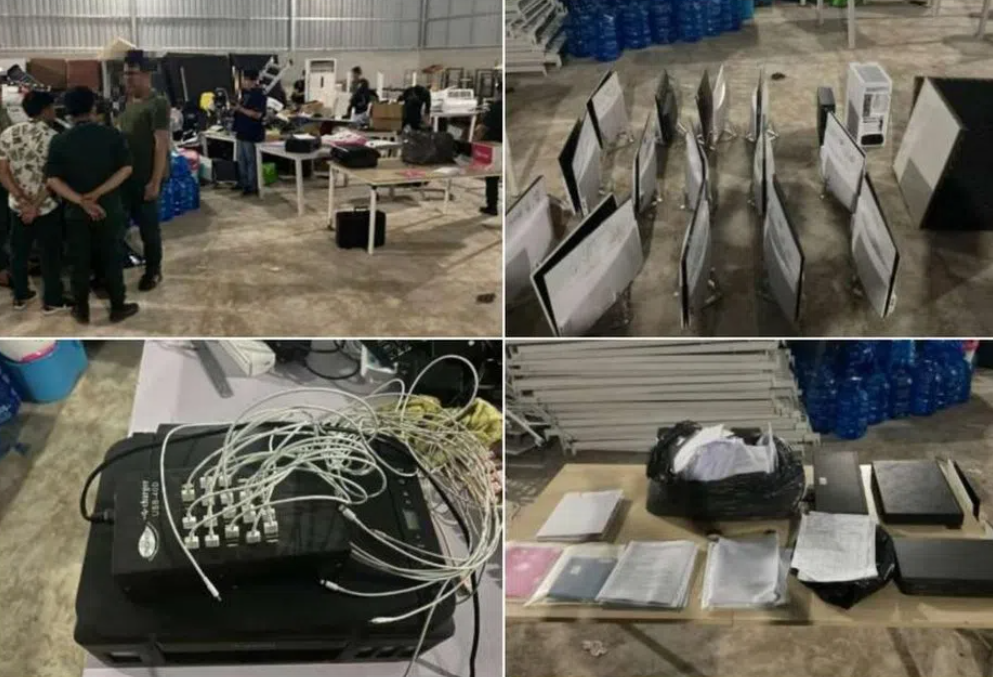
The physical layout of the operation revealed the industrial scale of the criminal enterprise. The compound served as a nerve centre for what would eventually be identified as a network with at least 78 suspected members operating across multiple hierarchical levels. Leadership handled strategic decisions and commission payments to front-line callers. Below them sat supervisors and trainers who managed daily operations and coached the scammers on technique. These trainers provided standardised scripts and psychological tricks designed to manipulate victims—including coaching callers to adopt Singaporean accents to appear more trustworthy. Underlying this structure was a separate money-laundering unit tasked with converting stolen funds into cryptocurrency, creating distance between the crime and the proceeds.
After their reconnaissance trip, both men returned to Malaysia to contemplate the offer before committing. They flew back to Cambodia on November 21, 2024, with Yip commencing work the following day. His compensation package was attractive on paper: US$1,800 per month in cryptocurrency plus a one per cent commission on the value of money he extracted from victims. However, Yip's practical performance revealed a critical weakness. Despite being given scripts to follow—which were designed to impersonate bank officers and manipulate Singaporeans into revealing sensitive financial information or transferring funds—he proved entirely incompetent at the deception. His first attempt on November 22 yielded no results. He tried again the next day with identical failure. Tang, unwilling to retain an unproductive member, fired him on November 23, 2024, and deleted their communications to cover traces.
The brevity of Yip's employment stands in stark contrast to the scale of the syndicate's overall impact on Singapore. Between September 3, 2024, and September 5, 2025, the group was associated with at least 528 reported scam cases resulting in losses of approximately S$52.5 million. That amounts to an average loss of nearly S$100,000 per case, reflecting the types of victims targeted—predominantly middle-class Singaporeans tricked into believing they were communicating with legitimate banking or government officials investigating suspicious account activity. The sheer financial toll demonstrates the efficiency of the operation and the psychological manipulation techniques deployed by successful members of the team.
It remains unclear from court documents precisely how Yip returned to Malaysia following his termination, but authorities apprehended him in Singapore on September 9, 2025. His arrest occurred during a large-scale coordinated operation between Singapore Police and the Cambodian National Police aimed at dismantling the network. In total, 12 individuals were charged as alleged members of the syndicate. Nine of the accused are Singaporean nationals: Deon Tan Ke Yuan, 25; Lester Ng Jing Hai, 29; Christy Neo Wei En, 29; Heiqal Lee, 30; Tay Jun Xiang, 32; Ng Wei Kang, 33; Zachary Lee Jia An, 35; Melvin Tan Wenzheng, 35; and Lau Haoxiang, 39. The other two accused are Malaysian Muhamad Asyraf Anuar, 29, and Filipino national Rizalyn Panganiban, 34. The multinational composition of the accused reflects how these syndicates actively recruit across Southeast Asia, exploiting geographic proximity and visa-free travel arrangements.
The significance of Yip's case extends beyond the individual sentence. Government official impersonation scams have become an escalating concern in Singapore, even as overall fraud cases have declined in 2025. The number of such cases more than doubled from 1,504 in 2024 to 3,363 in 2025, making it the fifth most prevalent scam type. This surge suggests these schemes are becoming more refined and persuasive, as criminals improve their ability to mimic legitimate authorities and exploit psychological vulnerabilities. The Cambodian-based operations have proven particularly effective at this specific fraud type, likely because the geographic and legal distance reduces enforcement risks while enabling the targeting of wealthy regional neighbours.
For Malaysian authorities and the general public, the case illustrates vulnerabilities in recruitment and vetting within criminal networks. Yip's recruitment through friendship chains and his subsequent rapid termination suggest these organisations operate with minimal formality, accepting whoever comes their way without thorough assessment of suitability. This creates opportunities for law enforcement to infiltrate networks and identify members, yet it also means criminals are constantly seeking fresh recruits from neighbouring countries, making cross-border awareness and cooperation essential.
The sentencing of Yip under organised crime statutes carries significant legal weight. Individuals convicted of being members of an organised crime group in Singapore face potential penalties of up to five years' imprisonment, fines reaching S$100,000, or both. Yip's sentence of 16 months and two weeks, while below the statutory maximum, reflects both his guilty plea and his minimal actual contribution to the syndicate's criminal operations. Yet the courts have signalled that membership alone—regardless of success or duration—carries serious consequences. This serves as a deterrent to potential recruits from Malaysia and elsewhere who might be tempted by attractive compensation offers from overseas criminal operations.

