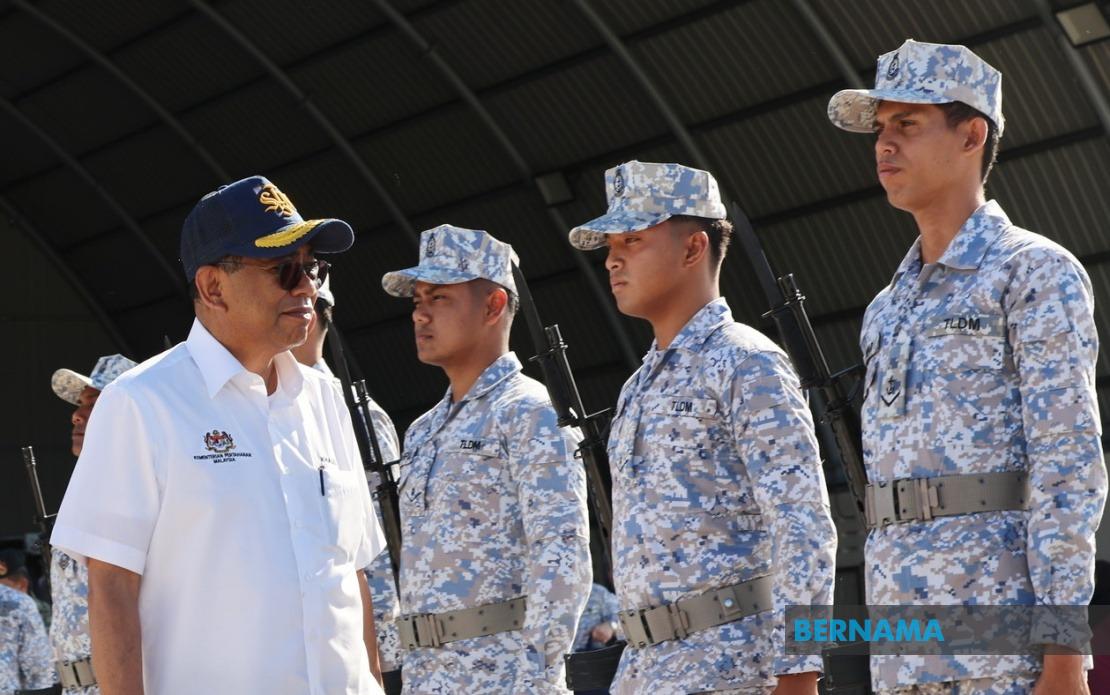
Malaysia is embarking on a comprehensive modernisation programme at Layang-Layang Island to reinforce its military capabilities and territorial assertion in one of the world's most strategically contested waters. Defence Minister Datuk Seri Mohamed Khaled Nordin announced during a working visit to the Royal Malaysian Navy's LIMA Station that the government would pursue sustained infrastructure development across operational, logistical, communications and support facilities to maintain peak readiness at this critical outpost.
The 35-hectare facility, positioned approximately 270 kilometres from Labuan and 280 kilometres from Sabah's coast, represents Malaysia's forward operating base in the South China Sea. Established on April 17, 1984, LIMA Station has long served as the nation's frontline installation for surveillance, defence and security operations in Gugusan Semarang Peninjau, a strategically vital area subject to competing maritime claims from China, Vietnam and the Philippines. The island's geographical location and Malaysia's continuous presence there underscore Kuala Lumpur's determination to maintain sovereignty and operational control in this economically significant and geopolitically sensitive region.
The most notable element of the upgrade programme is the planned installation of an advanced air defence radar system, which will complement the existing maritime radar infrastructure currently employed to monitor vessel movements across surrounding waters. Preparation work for the radar installation will commence immediately, with full operational capability anticipated by 2029. This dual-radar capability represents a significant leap in Malaysia's maritime domain awareness, enabling authorities to detect and track both surface traffic and aerial activity with greater precision and coverage across the disputed waters.
Beyond radar systems, the government intends to modernise personnel welfare facilities on the island, recognising that sustainable operations depend on adequate living conditions for military personnel stationed there. Improvements will encompass enhanced water and electricity supply systems, expanded food supply chains, and upgraded accommodation facilities. These foundational investments acknowledge that maintaining a credible, continuous presence requires personnel to operate effectively, which in turn demands reliable basic services and dignified working conditions at this remote outpost.
Mohammed Khaled emphasised that the strengthening of Layang-Layang Island should be pursued without provocation or escalation, a deliberate messaging choice given the volatile nature of South China Sea geopolitics. Malaysia's approach contrasts with more assertive postures adopted by other claimant states, positioning the nation as a measured yet resolute defender of its maritime interests. This calibrated strategy reflects regional sensitivities and Malaysia's broader diplomatic balancing act among major powers with competing interests in Southeast Asian waters.
The upgraded island infrastructure will serve multiple operational functions beyond traditional military defence. LIMA Station plays a critical role in supporting intelligence gathering operations and logistical provision for Royal Malaysian Navy vessels, while also facilitating operations by the Malaysian Maritime Enforcement Agency and other government agencies conducting patrols and enforcement activities. By strengthening the island's technological and material foundations, Malaysia enhances the effectiveness of these inter-agency operations and extends its capacity to project authority across its maritime domain.
The modernisation programme also incorporates emerging technologies into Malaysia's operational planning. Officials outlined intentions to deploy unmanned systems and advanced technological solutions to boost maritime surveillance and threat detection capabilities in Malaysian waters. This technological dimension reflects global defence trends where autonomous systems and remote monitoring capabilities augment traditional manned operations, allowing continuous surveillance with reduced personnel demands and operational risks.
Beyond security considerations, Malaysian officials identified Layang-Layang Island's significant scientific and environmental potential. The location offers valuable research opportunities concerning marine ecosystems, biodiversity conservation and coral reef sustainability throughout the South China Sea region. Mohammed Khaled indicated that the government intends to leverage these research opportunities through coordinated efforts involving relevant agencies and higher education institutions. This multifaceted approach positions the island not merely as a military installation but as a platform for advancing scientific knowledge and environmental stewardship in a globally significant maritime ecosystem.
The infrastructure programme also reflects Malaysia's broader vision for developing its maritime economy within the South China Sea. By combining military capabilities with research potential and environmental conservation, Malaysian policymakers seek to establish a comprehensive strategic presence that addresses security, scientific advancement and sustainable resource management simultaneously. This integrated framework allows the government to justify and sustain its island operations across multiple policy domains beyond purely military considerations.
For Malaysia's regional standing, the Layang-Layang Island upgrades carry substantial symbolic weight. The investment signals unwavering commitment to defending territorial claims despite pressure from larger powers, while the emphasis on peaceful development and research suggests Malaysia seeks to establish legitimate, multipurpose jurisdiction rather than purely militaristic control. The Defence Ministry's senior leadership attendance at the island visit—including the RMN chief, Air Force commander and Joint Forces commander—underscored the operation's importance across Malaysia's entire defence establishment.
The timeline for radar deployment through 2029 indicates a deliberate, sustained commitment rather than rushed militarisation. This measured pace allows Malaysia to manage costs, coordinate with technology partners and maintain international standing as a responsible maritime power. The extended timeline also provides flexibility for diplomatic developments or strategic reassessments should regional circumstances shift.
For neighbouring Southeast Asian nations, Malaysia's steady modernisation of Layang-Layang Island demonstrates how mid-sized regional powers navigate great power competition in contested waters. Malaysia's approach—combining military capability with environmental stewardship and scientific research—offers a potential model for other nations seeking to maintain sovereignty claims without provoking escalation. As South China Sea tensions persist, Malaysia's pragmatic balance between assertiveness and restraint warrants close attention from regional and international observers monitoring maritime security developments.