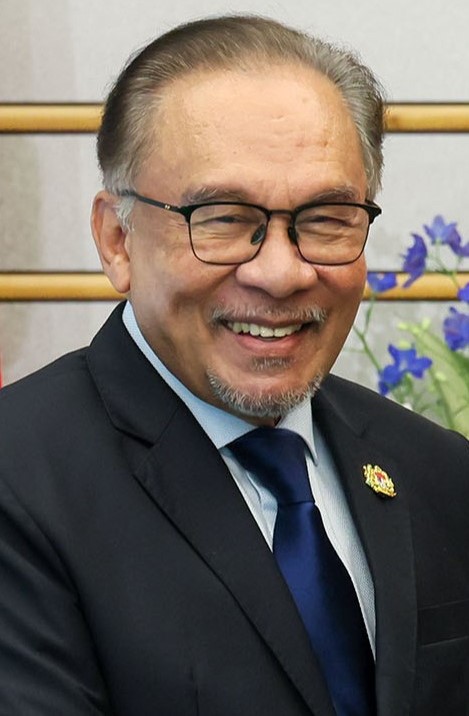
Malaysia is preparing to undertake a serious examination of mechanisms to conduct international trade using local currencies rather than relying predominantly on foreign exchange, Prime Minister Anwar Ibrahim has indicated. The move reflects growing interest among Southeast Asian economies to reduce dependence on major global reserve currencies and assert greater autonomy over cross-border transactions. Anwar's statement positions Malaysia within a broader regional trend toward financial self-determination, where nations seek alternatives to traditional dollar-denominated settlement arrangements that have long dominated global commerce.
The Prime Minister specifically highlighted bilateral payment systems already established with China as a practical template for Malaysia's exploration. These arrangements enable the two countries to conduct trade using their respective domestic currencies—the Chinese yuan and Malaysian ringgit—rather than defaulting to dollars or other international currencies. Such direct currency exchanges eliminate intermediary conversion costs and reduce exposure to fluctuating exchange rates, offering tangible economic benefits to both trading partners. The success of Sino-Malaysian bilateral arrangements demonstrates that alternative payment structures can function effectively within existing trade relationships of substantial scale and complexity.
Anwar's comments gain significance against the backdrop of Malaysia's economic relationship with China, its largest trading partner. In 2023, bilateral trade between the two nations exceeded $140 billion, making the volume of transactions substantial enough to justify the infrastructure investments required for local currency settlement. By leveraging this enormous trade base, Malaysia can establish robust mechanisms for ringgit-yuan transactions that might eventually serve as a foundation for similar arrangements with other trading partners. The practical experience gained through expanded China trade in local currencies could inform how Malaysia approaches settlement mechanisms with countries across Southeast Asia and beyond.
The initiative reflects deeper concerns within Malaysia and other developing economies about currency volatility and the costs imposed by perpetual dependence on currencies issued by distant central banks. When trade is settled in dollars, Malaysian importers and exporters face additional risks from US monetary policy decisions and currency fluctuations unrelated to regional economic fundamentals. Local currency settlement transfers some pricing power back to participating economies, allowing their central banks greater influence over the terms on which trade occurs. For Malaysia particularly, this matters given the ringgit's historical volatility and the importance of trade to overall economic growth.
Beyond the bilateral arrangements with China, Anwar's statement signals openness to exploring multilateral solutions within ASEAN and the broader Indo-Pacific region. The Association of Southeast Asian Nations has discussed regional payment initiatives, including enhanced use of local currencies in intra-ASEAN trade. Malaysia's serious examination of local currency settlement could contribute to advancing these regional conversations and establishing interconnected systems where multiple Southeast Asian currencies facilitate trade across the bloc. Such developments would represent a gradual decoupling from exclusive reliance on distant reserve currency issuers.
The practical challenges in shifting trade settlement toward local currencies should not be underestimated. Building the necessary financial infrastructure—clearing systems, payment channels, currency swap facilities—requires substantial investment and coordination between central banks and commercial financial institutions. Malaysia's banking sector would need to develop expertise and capacity to manage large volumes of ringgit transactions with foreign counterparts. These requirements mean that any transition toward local currency settlement would occur gradually, beginning with bilateral arrangements before potentially expanding to regional frameworks.
From an international relations perspective, Malaysia's exploration of local currency settlement with multiple partners reflects the country's strategic hedging between major powers. The arrangement with China demonstrates commercial pragmatism and deepening economic integration with its northern neighbour, while simultaneously exploring similar mechanisms with other nations maintains Malaysia's position as a non-aligned actor seeking beneficial relationships across multiple regions. This balanced approach allows Malaysia to pursue financial autonomy without appearing to choose any single partner or bloc over others.
The timing of Anwar's statement coincides with broader global conversations about de-dollarization and the future architecture of international finance. Several major economies have discussed reducing dollar dependency, though the practical realities of displacing the dollar as the world's dominant trade currency remain formidable. Malaysia's focused exploration of local currency settlement with key partners represents a more modest and achievable objective—not replacing the dollar globally but carving out spaces within bilateral and regional trade where alternatives function more efficiently. This incremental approach may ultimately prove more durable than grand schemes for currency replacement.
For Malaysian businesses and investors, serious exploration of local currency settlement mechanisms carries both opportunities and risks. Companies engaged in significant trade with China could benefit from reduced hedging costs and simpler payment procedures. However, companies will need to develop new capabilities to manage transactions in foreign currencies they may not have previously handled regularly. Financial institutions will require investment in training, systems, and partnerships to facilitate these arrangements effectively. The transition period could create inefficiencies for some market participants, though longer-term gains from reduced currency conversion costs may outweigh initial adjustment challenges.
The government's commitment to seriously examine local currency settlement also requires coordination with Bank Negara Malaysia and the domestic financial system. The central bank would need to establish frameworks governing ringgit transactions with foreign central banks, manage any implications for monetary policy, and ensure financial stability as new payment channels develop. Such coordination involves complex policy decisions that balance the desire for financial autonomy against the risks and costs of managing alternative payment systems alongside traditional dollar-denominated arrangements.
Regional implications extend to ASEAN economies watching Malaysia's exploration with interest. If Malaysia successfully establishes expanded local currency settlement with multiple partners, other Southeast Asian nations may accelerate their own initiatives. The result could be a gradually more multipolar regional financial system where ringgit, baht, peso, and other local currencies facilitate growing portions of intra-regional trade. Over years rather than months, this could reduce ASEAN's collective vulnerability to currency shocks originating outside the region. Malaysia's willingness to seriously examine these mechanisms positions the country as a potential leader in reshaping regional financial relationships.