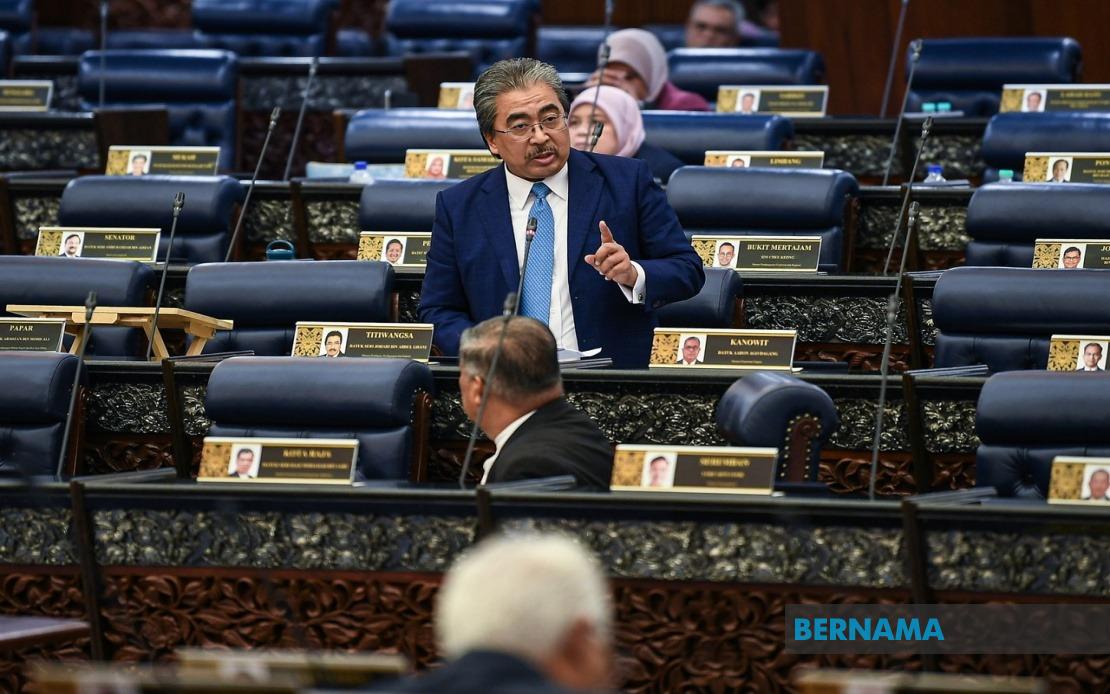
Malaysia is moving to close a significant gap in its trade compliance framework by developing a mechanism to prevent the importation of goods manufactured using forced labour. Investment, Trade and Industry Minister Datuk Seri Johari Abdul Ghani announced the initiative as a defensive measure against mounting international pressure and the threat of punitive tariffs from the United States.
The government has established an Inter-Agency Task Force on Forced Labour, with leadership vested in the Ministry of Investment, Trade and Industry. This coordinated approach reflects the complexity of the issue, drawing participation from the Ministry of Finance, the Ministry of Foreign Affairs, the Ministry of Home Affairs, the Ministry of Human Resources and the Ministry of Transport. The task force also incorporates enforcement and trade expertise from the Attorney-General's Chambers, the Royal Malaysian Customs Department, the Malaysian Border Control and Protection Agency, the Royal Malaysian Police, the Malaysian Investment Development Authority and the Malaysian External Trade Development Corporation.
The timing of this initiative is not coincidental. Malaysia currently operates without any specific laws or regulatory mechanisms to prohibit the entry of forced-labour-produced goods, a deficiency that has attracted scrutiny from Washington. The US announced preliminary findings on June 2, 2026, following an investigation into 60 countries' compliance with import restrictions on such items. Malaysia was identified as one of 54 nations lacking dedicated legal frameworks to control these imports, whilst six other countries were found to possess legislation but failed to enforce it adequately.
The consequences of inaction are mounting. The US has provided preliminary notification that Malaysia faces an indicative tariff of 10 per cent beginning after July 24, specifically targeting forced-labour concerns. This represents a significant commercial threat to Malaysian exporters, particularly in sectors reliant on complex supply chains and sensitive to trade disruptions. The tariff would apply broadly across relevant merchandise categories unless Malaysia demonstrates concrete progress in establishing and enforcing appropriate controls.
Understanding the architecture of the US review is essential for grasping Malaysia's vulnerability. The Section 301 investigation operates on two parallel tracks: one examining forced labour practices and another assessing market access barriers. The forced-labour investigation is approaching completion, with the 10 per cent tariff now formally indicated. The market access investigation remains ongoing, suggesting additional pressure points may emerge. This phased approach gives Malaysia a window to address the immediate forced-labour concern whilst preparing for potential secondary demands.
For Malaysian policymakers, the challenge extends beyond crafting legislation. Effective implementation requires coordination across multiple federal agencies with different mandates and operational capabilities. Customs authorities must develop detection methods and intelligence-gathering protocols. The police and border agencies need training and resources to identify suspect shipments. The Finance Ministry must align tariff codes and trade data systems. The Human Resources Ministry brings expertise on labour standards and worker protections. Building this institutional capacity from scratch, whilst maintaining trade continuity, demands sophisticated project management.
The broader regional and global context amplifies Malaysia's exposure. Forced labour concerns in supply chains have become a frontline trade and human rights issue, particularly affecting Southeast Asia. Major markets including the European Union, Canada and Australia have implemented or are developing similar restrictions. The US initiative under Section 301 sets a precedent that other trading partners may emulate. Malaysia's response now will establish its positioning on labour standards across multiple trade relationships, not merely with Washington.
Industry stakeholders face uncertainty during this transition period. Malaysian manufacturers, particularly in labour-intensive sectors such as electronics, palm oil, textiles and rubber, rely on regional supply chains and subcontracting networks. The absence of clear legal criteria for forced labour creates ambiguity about compliance obligations. Companies may struggle to audit complex, multi-tier supplier networks operating across borders. This compliance burden could increase costs and complicate sourcing decisions, potentially disadvantaging Malaysian firms relative to competitors in countries with established frameworks.
The task force's mandate to formulate the mechanism suggests a multi-step process ahead. First, Malaysia must define what constitutes forced labour under Malaysian law, harmonizing terminology with international conventions such as those of the International Labour Organization. Second, it must establish procedures for identifying and verifying goods produced using forced labour, likely requiring intelligence sharing with trading partners and participation in international databases. Third, it needs enforcement protocols specifying penalties for violations and procedures for confiscation and disposal of illicit goods. Finally, the government must communicate standards clearly to importers, enabling compliance.
Johari's parliamentary statement reflects awareness that Malaysia cannot ignore this challenge. Tariffs imposed under Section 301 would harm Malaysia's export competitiveness and undermine the value proposition of the country's manufacturing base. Beyond commerce, failure to address forced labour carries reputational costs, potentially alienating conscious consumers and socially responsible investors. The Inter-Agency Task Force represents a pragmatic acknowledgment that building credible import controls serves both Malaysia's trade interests and its international standing.
The July 24 deadline creates urgency, though the 10 per cent tariff is described as indicative, suggesting possibility for negotiation or revision. Malaysia's demonstrated commitment to establishing a genuine mechanism, rather than cosmetic compliance, will influence how the US exercises discretion. Close engagement between the task force and US officials during the formulation phase could clarify expectations and potentially moderate enforcement severity.
Looking ahead, Malaysia's experience will likely shape broader Southeast Asian responses to forced labour investigations. As other nations in the region confront similar pressure, Malaysia's approach could become a template or cautionary tale. Successful implementation would position Malaysia as a responsible trading partner attentive to supply chain ethics, potentially opening doors to premium markets and trade arrangements. Conversely, inadequate measures risk deepening commercial isolation and encouraging competitors to position themselves as more reliable suppliers to values-conscious buyers.

