The Prime Minister's Department (Religious Affairs) has pledged to reinvigorate its approach to youth engagement, placing particular emphasis on countering the twin threats of religious extremism and the spread of false information across digital platforms. This commitment follows a significant royal address from Sultan Nazrin Shah, the Sultan of Perak, who outlined the pressing need for religious authorities to assume a more visible and constructive role in steering young Malaysians away from radicalization and the corrosive effects of online misinformation.
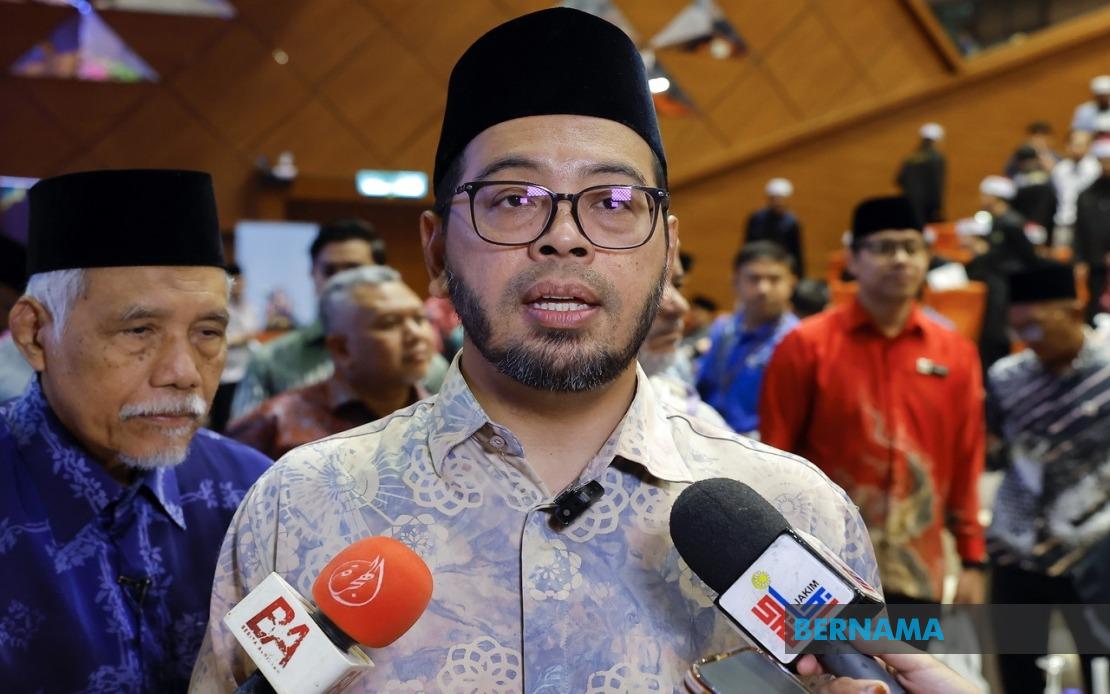
Dr Zulkifli Hasan, the Minister in the Prime Minister's Department (Religious Affairs), has indicated that the department intends to incorporate the Sultan's guidance as a foundational principle in shaping upcoming programmes and institutional responses. Speaking at the National and International Tokoh Ma'al Hijrah Premier Lecture 1448/2026 in Putrajaya on June 18, Dr Zulkifli emphasized the government's determination to operationalize the royal message and ensure it permeates through all relevant policy and community initiatives.
The Sultan's intervention came at a moment of growing concern within Malaysian policymaking circles about the vulnerability of young people to extremist narratives and coordinated disinformation campaigns. Sultan Nazrin Shah articulated a comprehensive vision of the challenges confronting today's youth, extending far beyond religious radicalization to encompass the interconnected pressures they navigate in an increasingly complex world. The Sultan identified several critical stress points: the mounting anxiety around climate change, ongoing global conflicts, economic instability and job market uncertainties, the algorithmic fragmentation of information ecosystems that deepens social divisions, and a troubling erosion of confidence in traditional institutions and authority structures.
This multifaceted framing of youth challenges reflects a sophisticated understanding of the contemporary environment in which religious messaging competes for attention and influence. Young Malaysians today are exposed to a torrent of competing narratives, many of them explicitly designed to manipulate emotions and drive wedges between communities. The digital landscape has fundamentally altered how religious extremist groups recruit and radicalize vulnerable individuals, often exploiting legitimate grievances about economic marginalization or social exclusion to draw people toward violent ideologies.
The Religious Affairs Department's planned response signals a recognition that traditional top-down approaches to countering extremism have become insufficient. Rather than relying solely on law enforcement or negative messaging, the government appears committed to a more inclusive engagement strategy that acknowledges the genuine concerns preoccupying younger Malaysians. By positioning religious leaders as trusted intermediaries capable of addressing both spiritual and practical questions, the department hopes to rebuild institutional credibility among a generation that has grown skeptical of official narratives.
For Malaysia, where religious harmony and social cohesion remain foundational national values, the stakes of effective youth engagement are particularly high. The country's multi-ethnic, multi-religious composition means that misguided or polarizing youth narratives can rapidly cascade into broader communal tensions. The spread of misinformation—whether about religious doctrines, inter-faith relations, or government policies—can undermine the delicate consensus that has enabled peaceful coexistence across decades. Digital platforms have accelerated the velocity at which falsehoods spread, often reaching young people whose critical media literacy skills remain underdeveloped.
The government's commitment also reflects a regional anxiety about the appeal of extremist messaging to Southeast Asian youth. Groups promoting violent interpretations of Islam have long sought to recruit from Malaysia, utilizing the country's educational infrastructure and its digitally connected population as strategic assets. The challenge is distinguishing between authentic religious inquiry and radicalization, between legitimate political grievance and recruitment into violent movements—a distinction that requires nuanced understanding rather than blunt enforcement.
Dr Zulkifli's statement that the department will "mainstream the messages" from the Sultan suggests an intention to embed youth engagement and countering misinformation into routine government operations rather than treating them as special initiatives. This institutional mainstreaming could involve training religious teachers and community leaders to recognize misinformation and discuss it openly with young people, creating spaces where young Malaysians feel heard and valued rather than lectured to or surveilled.
The implementation of this approach will likely require coordination across multiple government agencies, educational institutions, and faith-based organizations. Religious scholars will need to be equipped not only with theological knowledge but also with understanding of digital media dynamics, psychological factors in radicalization, and the economic anxieties that sometimes fuel extremist appeal. Civil society organizations that work directly with youth communities will be essential partners in translating government policy into authentic grassroots engagement.
The Sultan's emphasis on religious leaders taking active responsibility aligns with international best practices in countering violent extremism, which consistently demonstrate that communities are most effective at protecting their own members when they possess both motivation and capability. Religious authorities carry unique credibility within faith communities, allowing them to contest extremist interpretations from a position of theological legitimacy rather than external authority. This approach also respects the agency of young people themselves, positioning them as participants in meaning-making rather than passive targets of either extremist or counter-extremist messaging.
The initiatives announced will be tested against several practical measures: whether youth participation in government and community programmes increases, whether reported instances of misinformation and its uptake decline, and whether young Malaysians themselves report greater confidence in their religious leaders' relevance and understanding. The coming months will reveal whether the government's commitment translates into sustained resource allocation and institutional change or remains primarily rhetorical.
As Malaysia continues navigating the digital age's challenges to social cohesion, the government's renewed focus on youth engagement represents an important acknowledgment that countering extremism and misinformation demands proactive, inclusive strategies rooted in dialogue rather than denial. The Sultan's address has provided clear direction; the department's responsibility now lies in executing this vision with the seriousness and resources it warrants.