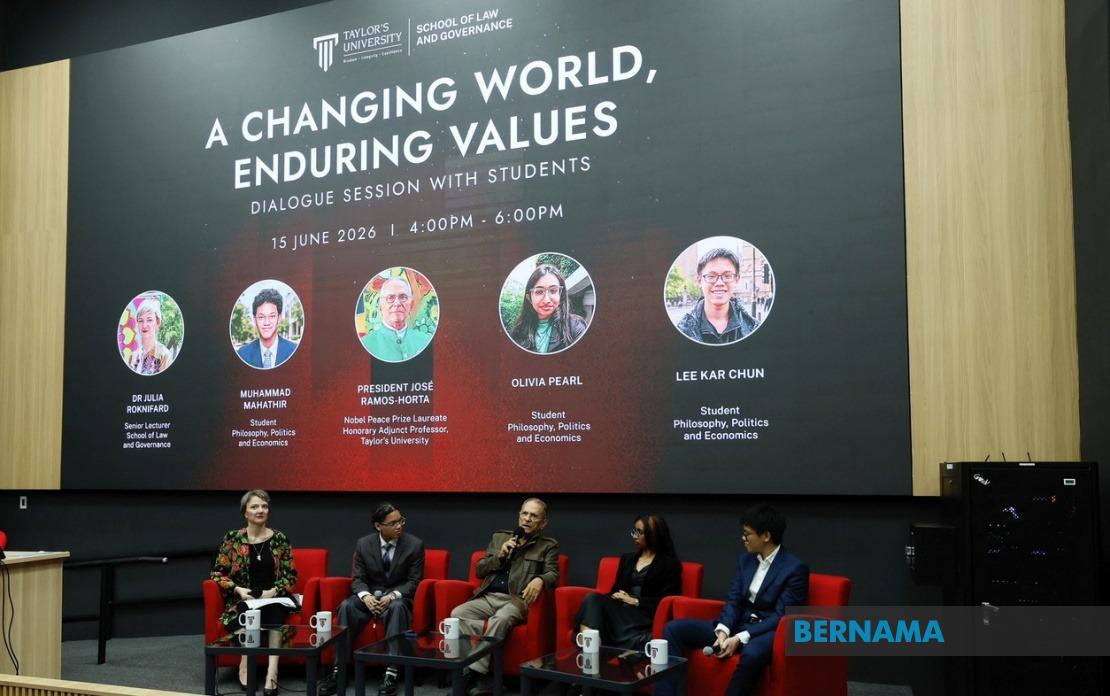
Timor-Leste President Jose Ramos-Horta has characterised bilateral ties with Malaysia as exceptionally strong, offering high praise for the country's international standing in security, democratic governance and personal freedoms during a visit to Petaling Jaya this week.
The Nobel Prize-winning statesman and former journalist, who is in Malaysia on a five-day official visit through Wednesday, reflected on decades of partnership between the two nations. Malaysia's engagement with Timor-Leste extends back further than the Southeast Asian nation's formal independence in 2002, he noted, referencing the Malaysian-led peacekeeping operations that supported Timor-Leste during the turbulent 1999 transition period following the UN-supervised ballot on autonomy.
Ramos-Horta's assessment of Malaysia's trajectory has been notably positive. He observed that the country has demonstrated consistent development over four decades, but suggested that recent years under Prime Minister Datuk Seri Anwar Ibrahim have witnessed an acceleration in both economic performance and regional influence. The president credited Anwar's diplomatic acumen with elevating Malaysia's international profile and economic standing during a period of significant global transition.
The dialogue session at Taylor's University, where Ramos-Horta holds an honorary position, provided him a platform to address the Malaysian academic community on evolving global dynamics and the importance of enduring values. His presence at the institution underscored the educational dimensions of the bilateral relationship and broader soft power cooperation between Kuala Lumpur and Dili.
Addressing Malaysian journalists ahead of the National Journalists' Day celebration in Penang this Saturday, Ramos-Horta delivered a message emphasizing the critical role of media in sustaining national cohesion. He contended that an informed citizenry represents a prerequisite for social unity, enabling societies to navigate contemporary challenges effectively. His remarks reflected broader regional concerns about information ecosystems and the media's responsibility in promoting stability during periods of rapid geopolitical change.
A significant element of Ramos-Horta's visit concerns Timor-Leste's preparations to chair ASEAN in 2029. The president expressed confidence that his nation would have the necessary infrastructure and institutional capacity to host the regional bloc's leadership and coordinate its activities during the chairmanship year. This represents a substantial undertaking for a nation that only recently joined ASEAN and continues infrastructure development.
Timor-Leste's membership in ASEAN, which took effect on October 26, 2025, constitutes the bloc's first expansion since 1999 when Laos and Myanmar joined simultaneously—a gap of 26 years that underscores the exclusivity and significance of the decision. The accession process involved complex diplomatic negotiations and capacity-building assessments to ensure the new member could meet organizational standards.
Ramos-Horta acknowledged Malaysia's pivotal role in facilitating Timor-Leste's ASEAN entry during Kuala Lumpur's chairmanship last year. This support reflects broader Southeast Asian recognition of Timor-Leste's strategic importance as an emerging economy and democratic nation in the region's eastern reaches, despite its relatively small population and economy. Malaysia's advocacy demonstrates the importance it places on inclusive regional architecture and the expansion of ASEAN's collective weight in global affairs.
The prospect of Timor-Leste hosting ASEAN in 2029 carries both practical and symbolic significance. Practically, it requires substantial investment in conference facilities, transportation infrastructure, and institutional readiness to manage bilateral and multilateral engagements among ten member states and numerous dialogue partners. Symbolically, it represents international confidence in Timor-Leste's stability and capacity, validating its rapid integration into the regional organization despite initial skepticism about readiness.
For Malaysia, Ramos-Horta's visit reinforces the importance of sustained engagement with ASEAN's newest member and underscores Kuala Lumpur's broader strategy of deepening ties across the bloc. Malaysia's historical involvement in Timor-Leste's stabilization and its recent diplomatic support for ASEAN accession have positioned the country as a key partner in Dili's development trajectory. This relationship extends beyond bilateral commerce and security to encompass educational exchange, institutional cooperation, and coordinated regional positioning.
The dialogue at Taylor's University also highlighted the academic dimension of Malaysia-Timor-Leste cooperation. Ramos-Horta's role as honorary adjunct professor suggests growing scholarly and intellectual exchange between the nations, contributing to people-to-people understanding and capacity development. Such educational linkages typically precede and support deeper diplomatic and economic integration.
For regional observers, Ramos-Horta's characterization of Malaysia-Timor-Leste relations as exceptionally good reflects the normalization of Timor-Leste within ASEAN structures and the effectiveness of Malaysian diplomacy in recent years. It also signals confidence among ASEAN leadership in Malaysia's regional role during a period of significant geopolitical transition in Southeast Asia, with major power competition intensifying and regional institutional arrangements facing pressure to adapt and maintain relevance.

