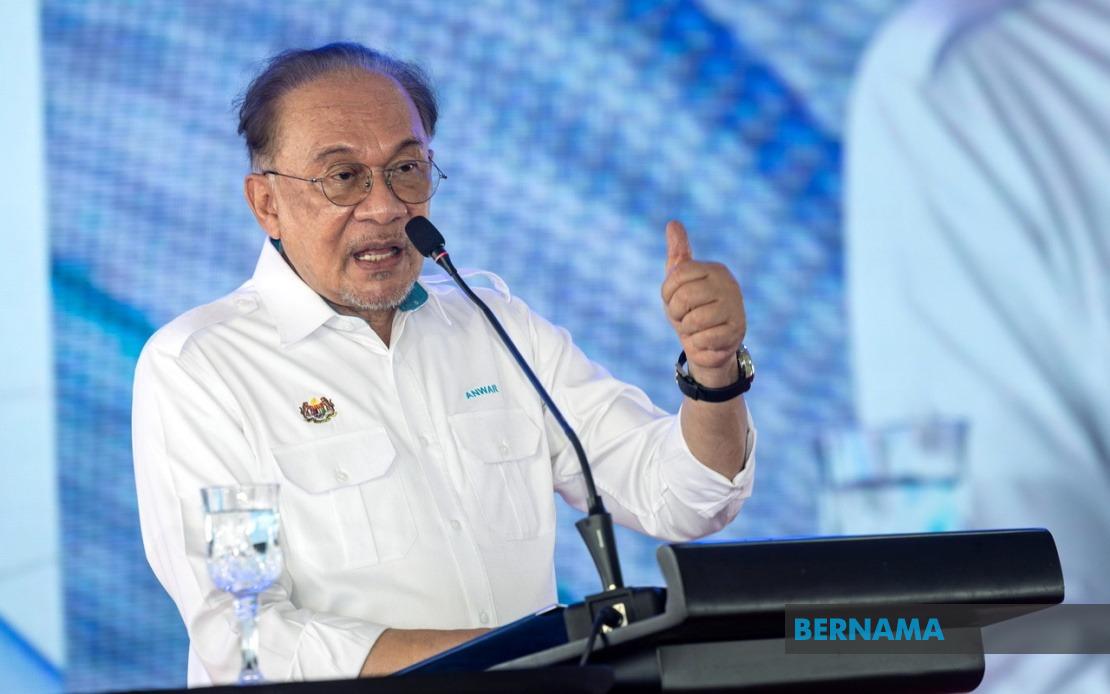
Prime Minister Datuk Seri Anwar Ibrahim has unveiled significant energy partnerships with Russia and Turkmenistan that are expected to underpin Malaysia's fuel security well into the coming decades. Speaking at an industrial park groundbreaking ceremony in Kepala Batas, Anwar disclosed that Russian President Vladimir Putin has committed to supplying Malaysia with crude oil, natural gas, and diesel under a long-term arrangement spanning a minimum of 20 years. The commitment emerged from bilateral discussions held during Anwar's recent visit to Kazan, reflecting what he characterised as deepening strategic ties between Kuala Lumpur and Moscow.
Turmenistan's role in this energy architecture may ultimately prove more consequential for Malaysia's long-term interests. During a separate official visit to the Central Asian nation, Anwar secured approval for Malaysia to access new petroleum and gas exploration and production opportunities. This breakthrough represents a substantial expansion of bilateral energy cooperation, building on momentum established when Turkmenistan's President Serdar Berdimuhamedov visited Malaysia in December 2024. The timing of these negotiations underscores a broader strategic pivot by the Malaysian government toward diversifying its energy sourcing beyond traditional suppliers and immediate regional sources.
The Turkmenistan agreement grants Malaysia access to reserves that rank among the world's most substantial, a development with profound implications for domestic energy stability. Malaysia's energy sector has faced mounting pressures from fluctuating global commodity prices and geopolitical tensions affecting traditional supply routes. By locking in guaranteed access to Turkmenistan's reserves, Anwar's administration has addressed a critical vulnerability in the nation's energy infrastructure. The arrangement effectively insulates Malaysia from short-term market volatility and supply disruptions that could otherwise jeopardise industrial competitiveness and household energy affordability. For a nation whose economic growth remains partially dependent on stable, affordable energy inputs, this represents a tangible security gain.
Beyond domestic consumption, the energy agreements position Malaysia as a potential hub for energy distribution and trading within Asia. Anwar highlighted that the secured supplies could be exported to major industrialised economies in the region, particularly China, Japan, and South Korea, each of which maintains voracious appetite for hydrocarbon imports. This export dimension transforms Malaysia's role from merely a consumer of energy to a potential intermediary in Asian energy markets. The ability to source gas from Turkmenistan and petroleum from Russia, then redirect portions toward neighbouring economies, creates new revenue streams and strengthens Malaysia's geopolitical influence within East and Southeast Asia. Such positioning aligns with Malaysia's broader strategic objective of elevating its profile as a critical energy player in an energy-hungry continent.
The diplomatic groundwork for these arrangements reflects a deliberate foreign policy strategy emphasising pragmatic engagement with multiple global powers. Rather than restricting Malaysia's energy partnerships to any single bloc, Anwar has pursued simultaneous engagement with Russia and Central Asia. This approach acknowledges the reality that Southeast Asia cannot afford to align exclusively with any single superpower, particularly in sectors as strategically vital as energy. By cultivating relationships across geopolitical divides, Malaysia demonstrates that smaller nations can navigate great-power competition to their advantage, securing concrete national benefits without compromising sovereignty or regional stability.
The 20-year duration specified for the Russian agreement deserves particular emphasis, as it provides Malaysia with unprecedented certainty regarding future fuel supplies. Long-term contracts of this magnitude are relatively rare in today's volatile energy markets and suggest that both parties view the relationship as strategically important beyond immediate commercial calculations. For Malaysia, the visibility and predictability this creates allows policymakers to develop coherent energy strategy, plan infrastructure investments, and commit to industrial projects with confidence in underlying resource availability. Companies considering locating manufacturing or energy-intensive operations in Malaysia can now factor in decades of stable, secure energy supply as a competitive advantage.
The announcement also carries implications for Malaysia's wider economic development agenda. Energy security underpins industrialisation, attracts foreign direct investment, and sustains the manufacturing sectors that remain crucial to employment and export revenue. Industries ranging from petrochemicals to data centres, semiconductor fabrication to intensive agriculture, all depend on reliable energy access. By guaranteeing such access through formal agreements with major suppliers, Anwar's government removes a significant constraint on Malaysia's capacity to diversify its economy and upgrade its industrial base. This proves especially important as Malaysia seeks to transition beyond dependence on commodities and tourism toward higher-value manufacturing and services.
From a regional perspective, Malaysia's energy diplomacy also demonstrates how Southeast Asian nations can leverage geographic position and diplomatic skill to secure advantages despite not possessing dominant military or economic power. The agreements reflect Anwar's personal diplomatic efforts and his administration's willingness to engage proactively with non-traditional partners. This approach contrasts with more reactive postures and signals that Malaysia intends to shape its destiny through active international engagement rather than waiting passively for circumstances to align favourably. Other ASEAN members facing similar energy security challenges may view Malaysia's success as a template for their own bilateral negotiations.
Looking forward, the sustainability of these arrangements will depend on maintaining stable bilateral relationships with both Russia and Turkmenistan despite international sanctions and geopolitical tensions affecting Russia. Malaysia's decision to pursue cooperation with Russia despite Western sanctions regimes reflects a calculation that national interest in energy security outweighs diplomatic pressure to isolate Moscow. This pragmatic approach aligns with Malaysia's historical foreign policy emphasis on non-alignment and national interest prioritisation. However, it also exposes Malaysia to potential pressure from Western nations, requiring skillful diplomatic management to maintain these energy partnerships while preserving other international relationships.
The Turkmenistan component of this energy architecture appears less complicated geopolitically, as Central Asian nations generally enjoy less contentious relationships with Western powers than Russia does. Turkmenistan's vast natural gas reserves and relatively underdeveloped export infrastructure mean the country actively seeks reliable, long-term buyer relationships. Malaysia's willingness to commit to substantial imports of Turkmenistan gas benefits both parties, providing the Central Asian producer with secure export revenue while guaranteeing Malaysian access to world-class reserves. This mutuality of interest suggests the Turkmenistan arrangement possesses greater inherent stability than arrangements dependent on markets or spot purchases.
Anwar's framing of these agreements as integral to national development strategy highlights how contemporary energy policy extends far beyond technical petroleum management into broader questions of economic growth, employment creation, and geopolitical positioning. By anchoring Malaysia's energy future to long-term agreements with reliable suppliers, the government has addressed one of the most significant constraints on sustained economic development. Whether these arrangements ultimately deliver the stability and economic benefits Anwar projects will become apparent over coming years, but the commitment of two major suppliers to 20-year relationships with Malaysia certainly represents a substantial diplomatic achievement that enhances the nation's strategic options and economic prospects.

