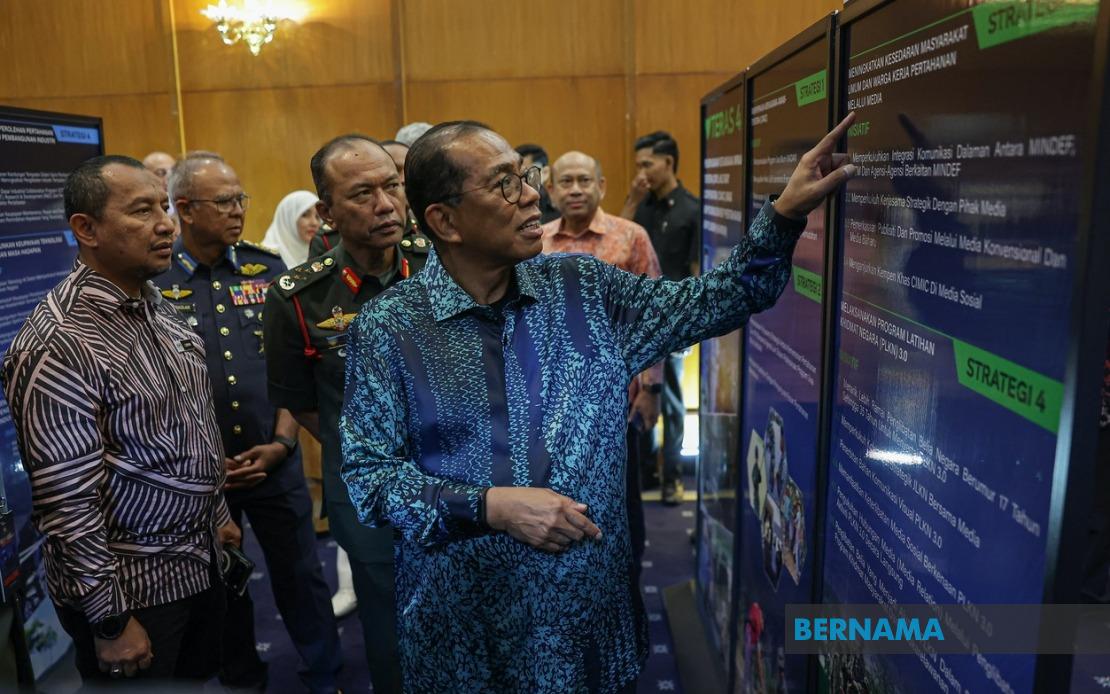
Malaysia's Defence Ministry has unveiled an integrated strategic framework designed to fortify the nation's defence posture against an increasingly complex security environment. The launching of the National Defence Strategic Plan (PSPN) and Defence Capacity Blueprint (RTKP) 2026-2030 represents a coordinated effort to translate long-term defence objectives into measurable operational outcomes across all branches of the Malaysian Armed Forces. Defence Minister Datuk Seri Mohamed Khaled Nordin emphasised that both documents work in tandem with the existing Defence White Paper, creating a layered approach to strategic planning that addresses both immediate challenges and future contingencies.
The strategic impetus behind this dual-document approach stems from the observation that the global security landscape has fundamentally transformed over recent years. Geopolitical tensions have intensified across multiple regions, with great power competition reshaping alliance patterns and defence calculations. Simultaneously, non-traditional security threats—ranging from cyber attacks and maritime piracy to transnational organised crime and climate-induced instability—have complicated the conventional threat assessment matrix. The Defence Ministry's decision to conduct a mid-term review of its existing Defence White Paper reflects an institutional recognition that static defence planning cannot adequately address this dynamic environment.
Technological disruption emerged as a central concern in the ministry's strategic calculus. Artificial intelligence, autonomous systems, and advanced automation capabilities are fundamentally altering the character of military operations and weapons systems development. Nations that fail to integrate these technologies risk becoming strategically disadvantaged relative to better-equipped adversaries. For Malaysia, a medium-sized power operating within a competitive region, technological innovation carries outsized strategic importance. The inclusion of defence technology and innovation as one of the seven strategic pillars demonstrates the government's commitment to ensuring the Malaysian Armed Forces maintains operational relevance in an era of accelerating technological change.
The PSPN framework rests upon seven strategic pillars that collectively address the full spectrum of defence organisational requirements. Operational readiness remains the foundational pillar, ensuring that combat units and support elements maintain the capability to respond to threats with appropriate speed and effectiveness. Enhancement of defence capabilities encompasses the acquisition, integration, and maintenance of modern weapons systems and equipment. The welfare of personnel and veterans reflects an understanding that human capital remains the ultimate source of military effectiveness; investments in training, career development, and post-service support directly influence force retention and morale. These pillars collectively represent a holistic vision of defence modernisation.
Complementing the PSPN, the capacity blueprint functions as an operational roadmap translating strategic intent into concrete resource allocation and institutional capacity-building. Mohamed Khaled characterised the relationship using a navigational metaphor: if the PSPN charts the destination, the RTKP ensures the organisation possesses the means to arrive there. This capacity encompasses multiple dimensions beyond simple financial appropriation. Human capital development—including recruitment, professional military education, and specialised training—forms a critical component. Technological expertise requires sustained investment in research institutions, defence contractors, and international partnerships. Inter-agency coordination recognises that modern security challenges rarely remain confined within military spheres; effective responses demand seamless integration across police, customs, intelligence services, and civilian agencies.
The emphasis on a whole-of-government and whole-of-society approach signals a departure from narrow militaristic conceptions of national defence. Contemporary threats—whether pandemics, environmental crises, or mass displacement—require mobilising resources and expertise across civilian institutions and society more broadly. This conceptual shift acknowledges that military instruments alone cannot adequately address the spectrum of contemporary security challenges. For Malaysia, this approach carries particular relevance given the nation's position as a maritime crossroads vulnerable to transnational threats and its diverse, multicommunal character requiring inclusive security approaches.
The ministry disclosed concrete progress in defence capability acquisition, noting the successful receipt and operational deployment of three ANKA Medium Altitude Long Endurance Unmanned Aircraft Systems at Labuan Air Base in March. These surveillance platforms extend Malaysia's intelligence, surveillance, and reconnaissance capabilities, particularly valuable for maritime domain awareness across the extensive exclusive economic zone. The unmanned aircraft systems programme exemplifies the integration of advanced technology into operational units, providing real-time intelligence collection capabilities without exposing pilots to hostile fire. This represents a practical manifestation of the defence technology pillar within the broader strategic framework.
Additional modernisation initiatives underscore the Defence Ministry's commitment to hardware renewal across multiple warfare domains. The scheduled acquisition of FA-50M light combat aircraft will enhance air defence and ground attack capabilities, providing an intermediate platform between basic training jets and high-end fighter aircraft. Maritime capabilities receive attention through procurement of dedicated maritime patrol aircraft capable of extended oceanic surveillance missions—increasingly critical as regional powers compete for maritime resources and strategic positioning. The littoral mission ships programme addresses the specific operational requirements of Southeast Asian naval operations, where operations in relatively confined waters and coastal zones demand vessels optimised for shallow-water operations rather than open-ocean blue-water capabilities.
For Malaysian defence planners, these initiatives arrive amid evolving regional dynamics that demand enhanced preparedness. The South China Sea remains a potential flashpoint for great power competition, with multiple territorial claims and increased military presence from external powers. Piracy, smuggling, and illegal fishing persist as persistent maritime security challenges requiring capable naval and coast guard assets. Terrorism financing and radicalisation continue demanding intelligence and law enforcement resources. The Defence Ministry's comprehensive strategic planning approach acknowledges these multifaceted challenges require coordinated responses across the defence and security apparatus.
The five-year planning horizon of the RTKP 2026-2030 positions Malaysia to address capability gaps progressively rather than attempting disruptive, all-at-once modernisation. Phased implementation allows the Defence Ministry to manage fiscal constraints while ensuring continuous capability improvement. The framework also provides sufficient flexibility to accommodate technological advances and shifting threat assessments without requiring wholesale strategic revision. As the Defence Minister noted, the RTKP incorporates mechanisms for ongoing assessment and adjustment, reflecting an appreciation for the non-linear nature of defence planning.
Implementing this comprehensive strategic framework will test Malaysian institutional capacity and defence management expertise. Translating high-level strategic documents into effective operational outcomes requires sustained political commitment, adequate resource allocation, and robust interagency coordination. The Defence Ministry must manage complex international defence relationships while ensuring domestic defence procurement processes remain transparent and accountable. Personnel recruitment and retention in military and defence-related professions will require competitive remuneration and career pathways that attract talent in an increasingly competitive regional labour market.
The strategic documents released today represent Malaysia's attempt to position its defence establishment for contemporary challenges whilst maintaining flexibility for unforeseen future developments. By explicitly acknowledging emerging technological and geopolitical complexities, the Defence Ministry demonstrates strategic seriousness appropriate to the nation's regional position and security imperatives. Whether the PSPN and RTKP achieve their stated objectives will depend on sustained implementation discipline, adequate resource commitment, and adaptive management throughout the five-year planning period.

