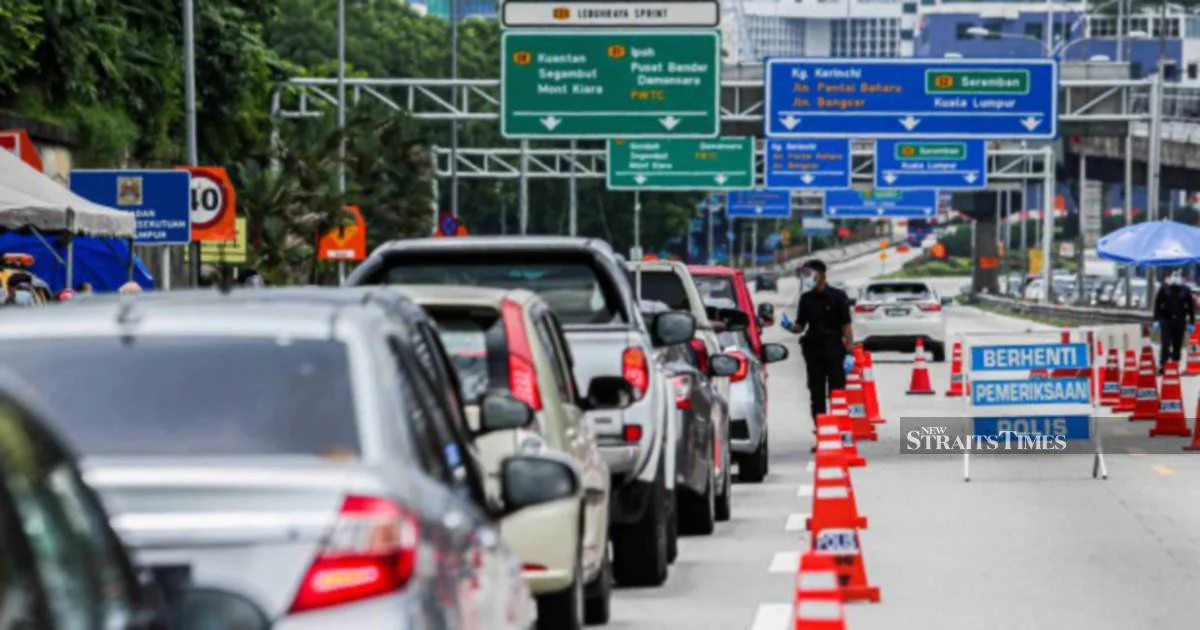
Malaysia's driving public faces significantly steeper penalties for traffic violations once Parliament passes proposed amendments to the Road Transport Act 1987, with the maximum compound fine set to jump to RM500 for more than 700 individual road offences. The anticipated increase represents a substantial escalation in enforcement costs for motorists and marks a pivotal shift in the nation's approach to traffic regulation compliance.
The dramatic increase in penalty levels underscores growing governmental concern over persistent road safety challenges across the country. By substantially raising financial consequences, policymakers appear intent on creating stronger deterrents against habitual traffic violations and improving overall compliance with road regulations. This approach aligns with broader regional traffic safety initiatives, though the effectiveness of penalty increases in changing driver behaviour remains debated among transport experts.
Current compound rates for various traffic infractions have remained relatively stagnant, and the proposed changes represent one of the most comprehensive updates to the penalty structure in recent years. The move affects a remarkably wide range of offences, from minor regulatory breaches to more serious violations endangering other road users. This breadth suggests that authorities view traffic safety as a systemic challenge requiring comprehensive rather than targeted interventions.
For Malaysian motorists, the practical implications are substantial. Drivers who accumulate multiple minor violations could face dramatically increased financial burdens compared to present circumstances. Commuters in congested urban areas, where traffic violations tend to cluster around parking, speeding, and signal violations, may experience particularly acute impacts on their household budgets. This financial pressure could inadvertently incentivise more deliberate rule compliance, though critics argue that economic penalties disproportionately burden lower-income drivers.
The timing of these amendments reflects heightened scrutiny of Malaysia's road safety record, which consistently ranks among the region's more challenging. Fatal accident rates, injuries, and property damage from traffic incidents impose substantial costs on the healthcare system, insurance industry, and national productivity. By tightening financial consequences, authorities hope to tip the cost-benefit calculation that influences driver decision-making at critical moments on the road.
Parliamentary approval remains essential before implementation, and the legislative process provides opportunity for opposition, refinement, or deferral of the proposed changes. Various stakeholder groups, including transportation advocacy organisations, insurance companies, and commercial transport operators, are likely to submit feedback during deliberations. These external perspectives may shape the final form of any amendments or influence any phased implementation strategies.
The increase to RM500 establishes a substantial baseline penalty across the traffic offence spectrum. However, the actual distribution of penalties across different violation categories remains unclear from current announcements. Some infractions may attract significantly lower fines while others approach the maximum, creating a tiered system that matches penalty severity to violation seriousness. Clarity on this penalty matrix will prove crucial for driver awareness and consistent enforcement across jurisdictions.
Enforcement consistency presents another critical challenge. With over 700 offences potentially subject to the new RM500 maximum, ensuring uniform application across Malaysia's diverse police contingents and local authorities requires substantial coordination and training. Variations in enforcement rigour between urban and rural areas, or between different state jurisdictions, could undermine the intended deterrent effect and create perceptions of unfairness among the driving public.
The commercial transport sector faces particular implications from these changes. Taxi operators, bus companies, and goods vehicle owners managing large fleets may experience compounded penalties across multiple vehicles, substantially increasing operational costs. These industries may seek exemptions, phased implementation periods, or alternative compliance mechanisms during Parliamentary debates. Their lobbying efforts could prove influential in shaping final legislation.
Regionally, Malaysia's move toward higher traffic penalties places it within a broader Southeast Asian trend toward stricter enforcement. However, comparative penalty structures across ASEAN nations vary significantly, and Malaysian rates may eventually exceed neighbouring countries' standards. This variation might create interesting dynamics for cross-border drivers and highlights how different jurisdictions balance revenue generation with behavioural modification through traffic enforcement.
The psychological dimensions of penalty increases warrant consideration. Research on traffic compliance suggests that perceived likelihood of detection often outweighs severity of punishment in influencing driver behaviour. An increase to RM500 may prove most effective when accompanied by enhanced visible enforcement presence rather than standing alone as a legislative change. Without corresponding investments in traffic police resources and technology, the penalty increase may generate revenue without meaningfully improving safety outcomes.
Long-term implementation will reveal whether the RM500 ceiling achieves intended compliance improvements or simply redistributes wealth from motorists to government coffers. Public awareness campaigns accompanying any Parliamentary passage will prove essential for ensuring drivers understand new penalty structures before enforcement commences. The transition period between legislative approval and full implementation will be critical for establishing clear expectations across the driving population.
As Parliament prepares to consider these amendments, Malaysian motorists should anticipate potentially significant changes to their traffic violation costs. Preparation through heightened awareness of road regulations and more cautious driving practices may represent prudent strategies as the legislative process advances toward probable approval.

