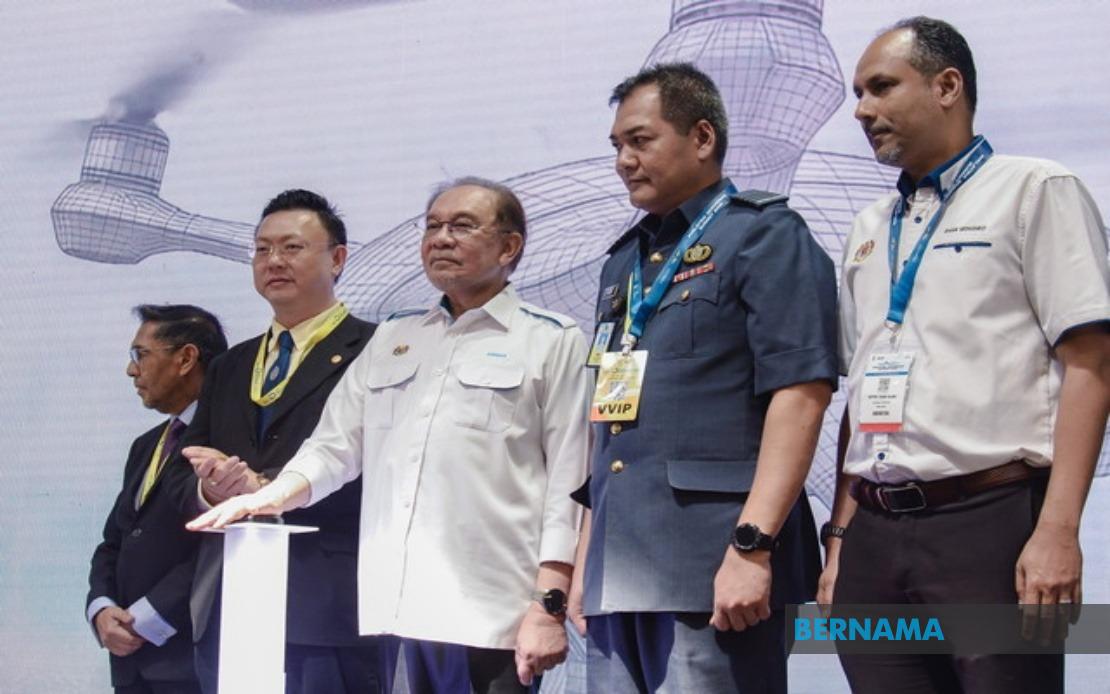
Prime Minister Datuk Seri Anwar Ibrahim has sounded an urgent call for Malaysia to move swiftly in developing unmanned aerial vehicle (UAV) and drone technologies, positioning the sector as critical to the nation's economic future. Addressing delegates at the closing ceremony of MyDrone Expo 2026 (MDX2026) in Sepang on June 27, Anwar underscored that technological advancement is essential for Malaysia to elevate its standing in the global economy and maintain competitiveness in an increasingly digital world.
The drone industry represents far more than a niche defence application, according to the Prime Minister. Rather, it sits at the convergence of several transformative fields—artificial intelligence, digital technology, and automation—making it a powerful multiplier for innovation and economic productivity. This intersection with emerging technologies means that Malaysian investments in drone development can simultaneously build capabilities across multiple high-value sectors, creating synergies that amplify returns on research and development spending.
Anwar's remarks come against the backdrop of substantial global market expansion. The worldwide UAV market is projected to surpass USD55 billion by 2030, representing significant revenue and employment opportunities for early movers and industry leaders. Beyond sheer market size, the low-altitude economy—encompassing everything from agricultural monitoring to logistics and emergency response—is gaining traction as a major investment focus among venture capitalists and established corporations worldwide. For Malaysia, failing to develop indigenous drone capabilities and manufacturing capacity risks ceding these opportunities to more advanced competitors in East Asia.
The MDX2026 itself demonstrated considerable momentum within the Malaysian drone sector. Co-organised by the World UAV Federation (WUAVF) Malaysia Chapter and the Malaysia UAV Development Association (MUDA), the three-day exposition attracted over 100 exhibition booths and drew thousands of visitors alongside industry professionals from 46 countries. This international participation reflects growing recognition of Malaysia's potential as a regional hub for drone innovation and development, though realising this potential requires deliberate government action.
Recognising the scale of the opportunity, Anwar has directed Cabinet ministers, policymakers, scientific research institutions, and all relevant agencies to provide comprehensive regulatory and ecosystem support to private and public drone ventures. This commitment extends beyond military and defence applications—traditionally the primary focus of governments investing in aerospace technologies—to encompass civil uses that drive broader economic benefit. Plantation management, precision agriculture, infrastructure inspection, and search-and-rescue operations represent just a few domains where drone deployment can meaningfully improve productivity and reduce costs.
The government's policy framework, according to Anwar, prioritises removing bureaucratic barriers and creating conditions favourable to rapid innovation and commercialisation. A key component involves overhauling and modernising the regulatory environment governing UAV operations, a task that demands coordination between aviation authorities, telecommunications regulators, environmental agencies, and defence bodies. Simultaneously, the government commits to bolstering research funding, establishing testing facilities, and developing certification pathways that allow Malaysian companies to bring products to market efficiently.
Human capital development forms another pillar of the government's strategy. Anwar emphasised the necessity of building a robust talent pipeline through closer collaboration between private industry, government research organisations, and universities. Malaysia has already established institutional capacity in adjacent fields such as artificial intelligence and quantum computing, suggesting that establishing dedicated drone engineering and autonomous systems programmes at tertiary institutions is both feasible and urgent. The involvement of academic institutions would also strengthen the research foundation underpinning industrial applications, creating a virtuous cycle where university breakthroughs transition into commercial innovations.
The timing of this push reflects broader strategic imperatives facing Malaysia's economy. As manufacturing shifts toward higher-value activities and labour-intensive industries face pressure from rising wages and automation, advanced technology sectors offer pathways to sustained prosperity. The drone sector's intersection with AI, software development, and advanced manufacturing means that Malaysian success in UAVs would reinforce and extend competitive advantages across multiple industries simultaneously, rather than representing an isolated sector play.
Regionally, Malaysia's geographic position, relatively mature digital infrastructure, and established aerospace manufacturing presence position it well to become Southeast Asia's drone innovation centre. Countries across the region face similar challenges—agricultural productivity, infrastructure monitoring, disaster response—that drone technologies address effectively. A Malaysian industry capable of designing, manufacturing, and supporting UAV systems could serve not only domestic needs but also export markets throughout the region, generating valuable foreign exchange while establishing technological leadership.
However, realising this vision requires sustained commitment and coordinated action. Government directives alone prove insufficient without parallel improvements to intellectual property protections, venture capital availability, and industry-academia partnerships. The presence of 46 countries represented at MDX2026 suggests that competitors are equally cognisant of the drone sector's potential. Malaysia's window to establish itself as a credible player remains open but is narrowing as investment flows toward countries demonstrating clear commitment and effective execution.
The challenge ahead extends beyond technology development to encompass workforce training, supply chain development, and standards setting. Malaysia must not only foster innovation but also build manufacturing capacity and establish quality assurance mechanisms that inspire confidence among international customers and partners. Success in these complementary areas will determine whether the drone sector becomes a genuine engine of economic growth or remains a promising but underperforming subsector.

