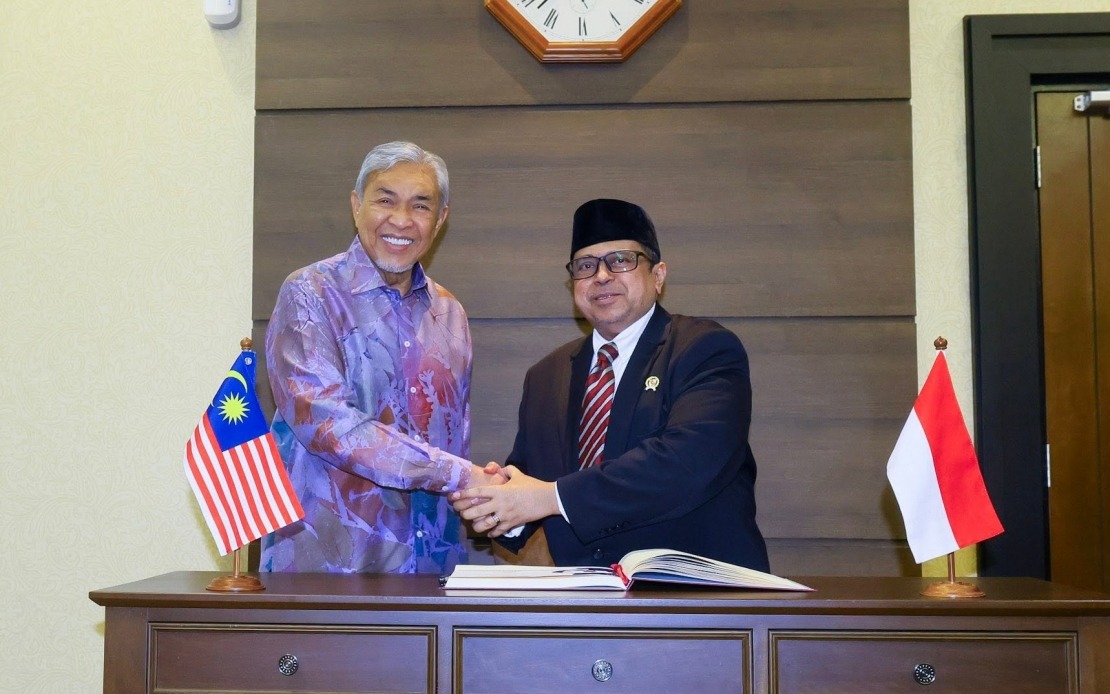
Malaysia and Indonesia are moving to cement their partnership in the halal industry through the establishment of new multilateral platforms designed to standardise practices and unlock investment opportunities across the region. Deputy Prime Minister Datuk Seri Dr Ahmad Zahid Hamidi outlined the collaborative vision following discussions with Indonesia's Ambassador to Malaysia, Raden Datuk Mohammad Iman Hascarya Kusumo, and the head of Indonesia's Halal Product Assurance Organising Body (BPJPH), Dr Ahmad Haikal Hassan, at the Parliament building on June 25.
The proposed Malaysia-Indonesia Halal Council (MIHC) represents the cornerstone of this bilateral initiative, designed to serve as a dedicated platform for addressing shared challenges within the halal ecosystem. Beyond this bilateral framework, both nations are pursuing broader regional architecture through the establishment of an ASEAN Halal Council, which would extend cooperation across the entire Southeast Asian bloc. Ahmad Zahid also referenced plans for a World Halal Development Council, signalling ambitions to position the region as a leader in global halal commerce and standards-setting.
Harmonising halal standards across borders remains one of the most pressing challenges facing producers in Malaysia and Indonesia. Despite both nations being predominantly Muslim and having established halal certification regimes, differences in certification procedures, documentation requirements, and compliance protocols have created friction in cross-border trade. The new councils aim to streamline these processes by developing unified standards that would reduce compliance costs for manufacturers and exporters while maintaining rigorous quality assurance. For Malaysian businesses seeking to expand into Indonesian markets or vice versa, this standardisation could substantially lower entry barriers and reduce time-to-market for halal products.
The timing of this initiative reflects broader economic imperatives facing both nations. The global halal market, valued at over USD2 trillion annually across food, pharmaceuticals, cosmetics and other sectors, represents a significant growth opportunity. Malaysia has long positioned itself as a halal hub and standards-setter, hosting the International Halal Certification Body and serving as home to numerous halal-certified manufacturers. Indonesia, with its substantially larger Muslim population exceeding 230 million, possesses enormous production capacity and consumer demand. By coordinating efforts, both countries can capture a larger share of international halal trade while establishing themselves as preferred suppliers to Muslim-majority markets across the Middle East, North Africa, and beyond.
The expansion of halal trade between Malaysia and Indonesia carries particular relevance for Malaysian exporters and investors. Indonesia's vast agricultural and manufacturing base offers opportunities for Malaysian companies to establish joint ventures or sourcing partnerships that leverage Indonesian production capacity while maintaining Malaysian halal standards and brand value. Conversely, Indonesian companies seeking to access premium halal markets in the Middle East or developed nations can benefit from Malaysia's established distribution networks and reputation for rigorous certification. The councils would provide institutional frameworks to facilitate such partnerships by reducing regulatory uncertainty.
Ahmad Zahid, in his capacity as chairman of the Malaysia Halal Industry Development Council, emphasised that the longstanding diplomatic and cultural ties between Malaysia and Indonesia position both countries uniquely to lead regional halal development. The historical relationship, grounded in shared Islamic heritage and geographic proximity, provides a foundation of trust and mutual understanding often absent in international negotiations. This goodwill can be leveraged to move beyond merely bilateral cooperation toward building consensus across ASEAN nations, many of which have emerging halal industries or growing Muslim populations seeking certified products.
The broader implications extend to Southeast Asia's positioning within global value chains. As Western markets increasingly demand halal-certified products to serve growing Muslim diaspora communities, ASEAN nations that can reliably supply certified goods enjoy significant competitive advantages over non-Muslim majority producers. By establishing region-wide standards and councils, Malaysia and Indonesia would not only improve bilateral trade flows but also create competitive advantages for the entire ASEAN bloc against suppliers from other regions. This collective approach mirrors successful regional integration efforts in other sectors and demonstrates how shared religious and cultural identity can be leveraged for economic cooperation.
The halal industry extends far beyond conventional food products. Pharmaceuticals, cosmetics, personal care items, and even financial services increasingly require halal certification or Islamic compliance. The proposed councils would address standardisation across these diverse sectors, requiring coordination with regulatory bodies, industry associations, and certification experts. This complexity explains why bilateral and regional frameworks are essential—individual companies lack the institutional capacity to negotiate standards across multiple jurisdictions, but coordinated governments can establish baseline requirements that individual producers must meet.
For Malaysian enterprises, the initiative opens pathways to participate in Indonesia's rapidly growing middle-class consumer market, projected to exceed 150 million by 2030. Indonesian consumers increasingly demand higher-quality, certified halal products as incomes rise. Malaysian brands, already established in the region through decades of halal marketing and quality positioning, can leverage these new frameworks to expand distribution and increase market penetration. Similarly, Indonesian producers can access Malaysian expertise in halal assurance and international market development.
The proposed councils also signal a commitment to addressing non-tariff barriers that have historically complicated trade between Malaysia and Indonesia. While both countries maintain relatively open trade policies within ASEAN, divergent standards and certification requirements have created compliance costs that disproportionately burden smaller enterprises. Harmonised standards would democratise market access, enabling small and medium-sized enterprises in both nations to participate in cross-border trade without bearing excessive regulatory compliance burdens. This inclusive growth approach aligns with development objectives within both countries.
Institutionalising cooperation through dedicated councils rather than ad hoc agreements provides stability and predictability for long-term business planning. Companies investing in new facilities or product lines can make decisions with confidence that regulatory frameworks will remain stable and aligned with regional standards. This certainty attracts both domestic and foreign direct investment into halal sectors within Malaysia and Indonesia, benefiting the broader Southeast Asian economy.
The initiative also positions Malaysia and Indonesia to influence global halal standards development. Currently, standards-setting in the halal industry involves diverse actors ranging from national governments to private certification bodies to international organisations. By presenting a unified ASEAN position, Malaysia and Indonesia can shape emerging global frameworks rather than merely adopting standards developed elsewhere. This strategic positioning is particularly important as major trading partners increasingly incorporate halal compliance into supply chain requirements and as Muslim-majority nations seek greater representation in global standards bodies.

