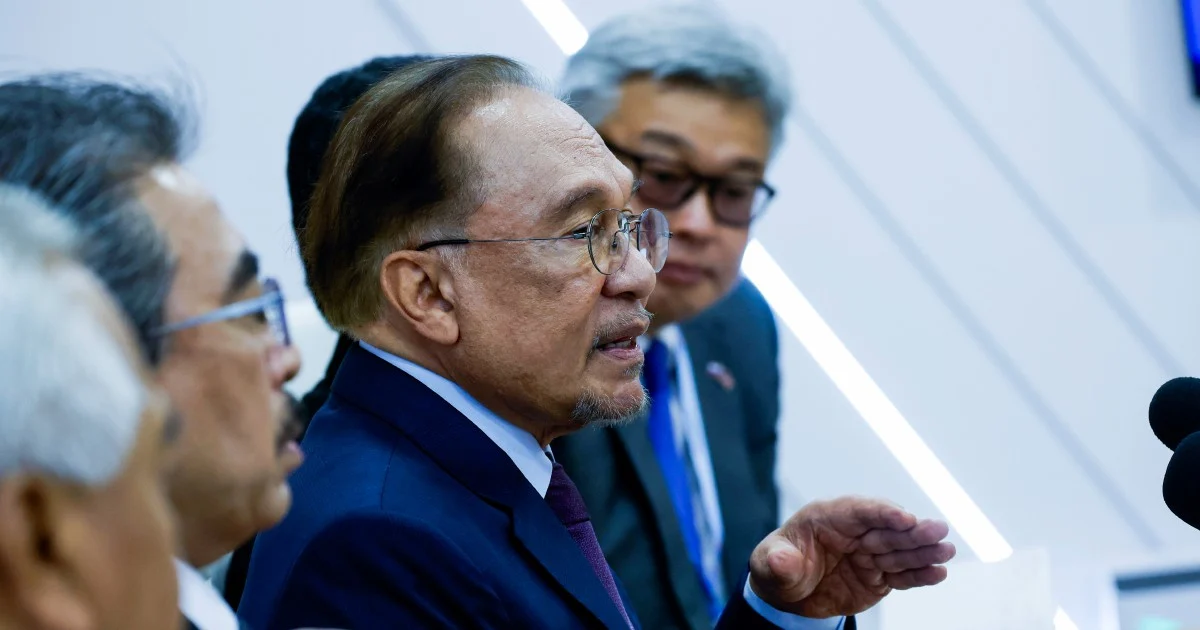
Prime Minister Anwar Ibrahim has expressed Malaysia's cautious optimism regarding a newly brokered peace agreement between the United States and Iran, signalling the country's commitment to supporting diplomatic efforts that could de-escalate tensions across the volatile Middle East. Speaking in Kazan, where Malaysia was engaged in regional consultations, Anwar underscored that while the bilateral accord represents a meaningful step forward, the international community cannot afford to overlook the humanitarian crises unfolding simultaneously in Gaza and Lebanon—two flashpoints that continue to destabilize the broader region and threaten prospects for comprehensive peace.
The Malaysian Prime Minister's remarks reflect a sophisticated understanding of Middle Eastern geopolitics that extends beyond the immediate US-Iran relationship. By acknowledging the diplomatic achievement while simultaneously highlighting the Palestinian and Lebanese emergencies, Anwar positioned Malaysia as a balanced voice that refuses to compartmentalize regional conflicts. This approach aligns with Malaysia's historical role as a steadfast advocate for Palestinian rights and a supporter of multilateral solutions to Middle Eastern crises, demonstrating consistency in the nation's foreign policy priorities even as global power dynamics shift.
For Malaysia, which chairs or participates actively in numerous regional forums including the Association of Southeast Asian Nations, supporting conflict resolution initiatives carries both symbolic and practical weight. The country has invested considerable diplomatic capital in advocating for peaceful settlements to regional disputes, recognizing that instability in the Middle East reverberates through global supply chains, energy markets, and religious tensions that affect Southeast Asian societies. Malaysia's Muslim-majority population maintains deep cultural and religious connections to the Middle East, making developments in Palestinian territories and broader Arab affairs matters of genuine public concern rather than distant international news.
The US-Iran agreement, if successfully implemented, could theoretically reduce the risk of direct military confrontation between two major powers whose rivalry has fueled proxy conflicts across Iraq, Syria, Yemen, and other nations. However, Anwar's cautionary emphasis on Gaza and Lebanon suggests skepticism about whether diplomatic breakthroughs between Washington and Tehran will automatically translate into relief for civilian populations caught in active conflicts. The Gaza humanitarian situation has reached critical levels following sustained military operations, while Lebanon faces compounded crises involving internal political dysfunction, economic collapse, and cross-border military tensions.
Malaysia's position also reflects broader developing-world perspectives that view the Middle Eastern crisis through a humanitarian rather than purely geopolitical lens. While powerful nations often assess regional developments through the prism of strategic interests and great-power competition, countries like Malaysia prioritize the immediate welfare of affected populations and the restoration of basic services, security, and dignity for civilians. This humanitarian emphasis resonates throughout the Global South and shapes how Malaysia approaches international diplomacy at the United Nations and other multilateral platforms where Malaysian voices advocate for Palestinian self-determination and protection of civilian populations in conflict zones.
The timing of Anwar's comments proves significant given Malaysia's efforts to strengthen relationships across the Muslim world while maintaining pragmatic ties with Western powers. By welcoming the US-Iran agreement while pressing for Gaza and Lebanon attention, Malaysia demonstrates it will not subordinate Palestinian or Lebanese interests to great-power accommodation. This stance carries domestic political importance as well, given Malaysian civil society's vocal activism on Palestinian issues and the government's need to maintain credibility with constituents who view Middle Eastern conflicts through a lens of Islamic solidarity and opposition to perceived injustice.
Anwar's remarks implicitly challenge the notion that a single major agreement can constitute a complete regional solution when humanitarian emergencies persist. His framing suggests that peace arrangements between state actors, while valuable, represent incomplete progress if civilian suffering continues unabated. This reflects a sophisticated understanding that sustainable regional stability requires addressing root causes of conflict—political grievances, economic desperation, territorial disputes, and historical injustices—rather than merely managing relations between national governments.
For Malaysian policymakers and regional observers, the broader implication centers on whether the international community possesses sufficient political will to simultaneously pursue multiple peace tracks. The US-Iran accommodation consumed significant diplomatic resources and represented years of negotiation, yet parallel efforts to resolve Israeli-Palestinian disputes or stabilize Lebanon have proven far more intractable. Malaysia's intervention in this conversation serves as a reminder that nations outside the traditional Middle Eastern power structure retain voices capable of influencing how global affairs unfold and whose suffering receives international attention.
Moving forward, Malaysia's position suggests the country will continue leveraging its regional standing and its seat at global forums to maintain pressure on major powers to address humanitarian dimensions of Middle Eastern conflicts. Whether through ASEAN statements, United Nations interventions, or bilateral diplomatic channels, Malaysia appears committed to ensuring that Palestinian and Lebanese crises remain prominently featured in international consciousness even as headlines shift toward other developments. This sustained advocacy reflects both principled commitment to humanitarian values and recognition that Southeast Asian stability ultimately depends on achieving genuine, comprehensive peace across the broader Muslim world.

