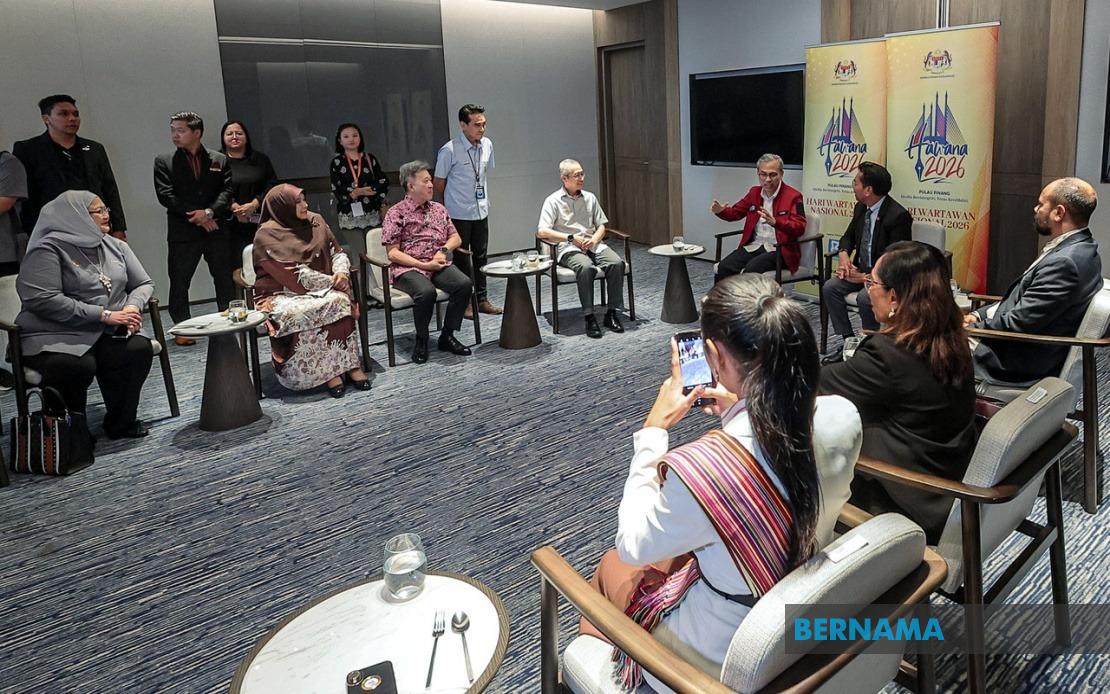
Communications Minister Datuk Fahmi Fadzil has signalled Malaysia's intention to deepen its media relationship with Timor-Leste, proposing a framework of institutional collaboration that would leverage Malaysia's established broadcast and news infrastructure to support capacity-building in the Southeast Asian nation. The initiative emerged during discussions in Butterworth between Fahmi and a high-level Timor-Leste delegation headed by Secretary of State for Social Communication Expedito Loro Dias Ximenes, whose entourage included the president and deputy president of Timor-Leste's national news agency, Agencia Noticiosa de Timor-Leste (TATOLI).
At the heart of Fahmi's proposal lies a multifaceted cooperation scheme involving Malaysia's premier news and broadcasting organisations. The Communications Minister indicated that Bernama, Malaysia's national news agency, and Radio Televisyen Malaysia (RTM) would establish formal working arrangements with their Timor-Leste counterparts, creating avenues for editorial exchange and technical knowledge transfer. More substantively, Fahmi outlined plans for the Tun Abdul Razak Broadcasting and Information Institute (IPPTAR) to conduct specialised training programmes for Timorese journalists, positioning Malaysia as a regional hub for broadcast and media literacy education.
The bilateral engagement carries particular significance given the divergent trajectories of the two nations within international press freedom assessments. Timor-Leste has achieved a striking position in the World Press Freedom Index compiled by Reporters Without Borders, ranking highest across Southeast Asia and placing 30th globally among 180 countries evaluated. This ranking underscores the young nation's relative success in establishing institutional safeguards for media independence since its transition to democratic governance. During the Butterworth meeting, Fahmi and Ximenes exchanged perspectives on the mechanisms underlying Timor-Leste's achievement, with the Malaysian minister acknowledging the lessons his counterpart's experience offers to other regional states.
Malaysia's own evolution on the press freedom metric forms an important backdrop to these cooperation discussions. The country currently occupies second position in Southeast Asia—behind Timor-Leste—reflecting modest but measurable gains over the preceding three to four years under the MADANI Government administration. Fahmi characterised these improvements as meaningful progress relative to earlier periods, yet he rejected complacency, framing the gap between Malaysia's existing ranking and potential higher positions as an objective requiring sustained strategic attention. The minister's candid acknowledgement of continued room for advancement signals the government's commitment to addressing structural factors affecting journalistic autonomy and editorial independence.
The cooperation initiative unfolds within the broader context of HAWANA 2026, a major regional media gathering held at the PICCA Convention Centre in Butterworth. The sixth iteration of this convocation assembled approximately 1,000 media professionals from Malaysia and overseas, operating under the thematic banner 'Media Integrity Strengthens Credibility'—a framework that directly addresses the relationship between institutional trustworthiness and audience confidence. Prime Minister Datuk Seri Anwar Ibrahim was scheduled to inaugurate the proceedings at 3 pm, lending executive prominence to discussions surrounding media standards and professional ethics.
The presence of senior figures from Malaysia's Communications Ministry underscored institutional investment in the Timor-Leste partnership. The delegation encompassing ministry secretary-general Datuk Abdul Halim Hamzah, deputy secretary-general Datuk Bahria Mohd Tamil, Bernama chairman Datuk Seri Wong Chun Wai, and Bernama chief executive officer Datin Paduka Nur-ul Afida Kamaludin reflected a whole-of-government approach to strengthening transnational media architecture. This senior representation signalled that cooperation frameworks would receive adequate resources and institutional backing rather than remaining rhetorical commitments.
For Malaysian readers and regional observers, the proposed media collaboration embodies a pragmatic recognition that press freedom and institutional credibility operate as interconnected variables within democratic systems. By positioning Malaysia as a supplier of technical expertise and training capacity to a neighbouring nation that has demonstrably advanced its own press freedom standing, the government simultaneously acknowledges external benchmarks of performance whilst creating mechanisms through which Malaysia might absorb best practices from Timor-Leste's experience. This reciprocal learning dynamic distinguishes genuine partnership from unidirectional assistance.
The timing of these developments coincides with heightened international scrutiny of press freedom across Southeast Asia, where democratic backsliding and restrictions on media autonomy remain persistent concerns. Within this regional landscape, Malaysia's MADANI Government has positioned press freedom improvements as integral to broader governance reforms. The Timor-Leste partnership represents one concrete expression of this commitment, channelling resources toward institutional strengthening whilst simultaneously improving Malaysia's standing on indices that increasingly influence international assessments of democratic health and institutional quality.
The journalist training initiative proposed through IPPTAR particularly warrants attention for its potential multiplicative effects. By developing media practitioners from neighbouring states in international standards of reporting, fact-checking, and editorial ethics, Malaysia extends influence over regional discourse standards whilst building networks of professional relationship that transcend formal diplomatic channels. Such capacity-building investments typically generate goodwill and create constituencies within partner nations that value continued cooperation, thereby stabilising bilateral relationships across political cycles.
Looking forward, the success of these initiatives will depend upon sustained institutional commitment beyond inaugural announcements. Bernama and RTM will require adequate staffing and resources to manage ongoing partnerships. IPPTAR must develop curricula responsive to Timorese institutional contexts rather than imposing Malaysian templates. Regular evaluation mechanisms should assess whether knowledge transfer genuinely strengthens newsroom practices and editorial independence in partner organisations. Without such implementation rigour, the framework risks becoming ceremonial rather than transformative.
For Malaysian audiences, this engagement illustrates the government's strategy of pursuing soft power through institutional mechanisms whilst simultaneously addressing domestic press freedom concerns. By collaborating with Timor-Leste on media standards, Malaysia simultaneously benchmarks its own performance and positions itself as a constructive regional actor. This multi-layered approach acknowledges that press freedom improvements serve both intrinsic democratic values and strategic national interests in an era when institutional credibility increasingly determines international standing.

