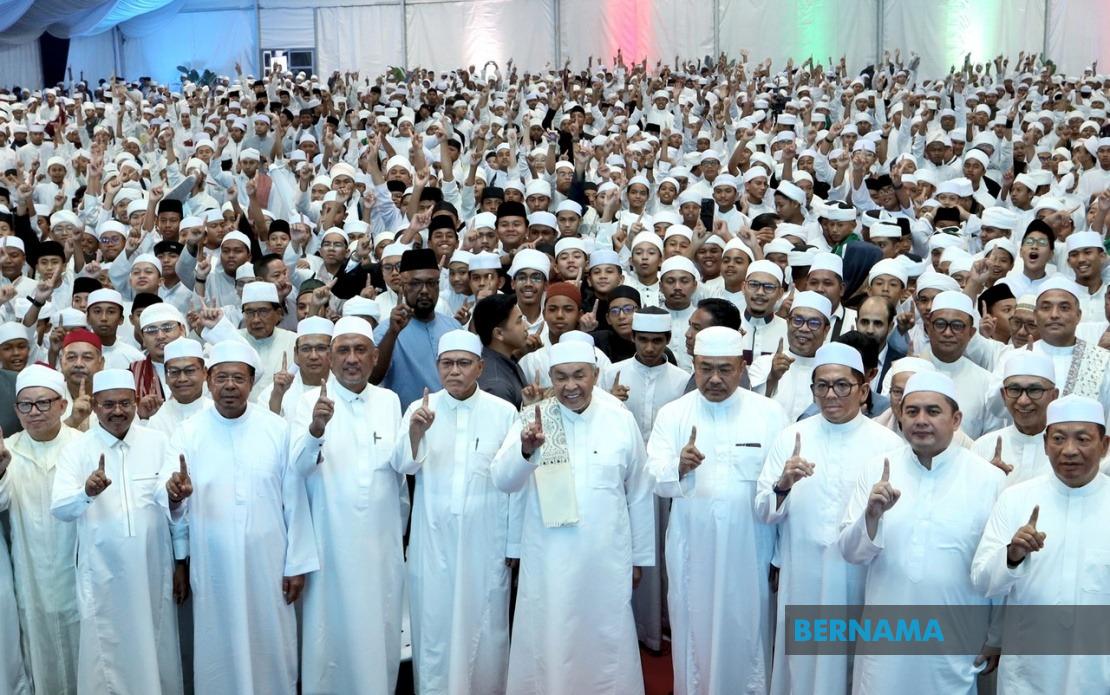
The federal government has formally approved the establishment of a National Tahfiz Council, representing a pivotal institutional development for Islamic education in Malaysia. Deputy Prime Minister Datuk Seri Dr Ahmad Zahid Hamidi unveiled the decision during the Pahang State Huffaz Gathering 2026 at Yayasan Pahang, where he was addressing an assembly of more than 5,000 hafiz and hafizah from across the state. The approval emerged from a Cabinet meeting presided over by Prime Minister Datuk Seri Anwar Ibrahim, who has tasked Ahmad Zahid with leading the council as its inaugural chairman.
This development signals a significant shift in how the government views tahfiz education within the broader educational ecosystem. Historically, Islamic memorisation schools have operated somewhat independently from mainstream education structures, creating challenges for students seeking to transition into conventional universities or formal employment. By establishing a dedicated national council, the government aims to create standardised direction, unified educational models, consistent recognition standards, and clearly articulated academic pathways for tahfiz students. The initiative acknowledges the growing recognition that Islamic education represents a legitimate and valued educational specialisation deserving integration within the country's formal education system.
Ahmad Zahid articulated an ambitious vision for tahfiz education integration, expressing his hope that the new council would facilitate a seamless progression for students throughout their educational journey. He envisions tahfiz graduates moving confidently from madrasah directly into university programmes, transitioning from pure memorisation work into practical skill development, and entering the professional workforce with recognised qualifications and expanded career prospects. This integrated pathway approach represents a meaningful departure from previous frameworks where tahfiz education often existed in institutional silos, limiting graduate mobility and professional recognition.
Pahang state has emerged as a model demonstrating how tahfiz education can develop into a comprehensive knowledge system spanning multiple educational levels. The state's initiatives, including those inspired by Al-Sultan Abdullah Ri'ayatuddin Al-Mustafa Billah Shah, the Sultan of Pahang, showcase how foundational programmes such as Tadika Tahfiz Negeri Pahang can establish early enthusiasm for Quranic memorisation and then build progressively towards secondary education, advanced training, and international-level participation. This structured progression suggests that with appropriate institutional support and coordination, tahfiz education need not remain compartmentalised but can instead form part of a coherent educational trajectory.
The government's renewed National Tahfiz Policy 2.0 framework incorporates several substantial initiatives designed to modernise and professionalise Islamic memorisation education. The TVET Tahfiz programme directly addresses skills development by integrating vocational and technical education components alongside traditional memorisation study. The Malaysian Tahfiz Certificate 2.0 establishes credentialed qualifications, while the Graded Hafazan Certification system enables differentiated recognition of achievement levels. The Huffaz Financing Scheme addresses financial barriers that may prevent deserving students from pursuing tahfiz education, removing a significant obstacle to access and participation across different socioeconomic backgrounds.
Additionally, the Malaysian Tahfiz Recognition Standard introduces quality benchmarks and consistency measures across institutions, addressing longstanding concerns about varying educational standards among independent tahfiz schools. This standardisation protects student interests while providing universities and employers with reliable benchmarks for evaluating tahfiz graduate credentials. Strategic collaborations between tahfiz institutions and higher learning establishments further institutionalise pathways that previously required individual navigation and negotiation.
The coordination agreements formalised during the gathering exemplify the collaborative infrastructure supporting this transformation. The memorandum of understanding signed between Yayasan Pahang, the Community Development Department (KEMAS), and Majlis Amanah Rakyat (MARA) creates structural mechanisms for strengthening tahfiz programme development while simultaneously expanding skills development opportunities. KEMAS and MARA bring substantial institutional experience in community development and skills training respectively, suggesting that tahfiz graduates will gain access to established vocational pathways and professional development infrastructure previously less accessible to Islamic education graduates.
For Malaysian readers, particularly those involved in Islamic education or with children pursuing tahfiz studies, this institutional development carries practical significance. The council's establishment signals government commitment to recognising and formalising what was previously treated as a supplementary educational track. Parents considering tahfiz education for their children now have greater assurance regarding curriculum standards, qualification recognition, and graduate employment prospects. Educational institutions increasingly must acknowledge tahfiz credentials as legitimate qualifications worthy of university admission consideration.
The broader Southeast Asian context illuminates the significance of this Malaysian initiative. Across the region, Islamic memorisation education occupies varying formal statuses, with some countries struggling to integrate tahfiz graduates into mainstream professional structures. Malaysia's systematic approach to standardisation and integration may offer instructive models for neighbouring nations grappling with similar challenges. The recognition that Islamic education represents an asset rather than an obstacle within modern educational systems could reshape regional approaches to religious knowledge integration.
From an economic and workforce development perspective, this institutionalisation of tahfiz education addresses identified skills gaps and workforce development priorities. Hafiz and hafizah represent a specialised human resource with demonstrated discipline, memory capacity, and religious commitment. By creating clear pathways into skilled employment, the government taps into this potential while expanding career opportunities for a demographic group whose educational specialisation previously offered limited professional options. Companies seeking employees with strong ethical frameworks and demonstrated discipline might increasingly view tahfiz graduates as valuable candidates.
The government's framing of this initiative emphasises confidence, qualifications, and expanded futures for tahfiz students. This language suggests a deliberate effort to elevate the social and professional status of Islamic memorisation education, countering potential perceptions that such education represents a limitation on life trajectory rather than a foundation for achievement. By positioning tahfiz study as compatible with and complementary to technical skills, professional advancement, and university education, policymakers signal that Malaysian society values and supports multiple pathways to meaningful achievement and contribution.
Implementing this ambitious vision requires sustained coordination across government agencies, educational institutions, religious authorities, and community organisations. The council's success will ultimately depend on whether universities genuinely incorporate tahfiz credentials into admission frameworks, whether employers recognise these qualifications, and whether institutions develop genuinely integrated programmes rather than superficial combinations of separate curricula. Ongoing dialogue between traditional Islamic education stakeholders and mainstream educational bodies will prove essential to ensuring that integration strengthens rather than dilutes tahfiz education quality.