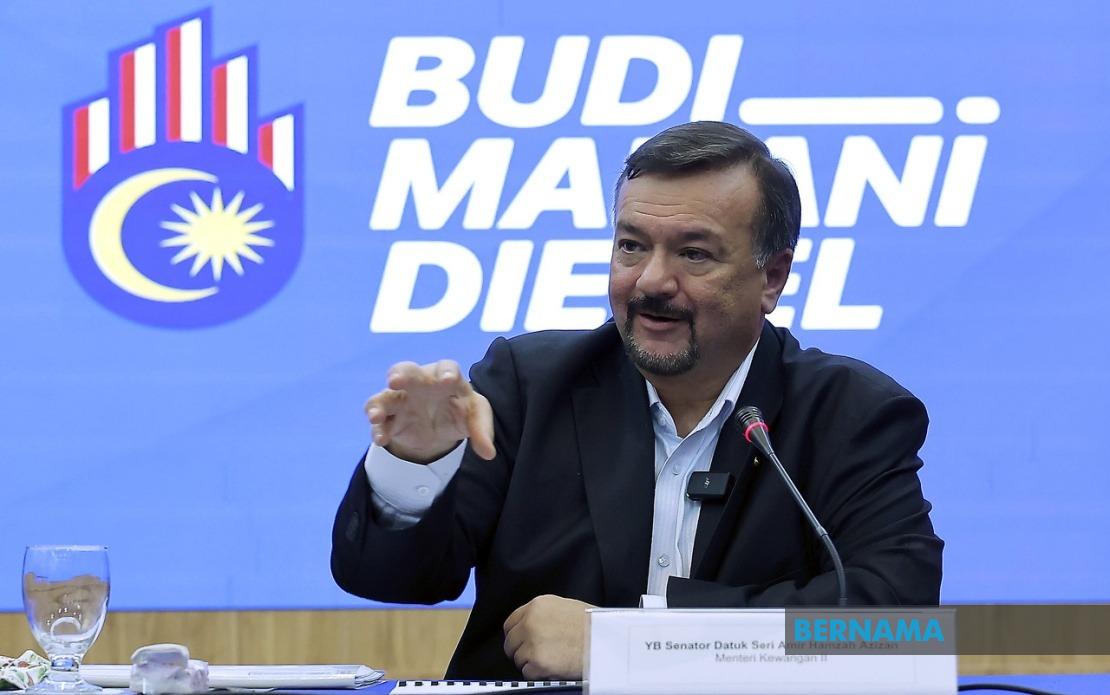
The MADANI Government has rolled out a package of three significant modifications to the BUDI Diesel targeted subsidy programme, designed to smooth the transition as the system enters its early access phase starting tomorrow in Peninsular Malaysia. The Ministry of Finance unveiled these adjustments after consulting extensively with the public, small business operators, industry stakeholders, and the agencies responsible for administering the new fuel pricing structure. The shift represents an important refinement to an initiative first announced on June 22, reflecting the government's willingness to incorporate feedback during the implementation process.
At the heart of the enhancements is a Temporary Incentive Programme that will exempt diesel vehicle owners from paying fees associated with transferring vehicle ownership for a three-month period beginning July 1. This waiver addresses one of the immediate concerns raised during stakeholder engagement, as ownership transfer charges could have created friction during the transition period for those seeking to adjust their vehicle registrations under the new subsidy framework. By removing this financial barrier temporarily, the government aims to eliminate a potential deterrent that could have complicated the shift to a more targeted system.
Equally significant is the government's decision to allow diesel subsidies to be transferred to whoever actually operates a vehicle, rather than restricting benefits solely to registered owners. This provision recognises the practical reality of vehicle usage in Malaysia, where trucks, vans, and work vehicles are frequently used by employees or operators who are not the registered proprietors. Finance Minister II Datuk Seri Amir Hamzah Azizan noted that this flexibility was introduced following appeals from the public and represents a core principle of the MADANI Government's approach to ensuring support reaches genuinely eligible Malaysians.
The third pillar of the enhancement package extends BUDI Diesel coverage to include company-owned private pick-up trucks and jeeps. Previously, the scope of eligible vehicles under the targeted subsidy may have created ambiguity around commercial or semi-commercial light vehicles. Broadening the definition to encompass these categories ensures that small and medium-sized enterprises relying on such vehicles for operations can access the fuel subsidies for which they qualify. This expansion particularly benefits rural and semi-rural businesses that depend on light commercial vehicles but lack the resources of larger fleet operators.
The rationale underpinning BUDI Diesel remains centred on fiscal efficiency and equity. For years, Malaysia's blanket fuel subsidies have benefited all consumers regardless of need, consuming billions of ringgit annually in government expenditure while allegedly creating opportunities for leakage and misuse. The targeted approach aims to direct support specifically toward those who genuinely depend on diesel for livelihoods or essential transport, while simultaneously tightening controls that have historically enabled smuggling and cross-border arbitrage. By restricting subsidies to identified eligible users and preventing resale or diversion, the government expects to recover substantial sums that can be redirected toward infrastructure, healthcare, or other social priorities.
The government's responsiveness in introducing these refinements within days of the initial June 22 announcement demonstrates awareness that abrupt policy shifts affecting fuel costs and vehicle operations require careful calibration. Truckers, taxi operators, farmers, and small business owners constitute powerful constituencies whose concerns cannot be dismissed, and public feedback clearly indicated that the original framework contained friction points. The three-month ownership transfer fee waiver, in particular, provides a grace period during which the system can stabilise while allowing individuals to make necessary administrative adjustments.
For Malaysian businesses and households, the enhancements carry practical implications. Commercial operators who employ drivers should find it easier to claim fuel subsidies without worrying that ownership mismatches between registered and actual users will disqualify them. The fee waiver reduces upfront costs for anyone adjusting vehicle registrations in light of the new rules. Smaller enterprises gaining clarity that their pick-up trucks and jeeps qualify for the programme can factor potential fuel savings into operational planning, though actual subsidy levels and eligibility criteria remain crucial details requiring close monitoring.
The transition to BUDI Diesel also offers a test case for how the MADANI Government balances fiscal consolidation with social protection. Moving away from universal subsidies toward targeted schemes requires administrative capacity, digital infrastructure, and verification systems that many middle-income countries struggle to implement effectively. Malaysia's existing database systems and relatively sophisticated bureaucracy position it better than many peers to execute such a transition, yet unexpected difficulties frequently emerge during rollout. The three enhancements suggest the government is prepared to adjust course if implementation reveals unforeseen problems, which could prove decisive in determining whether the new system ultimately achieves its dual objectives of protecting vulnerable groups while recovering government revenue.
Stakeholders should note that the enhancements announced on June 26 apply specifically to the early access phase beginning tomorrow. The government's broader implementation timeline and any adjustments following this initial period remain subjects for close observation. For businesses operating across Peninsular Malaysia—whether in logistics, agriculture, or services—understanding the precise mechanics of the new subsidy transfer provisions and confirming eligibility will require engagement with official guidance from the Ministry of Finance and relevant agencies. The success of BUDI Diesel will ultimately depend not only on policy design but on the effectiveness of communication and system administration in the weeks and months ahead.

