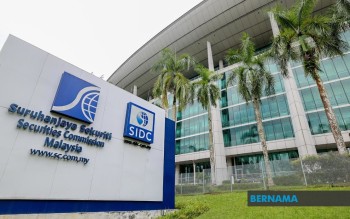
Malaysia is charting an ambitious path to deepen its standing as a global Islamic finance powerhouse by deliberately courting investment from Russia and neighbouring Central Asian economies. The Ministry of Finance, working alongside the Securities Commission Malaysia, has articulated a comprehensive strategy to make the country an increasingly attractive destination for capital flows that comply with Islamic principles, with Russia identified as a key market for expansion.
The cornerstone of this initiative involves the Securities Commission planning an exploratory mission to Central Asia scheduled for 2026 or 2027, part of a broader internationalisation agenda aimed at broadening the Islamic capital market beyond traditional Middle Eastern and Southeast Asian investors. This visit will serve multiple purposes: evaluating the appetite for Islamic financial products in the region, forging stronger connections with local financial authorities and private-sector stakeholders, and identifying pathways to establish a robust Islamic finance infrastructure that positions Malaysia as the natural intermediary between Russian and global markets.
Russian interest in Malaysia's model has gained tangible momentum following representations from the Head of the Republic of Tatarstan in May 2025, signalling receptiveness to adopting Malaysia's approach to Islamic finance development. This opening presents Malaysia with a distinctive opportunity to diversify its revenue streams beyond traditional banking and capital markets by exporting shariah expertise, a competitive advantage built over decades. Professional services including shariah advisory, consultancy work, training programmes and capacity-building initiatives represent high-value exports that require minimal infrastructure investment while leveraging Malaysia's accumulated knowledge.
The diplomatic groundwork has already begun. The Securities Commission has conducted a series of bilateral meetings with Russian counterparts, including engagements with the Central Bank of Russia and the Saint Petersburg International Mercantile Exchange in 2023 and again in 2025. These conversations have laid essential foundation for deeper financial cooperation, establishing communication channels and demonstrating mutual interest in cross-border collaboration that could eventually lead to joint ventures, shared standards and integrated trading platforms.
This strategic pivot towards Russia reflects Malaysia's recognition that Islamic finance, while growing robustly in the Middle East and parts of South Asia, remains underutilised in Eastern Europe and Central Asia despite substantial Muslim populations in regions like Tatarstan and other Russian republics. By positioning itself as the bridge between these emerging markets and global Islamic financial infrastructure, Malaysia seeks to capture first-mover advantages while the competitive landscape remains relatively open. The approach aligns with Malaysia's broader vision articulated in the Capital Market Masterplan 2026-2030, which emphasises regulatory modernisation, product innovation and deepened international partnerships.
The initiative represents more than commercial calculation; it embodies a sophisticated understanding of how Islamic finance can become a tool for economic diplomacy and regional integration. By assisting Russia and Central Asian nations in developing their own Islamic finance capabilities, Malaysia positions itself as a trusted partner and knowledge leader rather than simply a service provider. This approach builds goodwill, creates long-term relationships and potentially opens doors for Malaysian firms to participate in infrastructure projects and investment opportunities across these regions.
Malaysia's government has emphasised that it remains receptive to legitimate and productive investments from Russia, provided they comply with domestic laws and international standards. This conditionality reflects Malaysia's commitment to maintaining the integrity of its financial system while remaining pragmatically open to capital inflows from diversified sources. The emphasis on international standards addresses global concerns about transparency and regulatory compliance, positioning Malaysia as a responsible actor in the international financial architecture rather than a jurisdiction willing to compromise standards for short-term gains.
The concept of Maqasid al-Shariah—the objectives of Islamic law—features prominently in Malaysia's articulation of this strategy. Rather than framing Islamic finance merely as a technical system of financial products compliant with religious rulings, this framing emphasises the broader societal benefits: sustainability, inclusivity, transparency and equitable wealth distribution. This philosophical underpinning potentially appeals to Russian policymakers concerned with economic diversification and financial innovation that extends beyond Western-centric models.
For Malaysian stakeholders, the expansion into Russian markets carries significant implications. Financial institutions, shariah scholars, consultancy firms and professional services providers stand to benefit from new revenue opportunities. Local universities and training institutions may find enhanced demand for Islamic finance education programmes tailored to international participants. The broader economy could benefit from strengthened diplomatic relationships that create opportunities across multiple sectors beyond finance, from trade to infrastructure development.
The regulatory framework governing this expansion will prove crucial. The Securities Commission's continued enhancement of Malaysia's competitiveness through stronger regulatory frameworks and product innovation ensures that the country remains an attractive hub as competition intensifies globally. Other jurisdictions, including some in the Middle East and Southeast Asia, are similarly pursuing internationalisation strategies, making Malaysia's success dependent on maintaining superior regulatory quality, offering innovative products and delivering exceptional professional services.
Geopolitically, Malaysia's outreach to Russia through Islamic finance offers a subtle but meaningful avenue for engagement that sidesteps conventional tensions. Unlike direct foreign policy initiatives, financial and commercial cooperation built on mutual economic interest can proceed with less political friction. This pragmatic approach reflects Malaysia's long-standing policy of maintaining non-aligned positioning while pragmatically engaging with major powers across the geopolitical spectrum.
Longer-term, success in attracting Russian capital and establishing Malaysia as a preferred partner for Central Asian Islamic finance development could fundamentally reshape the regional Islamic finance landscape. Instead of capital flowing predominantly from the Gulf, diversified sources including Russian institutional investors could emerge, creating more resilient and multipolar Islamic financial markets. This structural shift would reinforce Malaysia's positioning while reducing concentration risk in the global Islamic finance ecosystem.

