Malaysia has formally endorsed the emerging understanding between the United States and Iran aimed at ending their prolonged hostilities, with Prime Minister Datuk Seri Anwar Ibrahim publicly backing the diplomatic breakthrough and the forthcoming memorandum of understanding between the two nations. In a statement via Facebook, Anwar acknowledged the significance of the development and specifically recognized Pakistan's instrumental role in mediating between Washington and Tehran—a recognition that underscores the critical position held by Pakistan within regional diplomatic channels and the broader Muslim world's stake in this resolution.
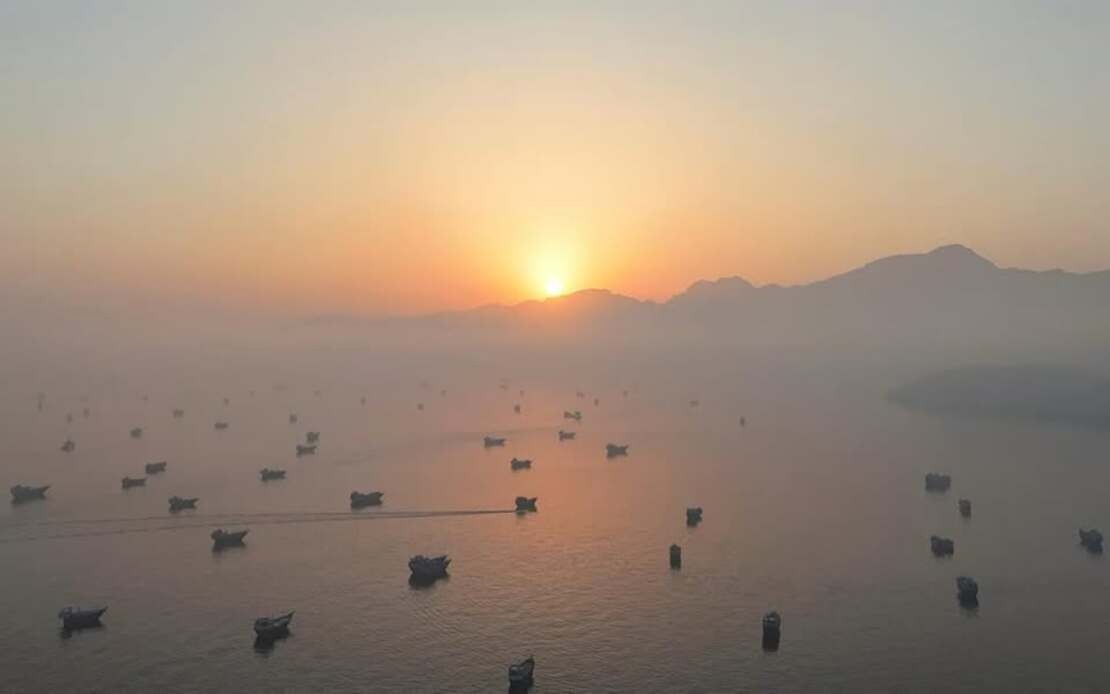
The primary concern articulated by Malaysia's leadership centres on the urgent necessity to restore normal shipping operations through the Strait of Hormuz, a waterway of unparalleled importance to global commerce and energy markets. Anwar characterized this critical passage as an arterial lifeline for international trade and energy security, emphasizing that its sustained closure creates cascading consequences far beyond the immediate bilateral dispute. For Malaysia and other Southeast Asian economies dependent on reliable energy supplies and uninterrupted maritime trade routes, the Hormuz chokepoint represents a strategic vulnerability. Nearly one-third of global seaborne crude oil and liquified natural gas passes through these waters annually, making its accessibility essential to economic stability across the region.
Anwar's intervention reflects Malaysia's pragmatic approach to regional geopolitical tensions. Rather than remaining a passive observer, the Malaysian government has positioned itself as a responsible stakeholder committed to peaceful resolution, while candidly warning that prolonged disruption serves no legitimate interest. This formulation acknowledges the mutual costs of continued hostility without appearing to favour either party. The Prime Minister specifically cautioned all participants and external actors against undertaking measures that could undermine the diplomatic momentum, a subtle reminder that even tangential actions by third parties could prove destabilizing at this delicate juncture.
The call for good faith implementation and rapid translation of the understanding into a substantive peace accord reflects Malaysia's understanding that preliminary agreements often prove fragile without momentum toward concrete institutional arrangements. Anwar's emphasis on proceeding without delay speaks to the recognition that delays in implementation allow domestic critics and hardliners on both sides to mount opposition and potentially sabotage the process. The historical record of Middle Eastern peace efforts demonstrates repeatedly that windows of opportunity for diplomatic breakthroughs narrow quickly if not seized promptly.
Malaysia's willingness to contribute actively to peace-building efforts carries significance within the broader context of the country's foreign policy orientation. As a Muslim-majority democracy with substantial economic interests in regional stability, Malaysia has traditionally sought to balance competing pressures while maintaining influence in both Western and Islamic forums. By endorsing this understanding while calling for international community support, Anwar positions Malaysia as a bridge-builder capable of engaging constructively with all parties.
The regional implications extend beyond energy security to encompass broader questions of trade corridor integrity and maritime safety. Southeast Asian shipping companies and traders rely on unobstructed passage through multiple chokepoints, and disruptions in one theatre inevitably create insurance cost increases and routing inefficiencies affecting commerce across the Indian Ocean. Malaysian ports and shipping interests face direct exposure to volatility stemming from Middle Eastern tensions, making stability in the region a tangible national interest rather than an abstract foreign policy concern.
Anwar's intervention also reflects awareness that external actors cannot remain aloof from such developments. China, India, Japan, and South Korea—all major consumers of Middle Eastern oil transiting through the Hormuz—have equally compelling reasons to support stabilization efforts. Malaysia's call for the international community to sustain momentum toward peace effectively invites these major economic players to reinforce diplomatic efforts and discourage actions that could reignite conflict. This multilateral framing enhances the political cost of renewed hostilities by broadening the coalition of stakeholders with vested interests in maintaining peace.
The memorandum of understanding referenced in the announcement represents only an initial step, requiring subsequent translation into binding agreements addressing underlying sources of US-Iran tension. These include nuclear programme limitations, sanctions architecture, regional proxy conflicts, and confidence-building mechanisms. Malaysia's emphasis on achieving a durable settlement acknowledges these remaining complexities while voicing optimism that the preliminary breakthrough can catalyze further progress. The distinction between an agreement in principle and a sustainable peace arrangement is crucial; the former often collapses unless supported by credible implementation frameworks and sustained diplomatic engagement.
For Malaysia specifically, the timing of this diplomatic progress arrives amid broader efforts to diversify energy sources and strengthen supply chain resilience. While renewable energy and LNG diversification have reduced Malaysian dependence on Middle Eastern crude in recent years, the country remains exposed to global energy market fluctuations driven by Middle Eastern dynamics. A stable Strait of Hormuz and normalized US-Iran relations contribute to the predictable, secure energy pricing environment essential for industrial planning and economic growth forecasting.
The Malaysian government's public positioning also reflects recognition that this understanding, while significant, represents merely one element within a more complex Middle Eastern security environment. The Israeli-Palestinian conflict, Yemen's ongoing humanitarian catastrophe, Syrian reconstruction challenges, and various proxy competitions between regional powers continue generating tension and instability. Malaysia's call for sustained international focus and its offer of constructive engagement position the country to contribute expertise and credibility in subsequent peace-building phases if opportunities emerge.
Moving forward, Malaysia's response establishes clear expectations regarding implementation speed and parties' obligations to refrain from provocative actions. The emphasis on good faith compliance and international monitoring reflects lessons learned from previous Middle Eastern agreements that succeeded on paper but failed in practice due to inadequate enforcement mechanisms or subsequent violations by signatories. By stressing these elements early, Malaysia signals its expectation that any final settlement will incorporate robust verification and dispute resolution provisions capable of preventing recurrence of hostilities.