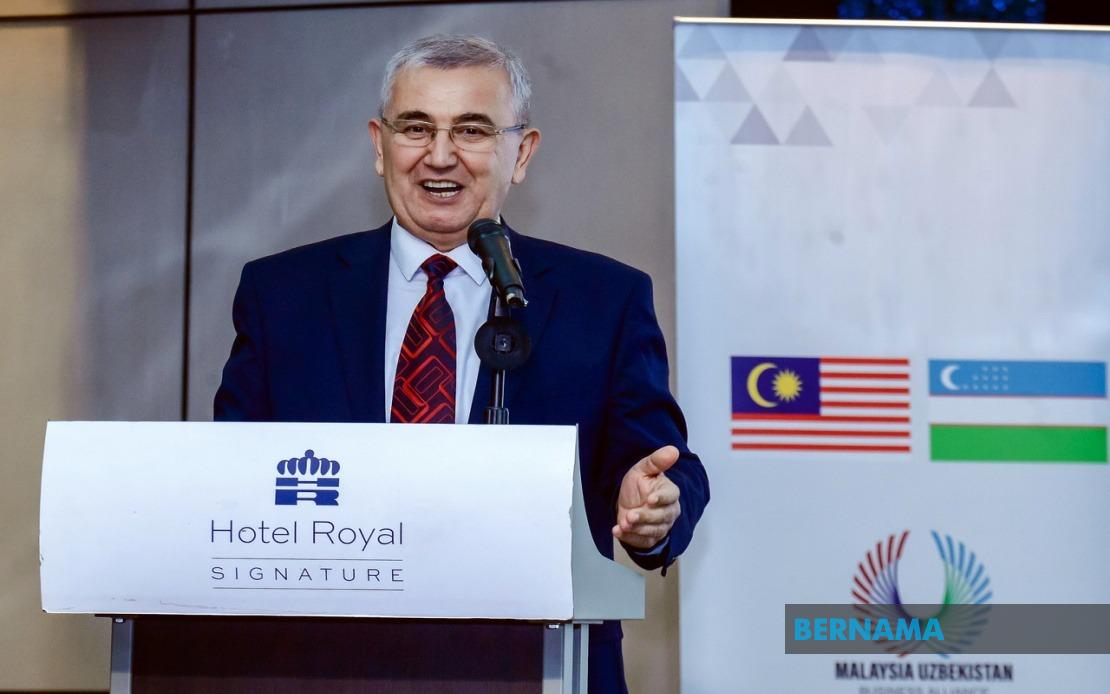
The governments of Malaysia and Uzbekistan are moving to establish a more robust agricultural alliance, recognising that complementary strengths in food production and technology can address mounting pressures on global supply chains. According to Uzbekistan's diplomatic envoy to Malaysia, Dr Karomidin Gadoyev, agriculture represents a cornerstone issue in bilateral relations, with both leaders consistently prioritising the sector during their recent visits. These high-level engagements—including Malaysian Prime Minister Datuk Seri Anwar Ibrahim's trip to Uzbekistan in May 2024 and President Shavkat Mirziyoyev's February visit to Malaysia—underscore the strategic weight placed on agricultural cooperation in an era of growing food security concerns across Asia.
The momentum accelerated following Agriculture and Food Security Minister Datuk Seri Mohamad Sabu's recent official mission to Uzbekistan, which marked a tangible shift from general dialogue to concrete partnership frameworks. This visit signals Malaysia's intent to position itself as a technology and innovation partner for Central Asian nations grappling with agricultural modernisation. For Uzbekistan, a nation of nearly 40 million people landlocked twice over, the need to ensure stable food supplies carries particular urgency. Malaysia's established capabilities in paddy cultivation, aquaculture, fisheries management, and agricultural research offer practical solutions that can be adapted and deployed across Uzbekistan's diverse agricultural landscape.
The technological dimension forms the beating heart of this emerging partnership. Both countries have identified digital innovation and artificial intelligence as transformative tools for enhancing agricultural output while managing resource constraints. Uzbekistan possesses sophisticated expertise in energy-efficient irrigation—a critical asset in Central Asia's arid climate—alongside a robust horticultural sector and established agri-food processing capabilities. Malaysia brings complementary knowledge in precision agriculture, smart farming systems, and cutting-edge aquaculture methodologies. By integrating these capabilities, the two nations envision a model where technology amplifies productivity and resilience, directly addressing the food security anxieties that increasingly dominate policy discussions throughout Asia.
Practical collaboration is already gaining traction through institutional channels. The Malaysian Agricultural Research and Development Institute (MARDI) has begun exploring agricultural innovations with Uzbek partners, while Malaysian agricultural technology firms are establishing footholds in Central Asia. Miracule, a Malaysian company, has opened the region's first agricultural drone showroom in Uzbekistan and is planning to accelerate drone deployment across Uzbek farming operations, eventually establishing local assembly capacity for advanced agricultural equipment. These initiatives represent more than commercial ventures; they constitute the foundation of a technology transfer framework that could reshape farming practices across Central Asia and create sustainable economic linkages between the two nations.
Aquaculture emerges as a particularly promising frontier for bilateral cooperation. Uzbekistan's landlocked geography historically limited access to seafood, but rising consumer demand driven by population growth presents an opportunity for inland aquaculture expansion. Malaysian companies have pioneered biofloc technology, which reduces feed expenses by up to 30 per cent while simultaneously raising productivity and lowering production costs—a compelling proposition for resource-conscious operators. Malaysian enterprises have already begun scouting investment opportunities in Uzbek shrimp farming and fisheries ventures, suggesting that the partnership extends beyond information exchange into direct capital participation and business integration. This convergence of demand, technology, and investment readiness could catalyse rapid sector transformation.
Trade dynamics between the two countries reflect existing commercial ties that offer significant room for expansion. Agri-food commerce reached more than RM338 million during 2025, with palm oil and palm oil derivatives constituting Malaysia's dominant export category. However, Dr Gadoyev articulated an ambitious vision for escalating bilateral trade, suggesting that annual volumes could double or even triple within five to ten years through strategic repositioning. He proposed that Malaysia leverage Uzbekistan as a processing and distribution hub for crude palm oil destined for Central Asian markets, creating value-added industries and reducing logistics costs across the region. Simultaneously, Uzbek producers could expand exports of premium fresh fruits, dried goods, and processed food items—sectors where the nation maintains competitive advantages in quality and cost.
This reorientation carries implications extending well beyond bilateral commerce. Malaysia's aspiration to establish Uzbekistan as a regional hub reflects broader regional integration strategies designed to strengthen ASEAN-Central Asia connectivity. By positioning itself as the technology and innovation partner, Malaysia advances its soft power while building durable economic relationships that withstand commodity price volatility and geopolitical uncertainties. For Uzbekistan, the partnership provides access to proven methodologies and capital without the protracted research cycles that independently developed solutions would require. The arrangement exemplifies pragmatic, mutually beneficial cooperation grounded in concrete comparative advantages rather than political posturing.
The digital transformation of agriculture carries profound implications for food security across Asia and beyond. As climate variability intensifies and arable land becomes increasingly scarce, nations must extract maximum productivity from available resources. Smart farming systems, AI-driven crop management, and precision aquaculture represent the technological frontier where production gains become possible. Malaysia's experience implementing these systems at scale provides a blueprint that Uzbekistan and other Central Asian nations can adapt to their own contexts. Conversely, Uzbekistan's expertise in irrigation efficiency and semi-arid agricultural management offers Malaysia valuable insights as climate change threatens to intensify water stress across Southeast Asia.
Institutional frameworks supporting this cooperation will likely expand in coming years. Malaysia's invitation for Uzbekistan to participate in the Malaysia Agriculture, Horticulture and Agrotourism Exhibition (MAHA) 2026 represents more than a commercial showcase; it functions as a deliberate platform for expanding business networks, introducing Uzbek agricultural producers and processed foods to Malaysian enterprises and consumers, and deepening people-to-people connections. Such exhibitions historically catalyse business partnerships and joint ventures that persist long after the event concludes. Dr Gadoyev's characterisation of MAHA as a cornerstone opportunity underscores Uzbekistan's commitment to leveraging Malaysian networks and market access for its own agricultural sector's internationalisation.
Looking forward, the emerging partnership rests on a foundation of genuine complementarity rather than competitive overlap. Malaysia's technological prowess and research infrastructure combine with Uzbekistan's agricultural heritage and processing capabilities to create a relationship where each party gains tangible economic benefits. The expansion into aquaculture, drone deployment, biofloc technology, and palm oil processing represents the early phase of what could become a comprehensive agricultural-industrial partnership. For Malaysian policymakers, the arrangement demonstrates how strategic alignment around food security generates diplomatic goodwill and commercial opportunity simultaneously. For Uzbekistan, the partnership offers a pathway toward modernisation without sacrificing traditional strengths in horticulture and crop production. As both nations implement planned cooperation initiatives throughout 2026 and beyond, observers should monitor whether bilateral agri-food trade trajectories begin tracking toward the ambitious targets articulated by diplomatic leadership.

