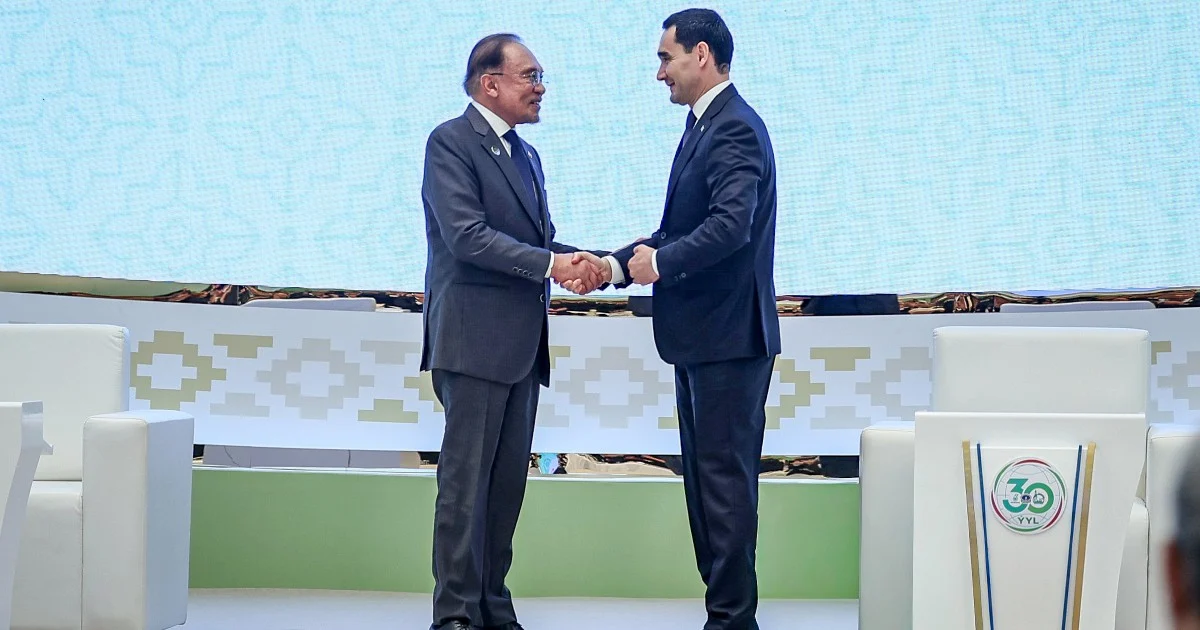
Malaysia and Turkmenistan have committed to substantially broadening their cooperative framework across energy and economic domains, cementing ties that extend beyond traditional commerce into strategic sectors vital to both nations' development agendas. The agreement emerged following Prime Minister Datuk Seri Anwar Ibrahim's official visit to the Central Asian nation, marking a significant diplomatic engagement that signals Kuala Lumpur's intent to diversify its regional partnerships and energy sourcing arrangements.
The energy sector represents the cornerstone of this newfound partnership momentum. Turkmenistan, as one of Central Asia's most resource-rich nations, holds considerable proven natural gas reserves that have long made it an attractive partner for energy-hungry economies across Asia and Europe. For Malaysia, already deeply invested in liquefied natural gas imports and domestic energy security considerations, accessing stable Central Asian energy supplies offers strategic diversification benefits beyond its traditional suppliers. The agreement to deepen energy cooperation creates pathways for potential joint ventures, technology transfers, and long-term supply arrangements that could benefit Malaysia's industrial base and electricity generation capacity as demand continues mounting.
Beyond hydrocarbons, the bilateral framework encompasses broader trade and investment dimensions that reflect Malaysia's broader pivot toward Central Asia. The two nations have identified opportunities for Malaysian companies to invest in Turkmenistan's infrastructure development, while creating reciprocal pathways for Turkmen enterprises to access Southeast Asian markets through Malaysian gateways. This mutual investment approach acknowledges Malaysia's advanced financial services sector and capital availability, positioning Kuala Lumpur as a potential financing hub for Turkmen development projects while simultaneously offering Turkmen investors exposure to the dynamic ASEAN market.
Transportation connectivity forms another pillar of the expanded cooperation framework. Enhanced linkages between Malaysia and Turkmenistan could strengthen multimodal transport corridors connecting Central Asia to Southeast Asia, benefiting not merely bilateral commerce but regional trade flows more broadly. Improved maritime routes, air cargo services, and potentially rail connectivity through intermediary nations would reduce transaction costs and delivery times for goods moving between the two regions, making both economies more competitive in their respective markets.
Educational exchanges and human capital development figure prominently in the partnership vision. Malaysia's established universities and vocational training institutions offer advanced learning opportunities for Turkmen students, while Turkmen institutions can provide Malaysia with specialized expertise in natural resource management and energy sector development. Such academic collaboration builds people-to-people networks that often prove more durable than purely commercial relationships, fostering long-term mutual understanding and cooperation.
Technology cooperation encompasses several promising avenues. Malaysia's position as a growing technology hub and digital economy leader can facilitate knowledge transfer to Turkmenistan in areas ranging from telecommunications infrastructure to digital commerce platforms. Concurrently, Turkmen expertise in specific industrial and resource management technologies could prove valuable as Malaysia navigates its own energy transition and industrial modernization challenges.
Prime Minister Anwar Ibrahim's personal engagement in this diplomatic initiative underscores Malaysia's strategic prioritization of Central Asian relationships. The visit represents broader Malaysian foreign policy objectives aimed at strengthening ties with non-traditional partners and reducing dependency on established relationships that may not always align with Malaysia's evolving interests. Central Asia, historically peripheral to Malaysian foreign policy, offers untapped potential for economic engagement and geopolitical influence.
For Malaysia specifically, this partnership addresses several contemporary policy imperatives. Energy security concerns loom large as the nation navigates growing domestic consumption alongside commitments to environmental sustainability and renewable energy targets. Diversifying energy suppliers and exploring advanced technologies in the sector aligns with long-term national development strategies. Simultaneously, Malaysia's ambitions to position itself as a global financial and services center benefit from expanding business relationships across diverse geographic regions.
Turkmenistan, meanwhile, benefits from accessing Malaysia's established networks throughout Southeast Asia and its financial expertise. The Central Asian nation, despite substantial resource wealth, faces challenges in diversifying its economy and developing non-energy sectors. Malaysian investment and expertise could catalyze broader economic transformation while expanding markets for Turkmen goods and services beyond its traditional European and Chinese partners.
The timing of this partnership deepening reflects broader regional realignments occurring across Asia. As competition intensifies among major powers for influence and resources, countries like Malaysia are deliberately cultivating multiple partnerships to enhance their strategic autonomy. Central Asian nations, similarly, are diversifying their international relationships to reduce vulnerabilities associated with over-reliance on any single major power.
Moving forward, the concrete realization of these cooperative agreements will depend on translating political will into operational mechanisms. Joint working committees, formal trade agreements, and investment protocols typically follow such high-level diplomatic overtures. Malaysian and Turkmen officials will need to identify specific projects with clear commercial viability and mutual benefit, ensuring that diplomatic rhetoric translates into sustained economic engagement.
The partnership also carries implications for broader Southeast Asian positioning. As individual ASEAN nations expand their Central Asian relationships, the collective engagement between Southeast Asia and Central Asia intensifies, potentially creating new regional dynamics that enhance Asian connectivity and reduce external dependency. Malaysia's pioneering role in deepening Central Asian ties may well inspire other regional nations to similarly explore partnership opportunities with this resource-rich but often underappreciated region.

