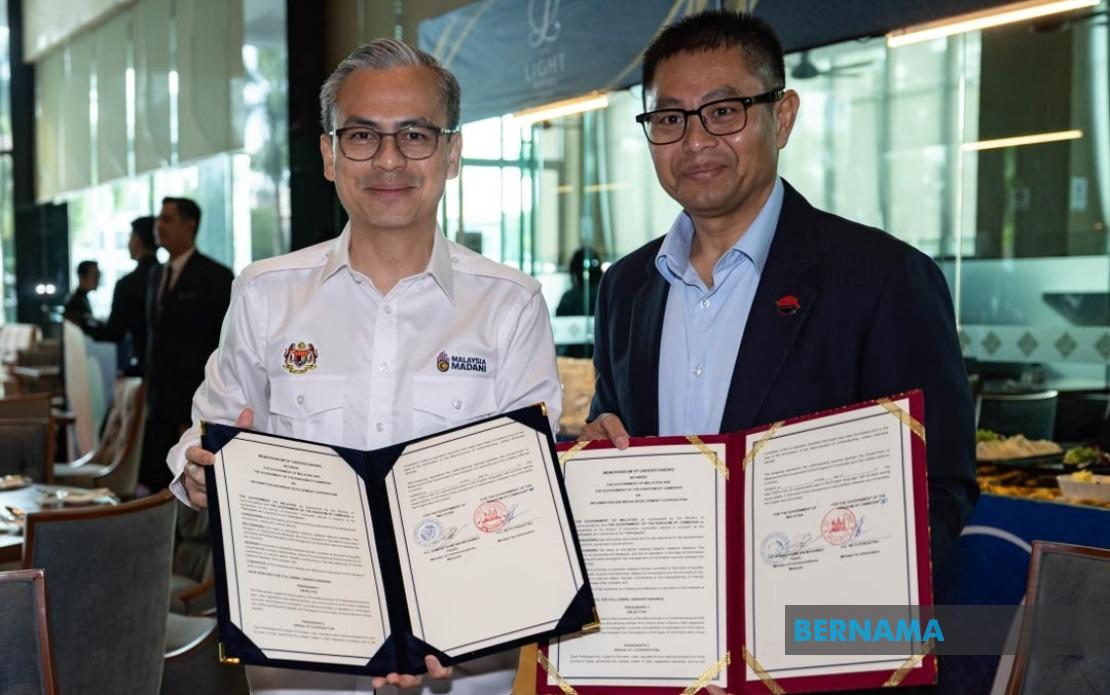
Malaysia and Cambodia have taken a significant step toward deeper integration of their media sectors by signing a comprehensive memorandum of understanding focused on information and communications development. Signed in Butterworth on June 20, the agreement between Communications Minister Datuk Fahmi Fadzil and Cambodian Information Ministry representative Prak Thaveak Amida marks an important milestone in the two nations' longstanding relationship, establishing formal mechanisms for sustained collaboration across multiple dimensions of the modern media landscape.
The framework created by this MoU spans an impressively broad range of activities and policy areas. Beyond the traditional foundations of news and information exchange that have long characterised Southeast Asian media partnerships, the agreement explicitly encompasses radio and television broadcasting standards, printing and publishing sector development, and human resources training—recognising that a robust media ecosystem requires investment across the entire value chain. This comprehensive approach reflects an understanding that information systems in the region cannot remain siloed but must instead evolve as integrated wholes capable of responding to contemporary challenges.
Particularly noteworthy is the agreement's inclusion of media cybersecurity as a formal cooperation area. As digital threats to news organisations, broadcast facilities, and information infrastructure intensify across Southeast Asia, establishing bilateral protocols for sharing cybersecurity best practices and threat intelligence represents a pragmatic response to shared vulnerabilities. Both nations operate in an environment where state actors, criminal groups, and malicious individuals increasingly target media organisations, making coordination on defensive measures both timely and strategically sound.
The MoU also emphasises innovation in media and broadcasting technologies, signalling that Malaysia and Cambodia intend to position themselves at the forefront of regional media modernisation rather than merely adapting to external innovations. This forward-looking dimension could facilitate joint investments in emerging platforms, digital content distribution systems, and new storytelling formats that reflect the specific informational needs and cultural contexts of Southeast Asian audiences—potentially creating alternatives to predominantly Western-dominated global media infrastructure.
Information policy and regulatory harmonisation represent additional substantive elements of the agreement. As digital communications transcend borders with ease, developing compatible regulatory frameworks reduces friction for cross-border media operations and helps establish regional standards for journalistic practice, content moderation, and data protection. This coordination could strengthen both countries' capacity to address misinformation, protect public discourse, and maintain media independence amid increasing pressures from various actors seeking to manipulate information environments.
The signing ceremony occurred during Malaysia's hosting of the National Journalists' Day (HAWANA) 2026 grand finale, an event bringing together approximately one thousand media practitioners from Malaysia and abroad. This timing amplifies the MoU's significance, positioning it not as a purely diplomatic exercise but as a concrete outcome relevant to the broader professional media community. The convergence of bilateral agreement-signing with a major regional journalism conference demonstrates how Malaysia leverages such gatherings to advance substantive policy partnerships while simultaneously engaging the working press.
Prime Minister Datuk Seri Anwar Ibrahim's scheduled appearance to officiate HAWANA underscores the government's commitment to supporting a free and vibrant media sector. The conference theme—"Media Integrity Strengthens Credibility"—aligns directly with the cooperation framework's emphasis on knowledge exchange and professional development, suggesting a coherent policy vision extending from international partnerships through to domestic journalism standards.
For Malaysia's media industry, this partnership creates practical opportunities. Cambodian demand for Malaysian broadcasting expertise, publishing know-how, and professional journalism training represents a market for Malaysian media consultancies, equipment suppliers, and educational institutions. Reciprocally, Malaysia gains access to Cambodian markets and insights into regional media consumption patterns, potentially enabling Malaysian media companies to develop content strategies with broader Southeast Asian appeal.
The agreement also addresses the reality that digital transformation has fundamentally altered the competitive dynamics of regional media. Standalone national broadcasters or publishers increasingly struggle against globally-scaled digital platforms. By establishing formal cooperation mechanisms, Malaysia and Cambodia can pool resources for content production, share infrastructure where practical, and collectively develop competitive advantages through knowledge exchange that smaller individual nations struggle to generate independently.
Cultural and linguistic dimensions warrant consideration as well. While Khmer and Malay differ significantly, both nations share Buddhist and Islamic cultural influences alongside complex colonial histories and contemporary development challenges. Media partnerships can facilitate storytelling that reflects these common experiences, potentially building greater mutual understanding across populations and reducing reliance on external narratives about Southeast Asia.
The presence of senior figures from Bernama, Malaysia's national news agency, alongside government officials and Penang's Chief Minister, demonstrates the multi-level engagement this partnership commands. Bernama's leadership role in the arrangement positions Malaysia's state news infrastructure as a regional knowledge hub, potentially enhancing its influence and relevance in an era when national news agencies globally have faced diminishing audiences and relevance.
Looking forward, the concrete realisation of this MoU's potential depends on implementation structures yet to be fully detailed. Successful bilateral media partnerships require dedicated funding, regular technical exchanges, clearly defined project timelines, and institutional commitment that can survive political transitions. The agreement's emphasis on human capital development suggests both nations recognise that sustainable cooperation ultimately depends on building professional relationships and shared methodologies among working journalists, technicians, and media managers.
For Southeast Asia more broadly, this Malaysia-Cambodia partnership exemplifies a growing recognition that regional media integration offers pathways toward stronger information systems, more resilient journalism industries, and greater capacity to shape narratives about the region rather than passively consuming narratives constructed elsewhere. As digital transformation and geopolitical competition increasingly focus on information dominance, bilateral and multilateral media cooperation agreements represent practical tools through which Southeast Asian nations can strengthen collective capabilities and assert greater agency over their information environments.

