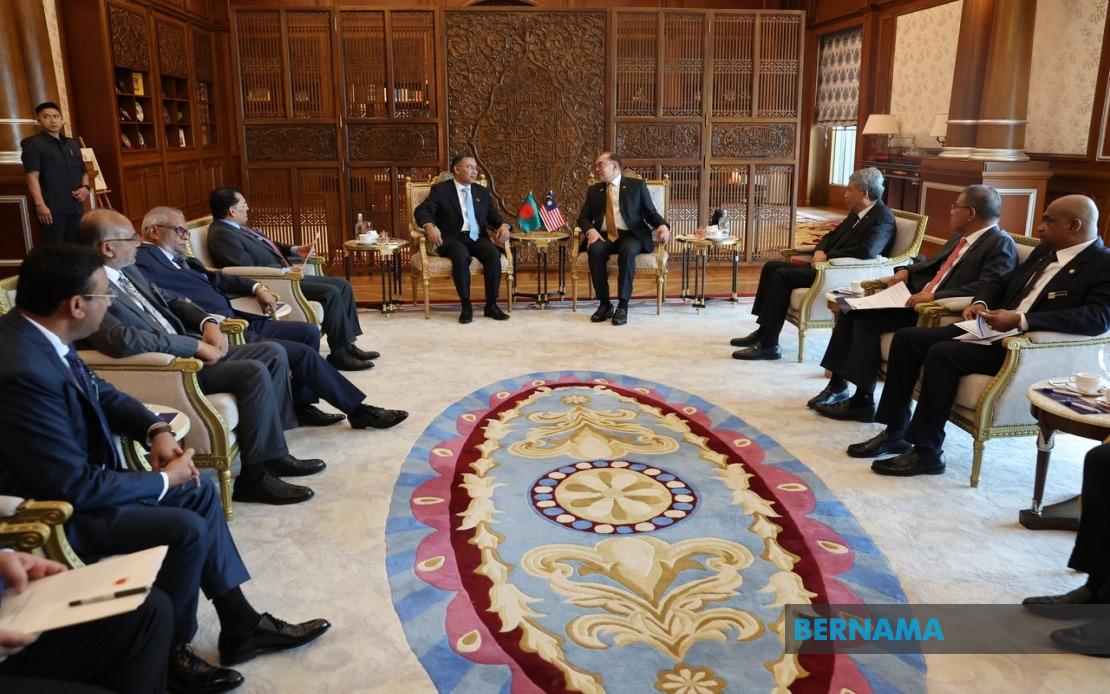
Malaysia and Bangladesh have committed to strengthening their partnership in addressing the protracted Rohingya refugee crisis by leveraging ASEAN platforms and direct engagement with Myanmar, according to Prime Minister Datuk Seri Anwar Ibrahim. The announcement came during bilateral talks in Putrajaya between Anwar and visiting Bangladesh Prime Minister Tarique Rahman, underscoring the centrality of regional mechanisms in tackling what remains one of Southeast Asia's most pressing humanitarian challenges.
The cooperation framework will operate through multiple channels, with both nations' foreign ministries taking the lead in coordinating efforts whilst utilising ASEAN's institutional structures to maintain dialogue with Myanmar authorities. This layered diplomatic approach reflects the sensitivity surrounding Myanmar's political situation and the need for sustained, multilevel pressure to achieve progress on refugee repatriation. Anwar framed the initiative as a shared responsibility, emphasising that Malaysia and Bangladesh must pool resources and diplomatic capital to resolve what has become a regional burden affecting hundreds of thousands of people.
Bangladesh currently hosts the vast majority of Rohingya refugees—over 900,000 people living in sprawling camps in Cox's Bazar—whilst Malaysia accommodates approximately 180,000 registered refugees alongside undocumented populations. The humanitarian strain on Bangladesh has been particularly acute, with the country shouldering enormous costs for shelter, healthcare, and education despite limited international funding. Tarique's expression of concern about conditions in the camps signals Bangladesh's urgency in finding pathways toward safe, dignified, and sustainable repatriation, a phrase both leaders emphasised repeatedly during their engagement.
The bilateral visit, Tarique's first official trip abroad since assuming office in February 2026, served as a broader platform for expanding Malaysia-Bangladesh relations beyond the Rohingya question. The two governments formalised cooperation through a Memorandum of Understanding on cultural collaboration and two Exchanges of Notes covering counter-terrorism research and investment facilitation. These instruments reflect growing recognition that stability and prosperity in the region depend on deepening institutional linkages and people-to-people connections across multiple domains.
Trade relations between the two countries have expanded significantly, reaching RM12.18 billion in 2025, positioning Bangladesh as Malaysia's 28th largest trading partner globally and second most important trade partner within South Asia after India. Malaysian exports to Bangladesh, valued at RM10.08 billion, are dominated by petroleum products, reflecting Bangladesh's growing energy demands as its economy develops. Conversely, Bangladesh supplies Malaysia with textiles, apparel, and footwear worth RM2.10 billion annually, leveraging its substantial manufacturing capabilities in these sectors.
The economic dimension of the Malaysia-Bangladesh relationship adds weight to their diplomatic coordination on Rohingya issues. Strengthened trade and investment ties create mutual incentives for regional stability and demonstrate that addressing humanitarian crises serves the broader economic interests of Southeast Asian nations. Both governments signalled interest in expanding cooperation into semiconductors, energy, agriculture, and human resource management—sectors where complementarities could generate significant mutual benefits.
The ASEAN-centred approach to the Rohingya crisis reflects a deliberate choice by Malaysia and Bangladesh to work within regional frameworks rather than escalate the issue through international bodies. This strategy acknowledges Myanmar's position within ASEAN and attempts to maintain productive relationships whilst advancing humanitarian objectives. However, the effectiveness of this approach depends on Myanmar's willingness to facilitate repatriation and address the root causes that drove Rohingya displacement in the first place—factors that remain deeply contested and politically sensitive within Myanmar.
For Malaysia, the renewed commitment to ASEAN-level engagement on Rohingya matters represents a continuation of its humanitarian advocacy whilst avoiding actions that could be perceived as unilateral pressure on Myanmar. The country has historically balanced compassion for Rohingya populations with pragmatic recognition of Myanmar's strategic importance in Southeast Asian geopolitics and the limits of external pressure in changing internal policies. By channelling efforts through ASEAN, Malaysia signals that resolution requires collective regional responsibility rather than individual state action.
The timing of Tarique's visit and the formalisation of cooperation mechanisms come as the global Rohingya situation remains in stasis. Repatriation efforts have stalled due to Myanmar's slow progress in creating conditions deemed safe by international observers, whilst host countries like Bangladesh face mounting pressure from domestic populations fatigued by the presence of large refugee communities. Malaysia has similarly grappled with tensions between refugee protection commitments and public concerns about integration and resource allocation.
Looking ahead, the Malaysia-Bangladesh cooperation framework will likely focus on three dimensions: diplomatic pressure through ASEAN to encourage Myanmar toward repatriation preparations, humanitarian support and burden-sharing arrangements between host countries, and development initiatives in Bangladesh's refugee-hosting areas. The latter aspect remains underfunded despite recognition that investments in Cox's Bazar's infrastructure and economy could ease tensions between refugee and host populations.
The partnership also signals to other ASEAN members that the Rohingya crisis demands sustained engagement rather than benign neglect. With several Southeast Asian nations hosting Rohingya populations and others serving as transit points, the issue remains regionally distributed and demands coordinated responses. Malaysia and Bangladesh's bilateral coordination could establish precedents for other affected nations to deepen cooperation and present unified positions in regional forums.
Ultimately, the success of Malaysia-Bangladesh efforts will hinge on Myanmar's cooperation and the international community's willingness to support host countries over the medium to long term. Without addressing Myanmar's political instability and the underlying grievances that produced the humanitarian crisis, achieving sustainable repatriation and refugee return remains elusive. Nevertheless, the commitment articulated in Putrajaya demonstrates that regional actors refuse to accept permanent displacement as inevitable, maintaining diplomatic momentum towards eventual resolution despite daunting obstacles.

