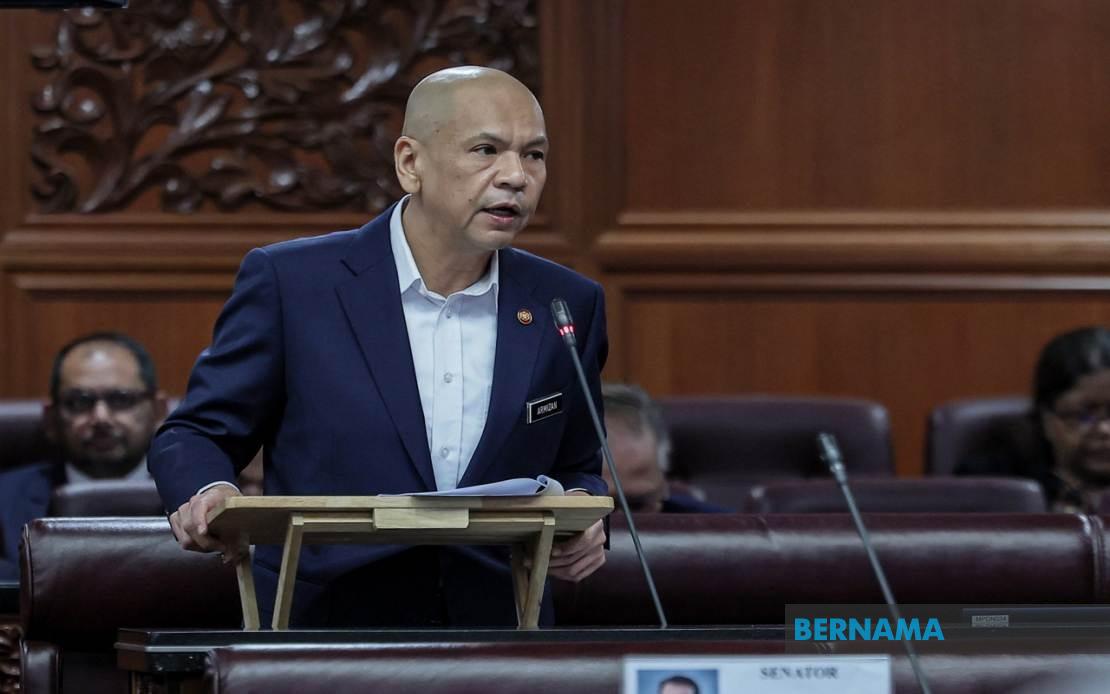
The Malaysian government has moved forward with significant competition law reforms by tabling two amendment bills in the Dewan Rakyat, signalling a renewed commitment to strengthening market oversight and consumer protection across the economy. Minister Datuk Armizan Mohd Ali, acting on behalf of the Domestic Trade and Cost of Living Ministry (KPDN), introduced the Competition (Amendment) Bill 2026 and the Competition Commission (Amendment) Bill 2026 for their first reading on June 23, with both measures set for second reading during the current parliamentary session. These legislative initiatives represent a comprehensive overhaul of Malaysia's existing competition framework, which has remained largely unchanged since 2010.
The Competition (Amendment) Bill 2026 targets fundamental aspects of the Competition Act 2010 (Act 712), seeking to modernise investigative mechanisms and enforcement capabilities available to the Malaysia Competition Commission (MyCC). Equally important, the proposed amendments intend to refine decision-making procedures within the commission itself and establish clearer governance standards for the Competition Appeal Tribunal. These enhancements address longstanding concerns about the pace and effectiveness of competition investigations in Malaysia, particularly in rapidly evolving digital and technology-driven markets where enforcement lags often disadvantage consumers.
One of the most substantive changes under Clause 3 would expand the regulatory perimeter to encompass all economic activities rather than limiting oversight to narrowly defined commercial transactions. This expansion carries profound implications for Malaysia's digital economy, gig work platforms, and emerging sectors that have operated in regulatory grey zones. By extending competition law's reach, the government seeks to prevent market abuses and anti-competitive conduct in areas previously beyond MyCC's formal jurisdiction, a necessary modernisation given how economic activity has fundamentally transformed since 2010.
Clause 7 represents another critical enhancement, granting MyCC explicit authority to demand information or documents from individuals and government entities during market review investigations. This power addresses a persistent weakness in Malaysia's competition enforcement framework, where investigators have sometimes encountered resistance or delays in obtaining necessary evidence. By clarifying and broadening information-gathering authority, the amendment facilitates more thorough and timely market analyses, enabling the commission to identify systemic competition problems before they cause substantial consumer harm.
Recognising that enforcement effectiveness depends partly on deterrence, Clause 13 introduces criminal penalties for intentional destruction, concealment, defacement, or alteration of evidence or data with intent to impede MyCC investigations. This provision mirrors measures found in competition regimes across developed economies and acknowledges that some actors will resist regulatory scrutiny. By establishing clear criminal liability for evidence tampering, the amendment strengthens the commission's investigative credibility and reinforces the seriousness with which Malaysia treats competition violations.
The complementary Competition Commission (Amendment) Bill 2026 addresses MyCC's internal governance and advisory function. Clause 8 explicitly defines and expands the commission's advisory role regarding competition policy, procedures, and programmes involving the minister, public authorities, and regulatory bodies. This formalisation elevates MyCC's status as an authoritative voice in policy development, enabling the commission to shape economic regulation across government in ways that promote competition and protect consumers. For Malaysian businesses, clearer delineation of MyCC's advisory responsibilities could improve regulatory consistency and reduce conflicting guidance from different agencies.
Clause 10 grants MyCC flexibility to delegate functions and powers to its chairman, committees, officers, and employees, streamlining decision-making and enabling faster responses to competitive developments. This delegation mechanism acknowledges that large, complex competition investigations require distributed authority across experienced personnel rather than centralised approval processes. The amendment facilitates more agile enforcement while maintaining accountability through established internal governance frameworks.
Subclause 12(a) introduces a significant procedural reform by permitting MyCC itself to appoint commission officers upon recommendation by the chief executive officer, rather than relying on external appointment mechanisms. This change enhances institutional autonomy and transparency in recruitment, allowing MyCC to build a professional, merit-based workforce without external political interference. For a competition authority to function effectively, its personnel must be insulated from partisan pressure and appointed based on expertise and commitment to the competition law mission. This amendment strengthens that insulation.
These reforms arrive at a crucial moment for Malaysia's economic regulation. As Southeast Asia's second-largest economy, Malaysia faces intensifying competition from regional neighbours and increasing scrutiny of market concentration, particularly in sectors dominated by large conglomerates. Digital markets—from e-commerce to ride-sharing—have expanded dramatically since 2010 without corresponding regulatory evolution. Consumers have experienced rising prices, limited choice, and abusive platform practices in some sectors, prompting demand for stronger enforcement.
The amendments also reflect international best practice in competition law. Jurisdictions from Australia to the European Union have recently strengthened their competition authorities' investigative powers, expanded regulatory scope, and enhanced penalties for evidence destruction. By moving in this direction, Malaysia positions itself more competitively within regional and global enforcement networks, facilitating cross-border cooperation against cartels and monopolistic practices that transcend national borders.
For Malaysian businesses, these amendments carry mixed implications. Legitimate enterprises operating competitively should welcome clearer rules and stronger enforcement against anti-competitive rivals. However, companies with dominant market positions or engaged in exclusionary practices face heightened scrutiny and enforcement risk. Particularly in concentrated sectors like telecommunications, aviation, and financial services, incumbent players must reassess conduct strategies to ensure compliance with a more assertively enforced competition framework.
The parliamentary process ahead will test whether these reforms enjoy broad political support or encounter resistance from constituencies benefiting from current market structures. Implementation effectiveness will ultimately depend on MyCC's funding, staffing, and political independence—all factors that require sustained commitment beyond legislative amendments. The coming years will reveal whether Malaysia's competition law modernisation translates into genuine market discipline and consumer welfare improvements, or whether institutional constraints limit its impact.

